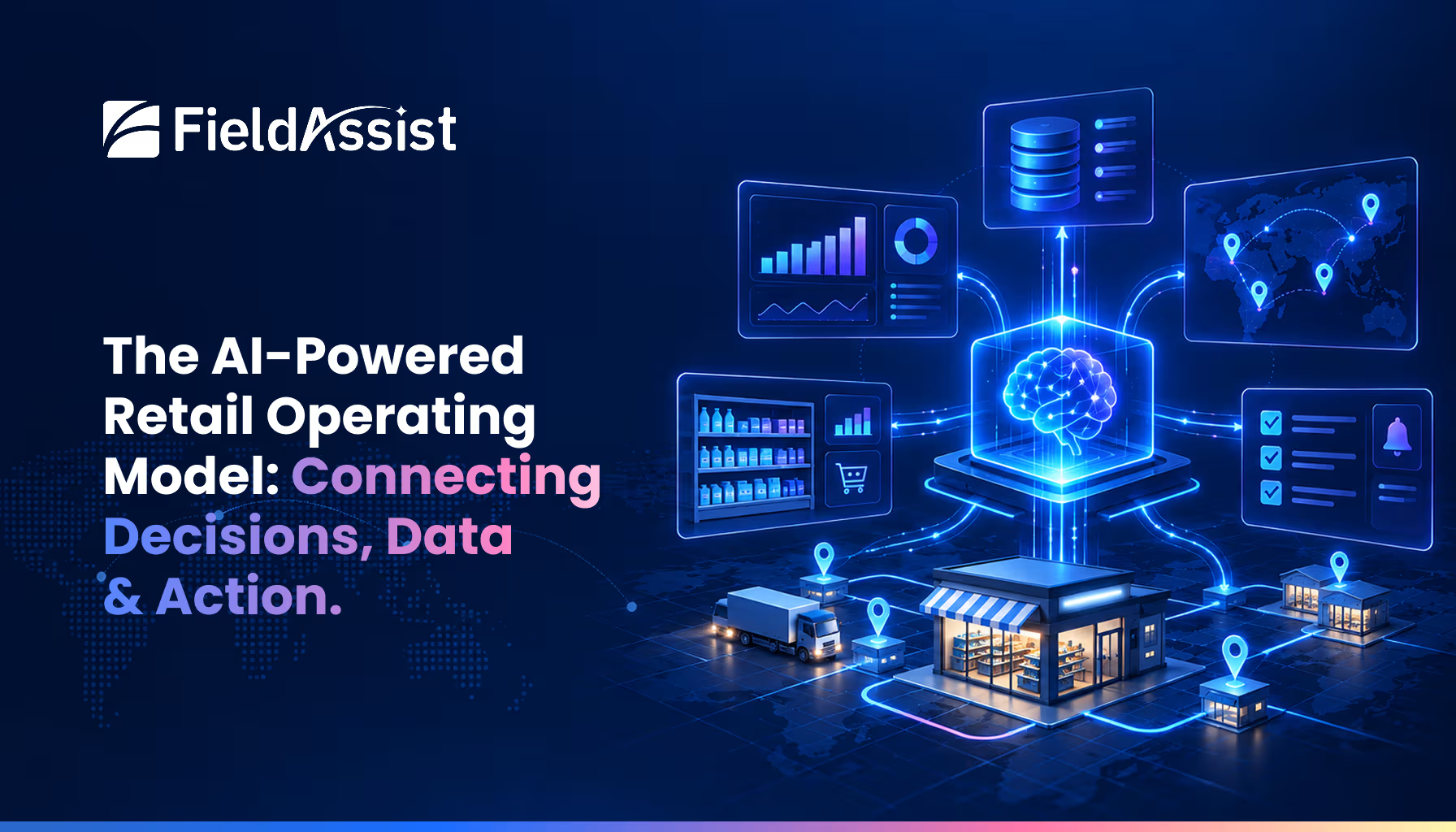
The AI-Powered Retail Operating Model: Connecting Decisions, Data, and Action
AI-powered retail connects data, decisions, and frontline action to reduce delays, improve shelf availability, optimize trade spend, and protect margins.

The gap between a predictive enterprise insight and a physical shelf execution is where retail margin goes to die.
For years, CPG and retail leaders have invested millions in predictive analytics, resulting in an abundance of isolated dashboards that expertly diagnose past performance or forecast future trends. Yet, the core operating model remains stubbornly analog. A supply chain algorithm might predict a regional stockout, but if that insight does not automatically trigger a localized replenishment order and dynamically reroute a field representative to that specific store, the intelligence is effectively useless.
The mandate for the modern retail enterprise is no longer about acquiring more data; it is about building an operating system that acts on it.
This is the transition to the AI-Powered Retail Operating Model: a strategic playbook for moving from passive analytics to agentic execution by synchronizing data, decisions, and action.
The Playbook Foundation: From "Advisory" to "Agentic"
The traditional tech stack relies on "Advisory systems” that process information and present it on a screen, requiring human analysts to interpret the data, gain consensus, and manually trigger workflows across different departments. This creates operational latency.
The AI-Powered Operating Model shifts the enterprise to "Agentic AI." Built on modern cloud infrastructure, Agentic AI can ingest real-time variables, apply cross-functional business rules, and orchestrate multi-step actions across merchandising, supply chain, and frontline sales. Enterprise deployment, however, requires clearly defined autonomy thresholds: routine, low-risk decisions can execute automatically, while high-value, customer-sensitive, or exception-based actions should remain subject to human review, audit trails, and escalation protocols.
Play 1: Unifying the Data Plane (The Prerequisite)
AI cannot function as an enterprise nervous system if it is fed a fractured reality. In most organizations, field sales (SFA/CRM), distribution (DMS), and inventory (ERP) run on entirely different data architectures.
The Strategic Action:
- Establish a Single Source of Truth: Migrate fragmented departmental data into a unified, real-time cloud repository. Point-of-sale (POS) velocity, distributor inventory levels, and real-time field execution metrics must live in the same environment.
- Eliminate Latency: Transition from batch-processing data at the end of the week to real-time ingestion, ensuring the AI model is making decisions based on current shelf realities, not historical averages.
Play 2: Empowering the Decision Engine (The Brain)
Once the data is unified, the organization must deploy intelligent engines capable of cross-functional logic. A decision engine does not just calculate probabilities; it weighs enterprise-wide trade-offs to determine the most profitable operational move.
The Strategic Action:
- Automate Complex Trade-offs: If a primary SKU is facing a supply chain bottleneck, the decision engine should automatically adjust trade promotion spend for that SKU, shift marketing focus to a high-margin alternative, and notify distributors—all simultaneously.
- Align Trade Spend to Reality: Stop subsidizing products that are out of stock. The AI must continuously audit promotional budgets against real-time, store-level inventory data, preventing margin bleed.
Play 3: Automating Frontline Action (The Muscle)
The ultimate metric of an AI-powered operating model is frictionless edge execution. This is the mechanical translation of a centralized decision into a localized, physical workflow.
The Strategic Action:
- Dynamic Field Routing: Replace static, predetermined monthly beat plans with dynamic daily call plans. The AI should direct field representatives to specific stores based on localized out-of-stock risks, credit limits, and predictive demand, increasing revenue per visit.
- Auto-Replenishment Triggers: When the system detects a localized stockout anomaly, it should bypass the manual auditing process and automatically issue a direct purchase order to the relevant distributor tier.
Quantifying the Commercial Impact
Transitioning to an AI-orchestrated operating model shifts the enterprise from reactive, siloed execution to proactive, continuous optimization.
By unifying data, decisions, and edge execution, organizations can unlock measurable commercial impact across eight critical dimensions:
The Integration Mandate
Building this playbook requires a shift in procurement philosophy. Evaluating the next wave of enterprise technology requires looking past feature sets and focusing on structural interoperability. A platform's value is directly proportional to its ability to orchestrate workflows across the ERP, the DMS, and frontline sales tools without requiring heavy layers of custom middleware.
Competitive dominance in the next decade of retail will not belong to the enterprise that collects the most data. It will belong to the enterprise that architects the shortest, most automated path between an intelligent decision and the physical shelf.



.avif)