Retail Execution Basics: A Complete Guide for CPG Managers
Learn the essentials of retail execution, from OSA and shelf compliance to SFA, AI, and real-time execution strategies for CPG growth.

.avif)
Your brand strategy is strong, the national marketing campaign is live, trade promotions are funded, and production is running at peak capacity.
Then the monthly revenue report lands. Numbers are down.
When you dig into the root cause, the story is almost always the same. It didn't break down in the boardroom; it broke down on the retail floor. Products were stuck in the backroom, promotional displays were never set up, or stockouts went unnoticed for days. This gap between corporate commercial strategy and physical store presentation is the "last mile" execution gap.
Mastering retail execution basics is no longer optional, it is the operational backbone that separates fast-growing brands from those losing market share. We will break down what retail execution means today, the key pillars of a winning retail execution strategy, and how technology, from sales force automation software to AI-powered retail execution, drives predictable growth.
What is Retail Execution in CPG?
Retail execution refers to the sequence of field activities carried out by CPG brands and distributors to ensure that the right product is in the right place, at the right time, at the right price, and in the right quantity.
It bridges product strategy and point-of-sale reality. Retail execution encompasses everything that happens inside a modern retail outlet or traditional trade shop:
- replenishing stock before shelves run bare,
- setting up secondary point-of-sale materials (POSM),
- auditing planograms,
- validating promotional pricing, and
- securing prime visibility over competitors.
For CPG sales leaders, field reps are the eyes, ears, and execution engine of the brand. Mastering retail execution basics means giving those teams the data, workflows, and tools required to make every store visit drive measurable revenue.
Why Retail Execution Strategy Matters for Modern CPG Brands?
The modern retail ecosystem, spanning organized modern trade (supermarkets, hypermarkets) and high-density traditional trade (mom-and-pop shops, kiranas), is more fragmented and competitive than ever. Brand loyalty is fragile. If your product is out of stock or hidden on a bottom shelf, consumers rarely wait; they buy a competitor’s alternative.
A robust retail execution strategy turns in-store compliance into an operational moat. Consider these core dynamics driving modern CPG performance:
- Revenue Leakage at the Shelf: Poor availability, misplaced products, incorrect pricing, and weak shelf visibility can create significant gaps between what brands plan and what shoppers actually see.
- Better Trade Spend Efficiency: Promotions and in-store investments only deliver their intended value when displays, pricing, placement, and promotional mechanics are executed as planned.
- Data-Driven Growth: Store-level execution data helps brands identify recurring gaps, understand market performance, and make faster, more informed decisions.
- Reduced Out-of-Stocks: Better visibility into product availability allows sales teams to identify stock issues earlier and take corrective action before shoppers turn to competing products.
- Consistent Execution Across Channels: Whether the product is sold through a supermarket, hypermarket, distributor, or neighborhood retailer, standardized execution helps maintain consistent brand presence across fragmented retail networks.
Closing the "last mile" execution gap requires standardizing store-level operations across every channel.
Key Pillars of a Powerful Retail Execution Framework
To build a repeatable retail execution strategy, CPG sales leaders structure their field operations around five core pillars:
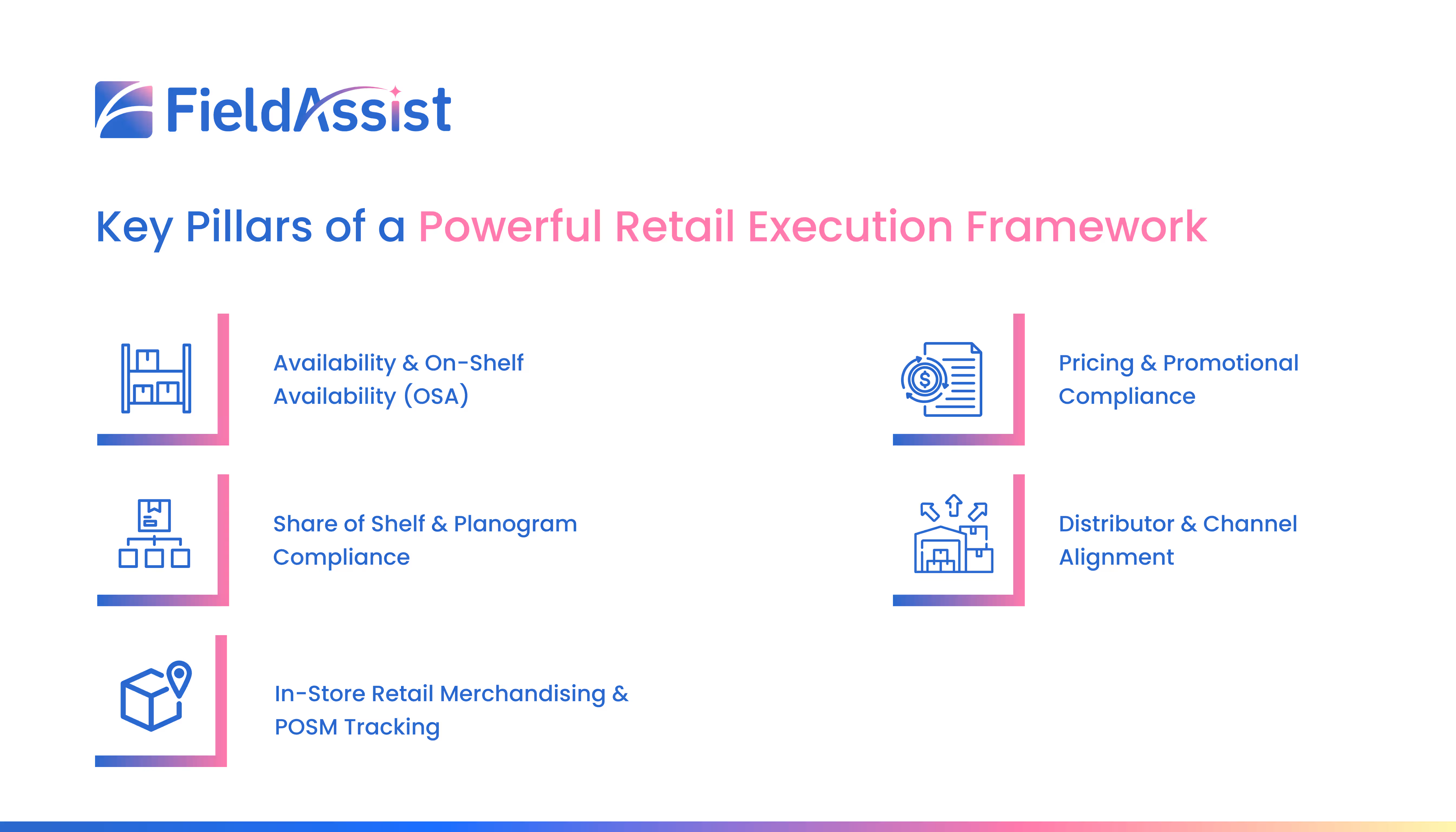
1. Availability & On-Shelf Availability (OSA)
Product availability is the baseline requirement of retail execution. If a product isn't on the shelf, nothing else matters. Maintaining high On-Shelf Availability (OSA) requires tracking two distinct metrics:
- Distribution Coverage: Is the SKU present in the store's warehouse or backroom?
- On-Shelf Availability: Is the SKU physically on the primary shelf, accessible to the consumer?
Phantom inventory (where system data shows stock, but the physical shelf is empty) is the silent killer of CPG margins. A disciplined execution framework forces reps to audit physical stock during every visit.
2. Share of Shelf & Planogram Compliance
Securing shelf space is an expensive fight. Once contractually negotiated, brands must ensure retailers honor those share-of-shelf agreements.
- Planogram Compliance: Verifying that SKUs are placed in the exact vertical/horizontal sequence, eye-level orientation, and facing structure agreed upon with store management.
- Share of Shelf (SoS): Measuring your brand’s physical linear space compared to direct category competitors.
When planograms drift out of compliance, brands lose visual dominance, directly suppressing sell-through rates.
3. In-Store Retail Merchandising & POSM Tracking
In-store retail merchandising covers the placement and upkeep of secondary displays, end-caps, floor stands, poster headers, and Point-of-Sale Materials (POSM).
Field reps need clear workflows to track POSM deployment:
- Did the high-value branded display stand arrive at the store intact?
- Is it positioned in a high-footfall aisle?
- Is it stocked with the correct promotional SKUs?
Without proper retail merchandising tracking, marketing collateral sits unused in store backrooms.
4. Pricing & Promotional Compliance
Trade promotions drive immediate sales volume, but only if passed on to the shopper. Common execution leaks include:
- Retailers failing to update price tags during a promotion.
- Field reps missing incorrect shelf price tags (MRPs).
- Unapproved localized discounting that erodes brand equity.
Auditing shelf prices against master promotional calendars ensures trade spend directly translates into higher basket sizes.
5. Distributor & Channel Alignment
Even the best field force will fail if primary supply chains stall. Achieving alignment across traditional trade and modern distribution networks requires synchronizing your field force with primary and secondary sales channels. Distributors must have real-time visibility into stock levels, order fulfillments, and credit limits so store demand is matched by immediate delivery capacity.
Essential Technology Driving Modern Retail Execution
Relying on manual clipboard audits, paper forms, or delayed messaging apps for field teams creates blind spots. To operate at scale, market-leading CPG brands deploy an integrated technology stack.
1. Sales Force Automation (SFA) Software
Modern sales force automation software acts as the daily operational operating system for your field reps. It digitizes beat planning, automates journey plans, provides historical store purchase records, and streamlines order booking.
By equipping field reps with purpose-built sales force automation software, CPG companies eliminate manual administrative tasks. Reps spend less time writing orders on paper and more time selling, optimizing shelf visibility, and expanding store penetration.
2. Retail Merchandising Software
While SFA focuses heavily on order generation and route management, dedicated retail merchandising software focuses on physical product presentation.
This specialized retail merchandising software empowers merchandisers to:
- Complete standardized visual audit checklists in seconds.
- Capture geo-tagged, time-stamped photo proof of secondary displays.
- Track inventory levels of promotional collateral across thousands of outlets.
- Instantly flag damaged packaging or missing stock directly to territory managers.
3. Distributor Management System (DMS)
To bridge field demand with supply chain execution, brands pair SFA with a central distributor management system. A robust distributor management system connects primary manufacturer shipments directly to secondary sales (distributor to retailer).
It tracks distributor inventory in real time, automates replenishment orders, manages claims and credit terms, and prevents stock hoarding or channel stuffing. When your sales force automation software speaks directly to your distributor management system, orders booked by reps turn into delivered goods without delay.
The Future: AI-Powered Retail Execution in CPG
The CPG landscape is shifting from reactive manual reporting to proactive, AI-powered retail execution. AI technologies are replacing subjective manual checks with objective, real-time data intelligence.
%20(1).avif)
1. Image Recognition for Automated Shelf Audits
Manual shelf audits are slow, error-prone, and open to rep bias. With AI-powered retail execution leveraging Computer Vision and Image Recognition (IR), a rep simply snaps a single photo of the shelf using their mobile phone.
Within seconds, the AI engine analyzes the image to calculate:
- Exact Share of Shelf percentages down to the single facing.
- Planogram compliance deviations (out-of-sequence SKUs, missing price tags).
- Competitor brand presence and pricing.
- Instant out-of-stock detection.
As per the study published by Bain & Company, deploying analytics-driven "Perfect Store" capabilities and automated shelf insights allows CPG companies to consistently achieve sales growth of over 5%.
2. Predictive Ordering & Smart Route Recommendation
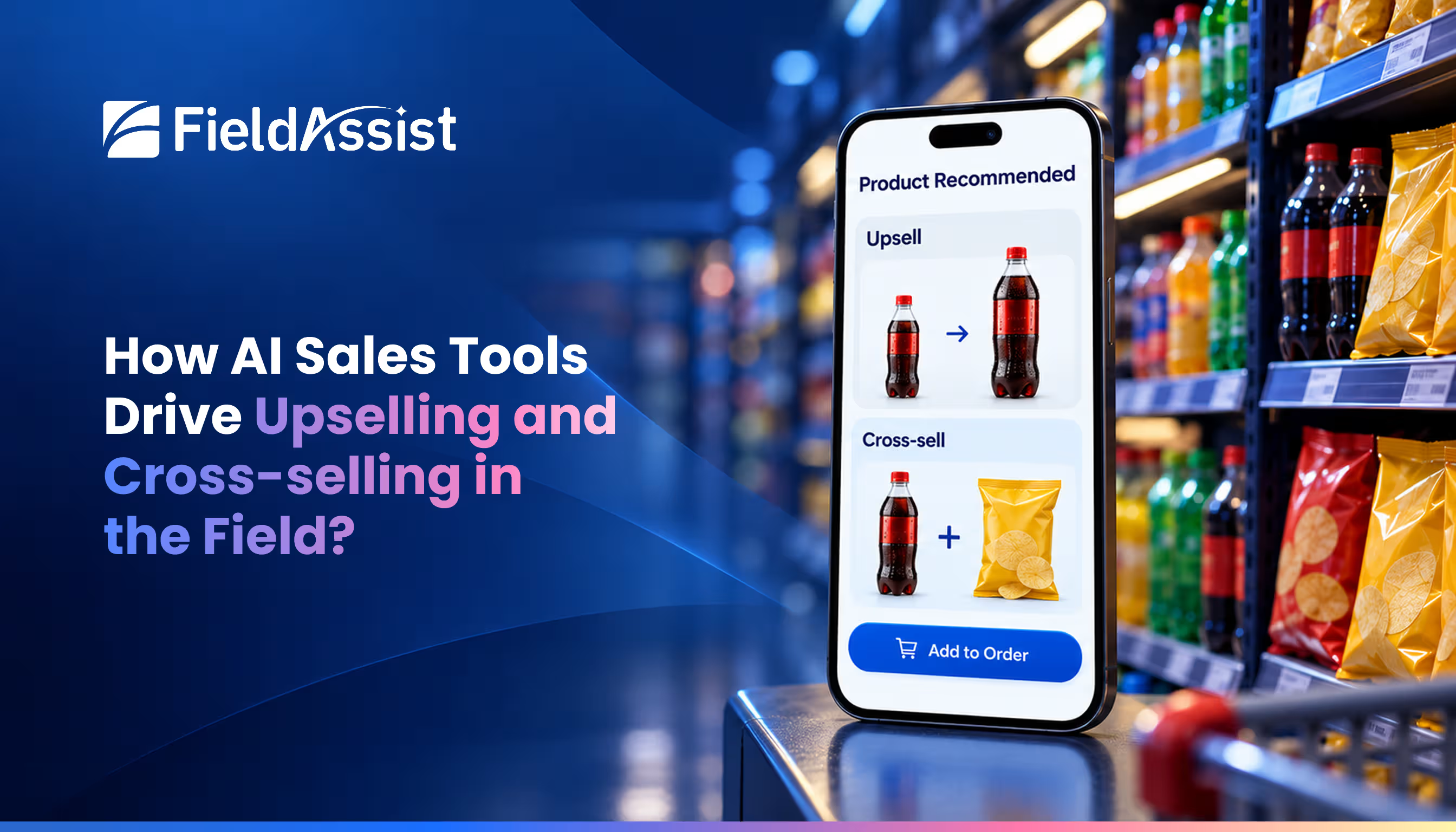
AI transforms mobile tools from passive data entry forms into smart daily assistants. By analyzing historical purchase velocity, seasonality, hyper-local consumer trends, and stockout risk, predictive algorithms suggest optimal order quantities for every store visit.
Furthermore, machine learning dynamically optimizes beat routes. Rather than following static weekly schedules, reps receive smart route recommendations that prioritize stores based on immediate stockout risk, high-value promotion launches, or unbooked order potential.
5 Best Practices for CPG Managers to Master Retail Execution
Transitioning from chaotic field operations to disciplined, data-driven execution requires clear processes. Here are five actionable best practices for CPG sales leaders.
- Define Clear KPI Guidelines
Do not overwhelm field reps with dozens of conflicting metrics. Define a clear "Picture of Success" for each outlet tier (e.g., Tier 1 Supermarkets vs. Tier 3 Mom-and-Pop Outlets). Focus on core metrics:
- On-Shelf Availability for Top 20 Focus SKUs
- Planogram Compliance Percentage
- Order Booking Value per Visit
- Strike Rate (Productive Visits vs. Total Visits)
- Unify Your Data Pipeline
Operating in data silos creates friction. If your retail merchandising data lives in one app while order history sits in a standalone distributor management system, managers spend more time reconciling spreadsheets than driving field strategy. Consolidate field operations into an integrated platform where SFA, merchandising, and distributor data feed into a unified dashboard.
- Implement Gamification & Incentives
Field reps thrive on clear targets and healthy competition. Leverage your sales force automation software to gamify daily tasks. Display real-time leaderboards showing route completion rates, order targets met, and shelf compliance scores. Tying micro-incentives directly to daily execution metrics drives immediate field adoption and engagement.
- Shift from Reactive to Real-Time Alerts
Waiting for end-of-month sales reporting to spot execution failures is a recipe for lost market share. Modern platforms deliver real-time exception alerts directly to territory sales managers. If a high-volume outlet reports an out-of-stock status on a core SKU or a promotional display is flagged as non-compliant, managers can intervene immediately.
- Empower the Field Team with Mobile-First Tools
Field reps work in signal-dead basement stores, congested wholesale markets, and remote rural routes. Technology must be built mobile-first with offline functionality. Your retail execution software must allow reps to take photos, book orders, log store visits, and view customer histories without a network connection, automatically syncing data once connectivity returns.
Transform Your Retail Execution Strategy with FieldAssist
Mastering retail execution basics requires closing the gap between high-level commercial strategy and store-level delivery. CPG managers don't just need more software—they need an integrated platform designed to solve the "last mile" execution gap.
FieldAssist provides an end-to-end operational platform built specifically for CPG brands:
Whether managing thousands of traditional trade outlets or optimizing modern trade execution, FieldAssist gives CPG leaders the real-time visibility and field automation needed to drive predictable, profitable growth.
Ready to eliminate the last-mile execution gap and unlock growth for your brand? Explore how FieldAssist transforms retail execution for leading CPG brands worldwide.




.avif)