How AI Helps Brands Win at the Shelf: The Complete Guide to AI Retail Execution
AI-powered retail execution helps CPG brands improve shelf availability, planogram compliance, pricing accuracy, and retail execution with real-time shelf monitoring.


Every CPG sales director knows the feeling. The forecast was solid. The trade plan was approved. The distributor confirmed delivery. And yet, three weeks later, the numbers come in soft in a key territory, and nobody can say exactly why.
Nine times out of ten, the answer isn't in the boardroom. It's on the shelf.
This is the "last mile" problem that has quietly eaten into CPG profitability for decades: the gap between what a brand plans to happen at retail and what actually happens at retail. A perfectly executed GTM strategy is worthless if the SKU isn't visible, the planogram isn't followed, or the shelf tag says one price while the register rings up another.
That's where AI retail execution changes the game. Artificial intelligence, specifically, computer-vision-powered AI shelf monitoring, is giving CPG and FMCG brands the one thing they never had at scale: eyes on every shelf, every day, without waiting for a human to physically walk the aisle.
What Is Shelf Execution?
Shelf execution is the discipline of ensuring that everything a brand has agreed to deliver at retail, availability, visibility, pricing, and placement, is actually happening the way it was planned, in every store, every single day.
Break it down into its four pillars, and you get what field teams often call the "4 P's" of retail execution:
- Product availability- Is the SKU physically on the shelf, not just sitting in the backroom or stuck in transit?
- Placement and planogram compliance- Is the product in the agreed shelf position, at eye level, with the right facings?
- Pricing accuracy- Does the shelf tag match the agreed price, and are promotional prices reflected correctly?
- Promotional compliance- Is the secondary display, POSM, or end-cap actually live, exactly as negotiated with the retailer?
When any one of these breaks down, brands lose sales they've already paid to generate through marketing, trade spend, and distribution. This is precisely why shelf execution, not just distribution, is the real battleground for CPG growth. You can have 100% distribution and still lose the sale if the product isn't visible and buyable the moment a shopper is standing in front of the shelf.
The scale of this problem is not small. According to reports, the global retail industry continues to lose an estimated $1.73 trillion annually to inventory distortion, the combined cost of out-of-stocks and overstocks, even after retailers invested $172 billion in fixes over the past year.
The Hidden Cost of Poor Shelf Execution
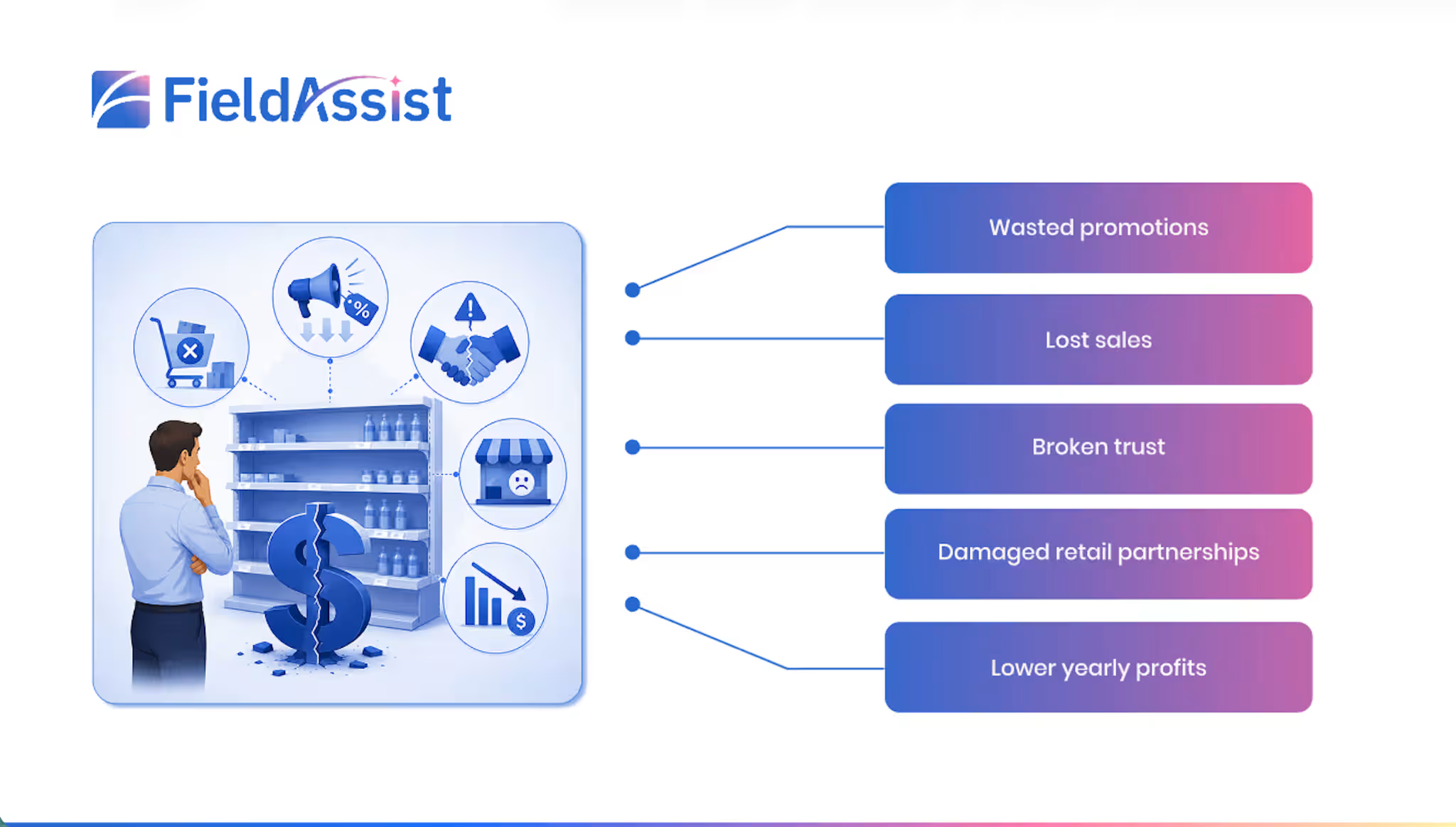
Before we get to the AI solution, it's worth sitting with the problem for a moment, because the numbers are more serious than most sales leaders realize.
- Wasted promotions
- Lost sales
- Broken trust:
- Damaged retail partnerships
- Lower yearly profits
What Is AI Shelf Monitoring?
AI shelf monitoring is the use of computer vision, machine learning, and image-recognition algorithms to automatically detect and analyze real-world shelf conditions, availability, share of shelf, planogram compliance, pricing, and competitor activity, from photographs captured during a routine store visit.
Here's how it typically works in the field:
- A field sales rep or merchandiser takes a photo of the shelf using a mobile app during a routine store visit (the same visit they were already making).
- AI-powered image recognition instantly scans the photo, identifying every SKU, counting facings, measuring share of shelf, and flagging gaps or planogram deviations.
- The system cross-references this against the brand's agreed planogram and business rules, in seconds, not hours or days later.
- Actionable alerts are pushed, so out-of-stocks, misplaced SKUs, or pricing errors can be corrected before the shopper ever notices.
This is the fundamental shift AI brings to retail execution: it replaces subjective, delayed, manual shelf audits with objective, instant, data-backed shelf intelligence. Where a manual audit might tell a brand what happened on a shelf last Tuesday, AI shelf monitoring tells them what's happening on that shelf right now,` and, increasingly, what's likely to happen tomorrow if nothing changes.
This capability sits at the heart of what makes modern shelf monitoring software so valuable to CPG brands: it turns thousands of individual store visits into a single, structured, real-time data feed that sales directors can actually act on.
How AI Improves Shelf Execution: From Reactive Audits to Real-Time Intelligence?
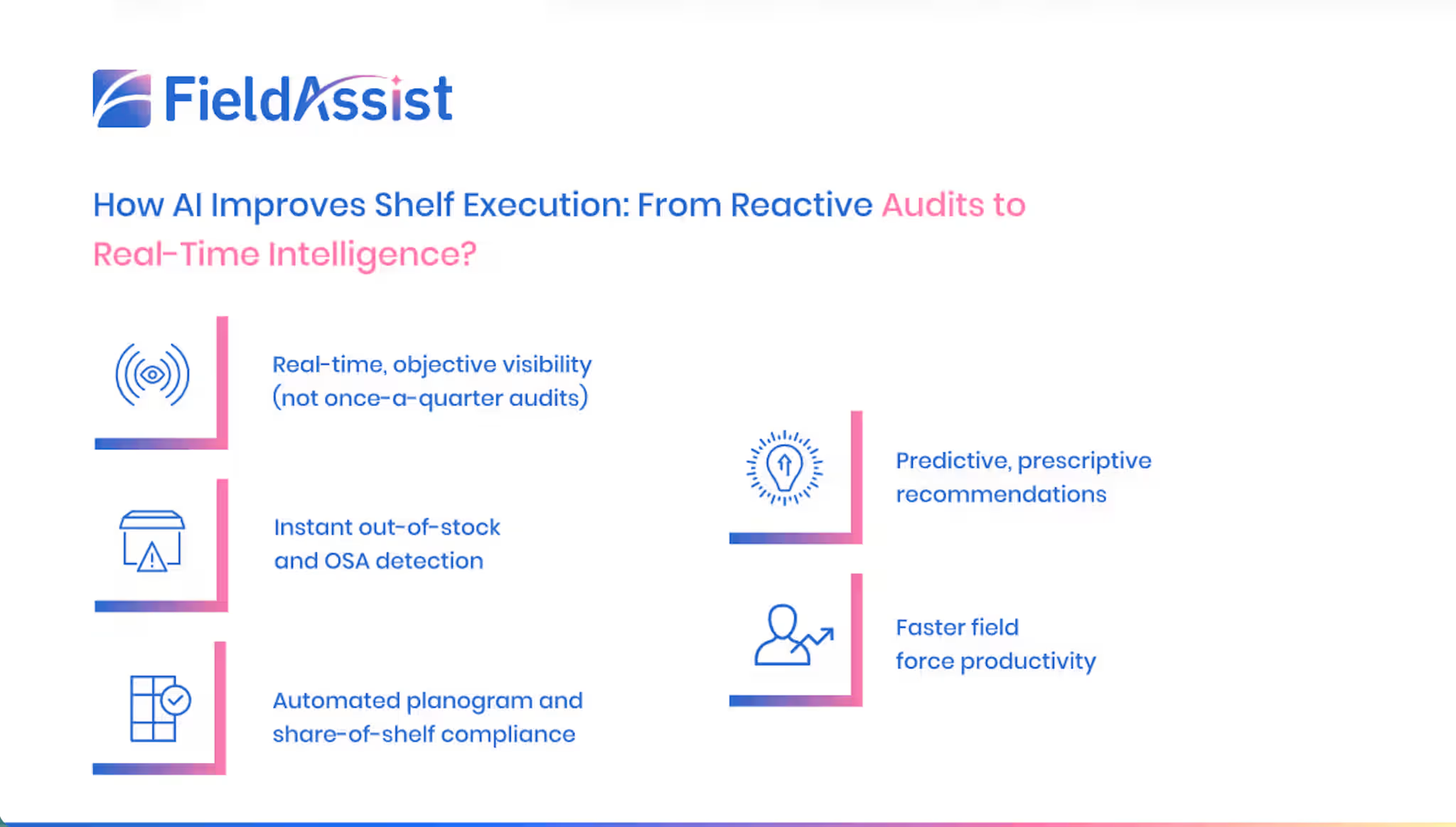
So, concretely, how does AI improve shelf execution? It comes down to five capabilities that manual processes simply cannot deliver at scale.
1. Real-time, objective visibility (not once-a-quarter audits)
Traditional shelf audits happen periodically, often quarterly, sometimes only during a big launch. AI-powered image recognition, by contrast, analyzes shelf conditions during every single store visit, which means brands go from a handful of snapshots a year to a continuous, near-real-time stream of shelf data across their entire retail network.
2. Instant out-of-stock and OSA detection
Rather than relying on inventory system data (which tells you what stock exists somewhere, in the store, not what's actually on the shelf), AI shelf monitoring calculates true on-shelf availability from the shopper's point of view, catching the gap between "delivered" and "available for purchase" that inventory systems routinely miss.
3. Automated planogram and share-of-shelf compliance
AI can instantly compare a photographed shelf against the agreed planogram and calculate share of shelf versus competitors, flagging deviations that would take a human auditor minutes, or would simply be missed altogether across hundreds of outlets.
4. Predictive, prescriptive recommendations
This is where AI retail execution moves beyond monitoring into genuine intelligence. By analyzing historical patterns across SKUs, seasons, and store clusters, AI models can flag which stores are at high risk of stocking out next week, and recommend replenishment quantities before the shelf actually goes empty.
5. Faster field force productivity
Because the AI does the visual auditing work automatically, field reps spend less time filling out compliance checklists and more time on high-value selling activities, order-taking, retailer relationship-building, and negotiating secondary displays.
AI for Retail Shelf Monitoring: Core Capabilities Every CPG Brand Needs
If you're evaluating AI for retail shelf monitoring, it's worth knowing what "good" actually looks like. The strongest platforms typically combine:
- Image-recognition-based SKU detection that works reliably across cluttered general trade shelves, not just clean modern trade aisles, a critical distinction for brands operating in emerging markets like India, Southeast Asia, the Middle East, and Africa.
- Automated OSA (on-shelf availability) scoring benchmarked against a brand-defined target, with instant alerts to the right field rep or distributor.
- Planogram and POSM compliance detection, comparing photographed shelves against the intended layout.
- Competitive intelligence, capturing rival SKUs, pricing, and share of shelf in the same image.
- Integration with route-to-market and distributor management systems, so a flagged gap can trigger an actual replenishment order, not just a dashboard notification nobody acts on.
Retail Execution Software vs. AI Shelf Monitoring: How They Fit Together?
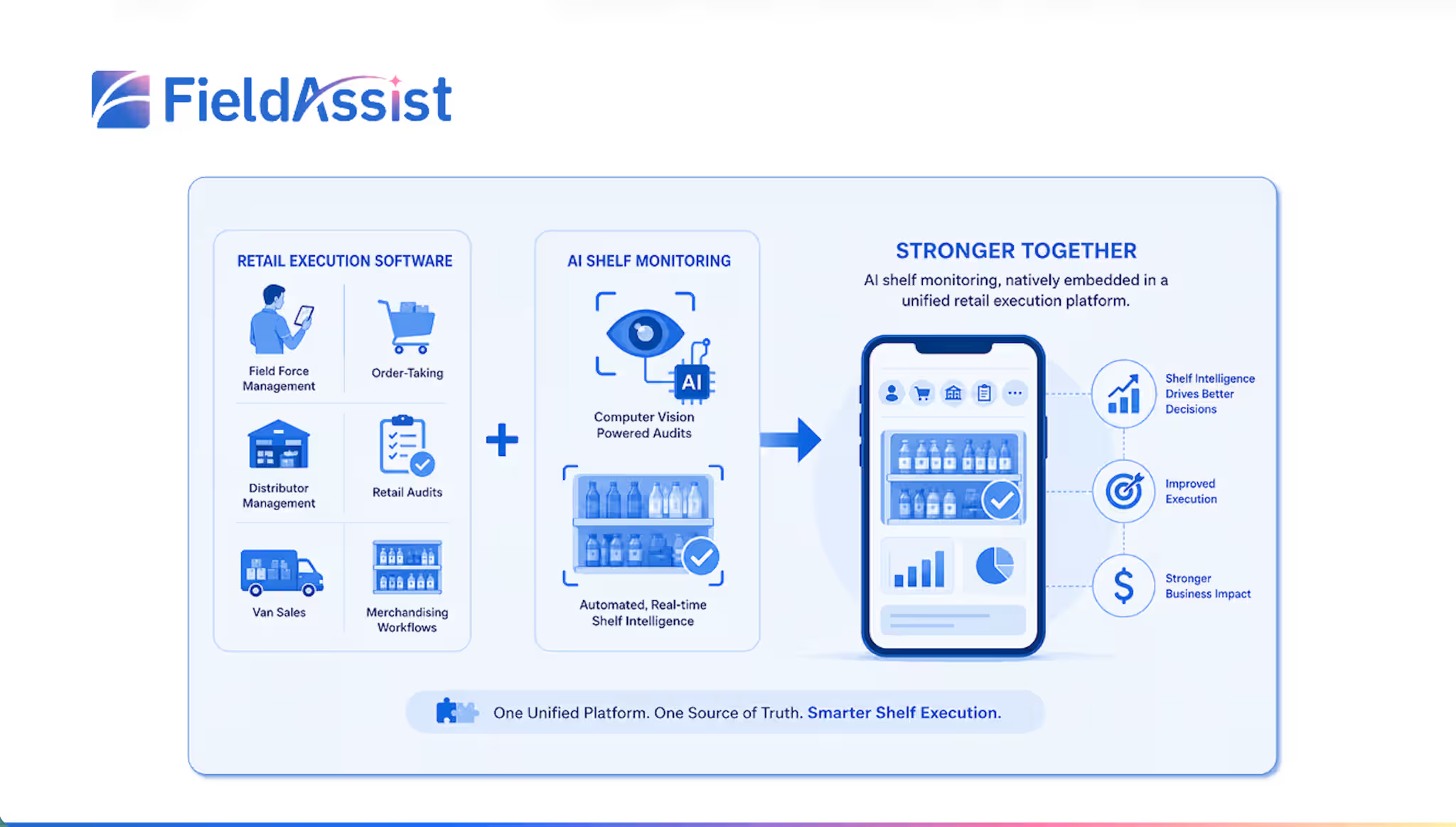
It's worth clarifying a distinction that often gets blurred in vendor conversations. Retail execution software is the broader category, it typically covers field force management, order-taking, distributor management, retail audits, van sales, and merchandising workflows for a CPG brand's go-to-market operations.
AI shelf monitoring is a specific, high-value capability within that broader retail execution stack, the layer that uses computer vision to automate the visual auditing piece that used to depend entirely on human judgment and manual checklists.
The brands winning at the shelf today aren't choosing one or the other. They're deploying a unified retail execution software platform where AI shelf monitoring is natively embedded into the same app their field reps already use for order booking, secondary sales tracking, and distributor management, so shelf intelligence flows directly into commercial decision-making, rather than sitting in a disconnected reporting tool.
What to Look for in the Best Retail Execution Software?
If you're a sales director or CXO evaluating platforms, here's a practical checklist for identifying the best retail execution software for a CPG or FMCG organization operating across complex, high-volume retail networks:
- Accuracy across general trade, not just modern trade: Many platforms are built and tested primarily on organized retail. If a significant share of your business runs through kirana stores, mom-and-pop outlets, or informal trade, insist on proof of accuracy in exactly those conditions.
- Speed of image processing: Field reps won't adopt a tool that makes them wait. Look for platforms delivering near-instant recognition, not overnight batch processing.
- Native integration with field force and DMS: Shelf data is only valuable if it triggers an action, a reorder, a rep task, a distributor alert, inside the same ecosystem your teams already use daily.
- Configurability for local business rule:. Every brand's planogram, OSA targets, and compliance definitions differ by category and geography. The platform should adapt to your rules, not force you into someone else's template.
- Actionable dashboards for leadership, not just raw data for auditors: Sales directors need shelf-level insight rolled up into territory, distributor, and brand-level views they can act on in a weekly review, not a spreadsheet dump.
- Proven deployment at CPG scale: Across multiple markets, languages, and retail formats, evidence that the platform has been battle-tested on the operational complexity that global and regional FMCG brands actually deal with.
How FieldAssist Powers AI Retail Execution for Global CPG Brands?
At FieldAssist, we built our platform around a simple conviction: strategy doesn't fail in the boardroom, it fails in the last mile, on the shelf, in the moment a shopper decides whether your brand is even available to buy. That's the execution gap we exist to close.
Our AI shelf monitoring capability is embedded directly into the same field force app our reps use for order booking, van sales, and distributor management, so when AI flags a stock-out, a planogram deviation, or a pricing error, it doesn't just sit in a report. It triggers a workflow: an alert to the rep on their next visit, a replenishment nudge to the distributor, or a flag to the sales manager reviewing territory performance that week.
We've built this specifically for the operational reality of global CPG go-to-market, including the messy, high-density, general trade environments across India, Southeast Asia, the Middle East, and Africa, where a huge share of FMCG volume actually moves, and where most off-the-shelf shelf monitoring software, built for Western modern trade simply breaks down.
The result is what we consider the real promise of AI retail execution: not just a prettier dashboard, but a measurable, sustained lift in on-shelf availability, share of shelf, and, ultimately, sales your brand has already earned the right to capture.
Frequently Asked Questions
Q.What is the difference between retail execution and shelf execution?
Retail execution is the broader discipline of ensuring a brand's go-to-market plan is delivered correctly across distribution, merchandising, and field operations. Shelf execution is a specific, critical subset of that, focused narrowly on availability, placement, pricing, and promotional compliance at the physical shelf.
Q. How accurate is AI shelf monitoring compared to manual audits?
Because AI-based image recognition applies the same objective rules to every photo, it removes the subjectivity and fatigue-driven errors that creep into manual audits, while also scaling to every store visit rather than a periodic sample.
Q. Does AI retail execution replace field sales reps?
No, it makes them more effective. AI automates the visual auditing and compliance-checking work, freeing reps to spend more time on relationship-building, negotiation, and selling rather than manual paperwork.
Q. Is AI shelf monitoring only useful for large modern trade retailers?
Not at all. In markets like India and Southeast Asia, where general trade and kirana stores still account for the majority of FMCG sales, AI shelf monitoring built specifically for these environments is often where brands see the largest execution gains, since these outlets are the hardest to audit manually at scale.



%20(1).avif)

.avif)