Best Enterprise Sales Automation Software in 2026
Discover the best enterprise sales automation software in 2026. Compare the top SFA platforms for CPG & FMCG brands to improve field sales execution and productivity.

.avif)
Your field team is out there right now, but you have no idea what's actually happening at the shelf. Orders are booked on scraps of memory, retailer schemes get applied inconsistently, and by the time a stockout shows up in your MIS report, you've already lost the sale, and maybe the shelf space too. This is the "last mile" execution gap, and it's the single biggest reason CPG and FMCG brands miss revenue targets they were otherwise on track to hit.
That gap is exactly why enterprise sales automation software has gone from a nice-to-have to a boardroom priority. For sales directors and C-level leaders managing hundreds of distributors and millions of outlets, the question isn't whether to invest in a sales automation platform; it's which one will actually execute at the shelf, not just digitize the paperwork.
What is Enterprise Sales Automation Software?
Sales force automation software (SFA) is a purpose-built system that digitizes and automates the core field sales workflow, beat planning, order booking, retailer visits, scheme application, and performance reporting, for large, multi-geography sales organizations. Unlike a generic CRM built for B2B deal cycles, a true enterprise SFA solution is engineered for high-frequency, high-volume retail execution: thousands of reps, millions of outlets, and daily transactions that need to sync in real time across distributors, warehouses, and head office.
According to industry reports, modern SFA platforms are increasingly AI-enhanced, using machine learning and advanced analytics to optimize contact, pipeline, and opportunity management while giving leadership real-time visibility into field activity. For CPG and FMCG enterprises specifically, the stakes are higher: this isn't just about managing a sales pipeline; it's about ensuring every single outlet, every single day, is served, stocked, and sold.
How Does AI Automate Enterprise Sales?
.avif)
AI sales software has moved well past dashboards and reminders. In 2026, AI inside an enterprise sales automation software stack does three things that manual processes simply can't:
- Predicts before problems happen. AI models forecast SKU-level demand, flag outlets at risk of going out of stock, and recommend the exact order quantity a retailer needs, before the rep even walks in.
- Nudges reps in real time. Instead of a manager discovering a missed beat three weeks later in a report, AI-powered nudges alert both rep and manager the moment execution drifts off plan.
- Compresses decision cycles. Research on generative AI in B2B sales notes that sales and marketing saw the sharpest jump in gen AI adoption of any business function between 2023 and 2024, precisely because the productivity gains were immediate and measurable.
For enterprise CPG brands, this means moving from sales force automation software that simply records what happened to an intelligent platform that actively guides what should happen next. AI-powered image recognition audits shelf compliance, route optimization reduces travel time, and
Top 5 Best Enterprise Sales Automation Software for 2026
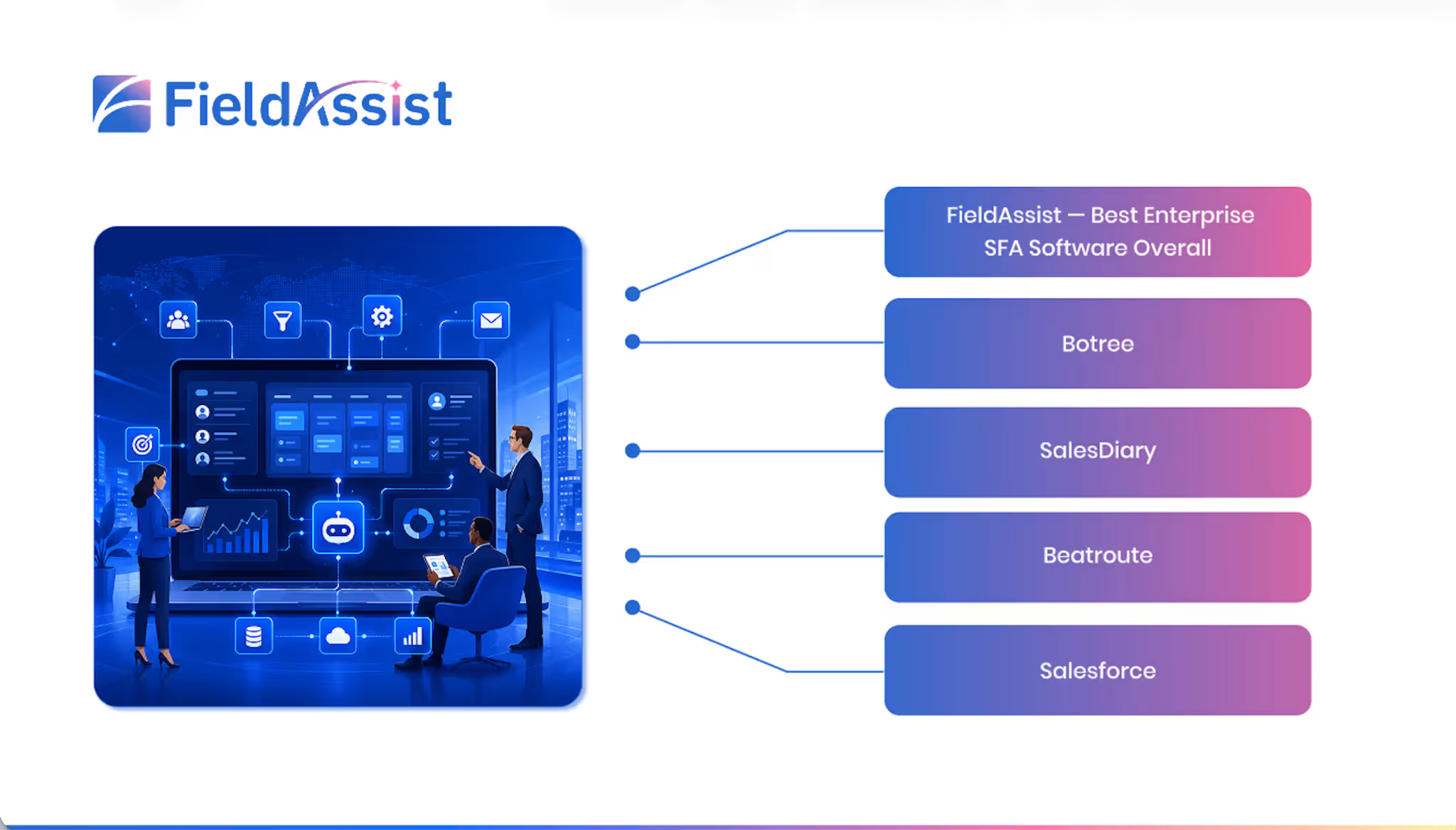
1. FieldAssist- Best Enterprise SFA Software Overall
FieldAssist is purpose-built for CPG and FMCG brands running large, distributed field sales operations across 32+ countries. As an enterprise sales automation software, it covers the full last-mile execution stack, distributor management, retailer ordering (including a Micromarket B2B ordering app), route optimization, merchandising and visibility audits, and AI-powered sales insights, all built offline-first for markets where connectivity can't be assumed.
What sets FieldAssist apart as an enterprise SFA solution is its focus on the "last mile", the point where strategy either becomes shelf presence or doesn't. Brands like Mars Petcare, Fonterra, Britannia, and Pearl Dairy use FieldAssist to run field operations at enterprise scale, with configurable workflows for different markets, languages, and trade structures, backed by a dedicated implementation and support team that understands FMCG go-to-market complexity.
2. Botree
Botree Software is a well-established sales automation platform in the South Asian FMCG market, offering distributor management, van sales, and retail execution modules. It serves mid-market CPG companies with tools built around core field sales workflows in the region.
3. SalesDiary
SalesDiary is an SFA software focused on distributor and retailer digitization for FMCG brands, primarily in emerging markets. It covers order management and reporting functions for field teams operating in these markets.
4. Beatroute
Beatroute offers sales force automation software with a focus on retail execution and distributor management, serving FMCG and consumer durables companies. Its platform supports field force digitization for sales teams across these industries.
5. Salesforce
Salesforce is a widely recognized name in enterprise CRM and general-purpose sales automation, used across industries for pipeline management, forecasting, and account management. It offers a horizontal, highly customizable platform that companies across sectors, including CPG and FMCG, adapt to their specific sales processes.
What software improves field sales productivity?
Field sales productivity improves most when reps spend less time on admin and travel, and more time in front of retailers and distributors. This is where a well-implemented sales automation platform pays for itself.
The mechanics are straightforward: automated order booking eliminates manual data entry, AI-optimized beat plans cut unproductive travel, real-time dashboards remove the need for reps to compile reports at day-end, and mobile-first tools let sales teams close visits and log data on-site, even without internet access.
McKinsey research shows that CPG and retail companies deploying AI and digital tools across their operations have improved demand forecast accuracy by 13%, cut product shortages by 40%, and reduced inventory levels by 35% in comprehensive implementations. Enterprise sales automation software is the operational layer that makes gains like these possible at scale.
Core Capabilities of FieldAssist's Sales Force Automation Software
To see how specialized functionality translates directly into bottom-line performance, here is a breakdown of the core modules within FieldAssist's comprehensive enterprise SFA solution:
How to Choose the Right Enterprise SFA Solution?
Selecting a long-term enterprise SFA solution requires evaluating core technical operational requirements. Avoid generic feature checklists and focus heavily on these three foundational performance pillars:
1. Scalability Across Geographies and Teams
An enterprise sales automation software platform must effortlessly handle vast operational scale. It needs to support thousands of field reps uploading photos, placing orders, and syncing location data simultaneously without experiencing lag or system downtime. The platform's back-end must scale smoothly to accommodate multi-country distribution tiers, complex localization demands, fluctuating tax structures, and diverse currency needs.
2. Integration with Existing CRM/ERP Stack
Your chosen sales force automation software should never operate as an isolated data silo. To maximize value, it must integrate deeply and reliably with your existing corporate technology stack, including ERP systems like SAP, Microsoft Dynamics, or Oracle, as well as downstream data warehouses.
3. Offline-First Mobile Capability
The reality of field sales execution is that connectivity is unreliable. If a mobile app fails or locks up inside a concrete wholesale market or rural retail zone, field productivity stops. The right enterprise SFA software must be engineered with an offline-first architecture. Reps must be able to view routes, access historic store logs, and log complex orders entirely offline, with the system handling data syncing silently in the background once a network connection is re-established.
Frequently Asked Questions
1. What is the best sales automation software for enterprises?
The best sales automation software for enterprises in the CPG and FMCG sectors is a dedicated platform like FieldAssist. While general-purpose CRMs work well for long, desk-based B2B sales cycles, fast-moving consumer brands require a specialized sales force automation software designed for high-volume retail distribution. The ideal enterprise SFA solution must provide out-of-the-box features like automated secondary sales tracking, AI-driven predictive order suggestions, and reliable offline-first mobile apps for field agents.
2. What is the difference between SFA software and CRM?
While both platforms track corporate sales activities, they serve different operational roles:
CRM (Customer Relationship Management): Designed around linear pipelines, lead tracking, email communication, and long-term customer accounts. It serves as an excellent system of record for corporate desk-based sales teams.
SFA (Sales Force Automation) Software: Purpose-built for high-volume field operations and complex route-to-market execution. It tracks rapid-fire retail orders, secondary distribution networks, van stock management, and shelf-level planogram compliance in real time.
3. Can SFA software function without an internet connection?
Yes. Modern SFA software with offline-first capabilities allows field sales teams to capture orders, record customer visits, update inventory, and log activities even without internet access. Once connectivity is restored, the data automatically syncs with the central system, ensuring uninterrupted field operations and accurate reporting.
4. Does an enterprise SFA solution provide secondary sales data visibility?
A dedicated enterprise SFA solution bridges the data gap between the manufacturer and the retail shelf by integrating directly with independent distributor management systems (DMS). Instead of waiting for delayed, manual weekly spreadsheets, the platform automatically aggregates daily stock levels, secondary sales invoices, and order fulfillment rates. This real-time data flow gives enterprise leadership instant visibility to adjust production lines and prevent stockouts before they hit the retail floor.
Conclusion
The difference between a winning market strategy and a losing one comes down to execution at the individual retail shelf. Investing in a specialized sales automation platform is no longer just about upgrading software; it is about permanently closing the execution gap between boardroom planning and retail reality.
As enterprise brands face tighter margins and shifting retail landscapes, deploying a generic CRM is no longer enough to win the market. Brands require a highly scalable, offline-ready enterprise SFA solution that transforms field data into immediate commercial advantages. By equipping your field organization with advanced tools like predictive ordering, intelligent routing, and automated shelf insights, you ensure that your retail execution remains fast, predictable, and profitable.



%20(1).avif)