What is Direct Store Delivery? And How Van Sales Improve DSD Profitability
Discover what Direct Store Delivery (DSD) is and how modern, AI-powered van sales automation helps CPG brands maximize profitability and retail execution.

The battle for market share isn't won in the boardroom; it is won at the retail shelf. Yet, relying on traditional, centralized supply chains often means relinquishing control over that critical last mile. Every additional warehouse touchpoint introduces delivery delays, increases handling costs, and creates blind spots in retail execution.
Enter the strategic mandate of the modern C-suite: reclaiming the point of sale.
What is Direct Store Delivery (DSD)?
At its core, Direct Store Delivery (DSD) is a distribution model in which manufacturers and suppliers deliver products directly to retail outlets, bypassing centralized distribution centers and third-party wholesale networks.
Historically reserved for highly perishable goods like bakery items and beverages, Direct Store Delivery (DSD) has evolved into a high-stakes competitive advantage across the broader consumer packaged goods landscape. Powered by AI and van sales software, a single delivery van can hit 40 to 60 small retail outlets (mom-and-Pop / kirana/corner stores) in a tight, 5-mile geographic radius in one day. For many brands operating in rural and hard-to-reach areas, direct store delivery is one of the easiest ways to artificially increase the drop size through algorithmic trade schemes applied at the point of sale.
The C-Suite Pivot: From Logistics to Revenue Engine
For CEOs, COOs, and CFOs, modern DSD is no longer viewed simply as a tactical logistics operation. It is a vital lever for margin protection and top-line growth. By eliminating the warehouse middleman, brands accelerate their "time-to-shelf," ensure strict planogram compliance, and dramatically reduce the stockouts that drive consumers to competitor products.
However, the true profitability of the DSD model hinges entirely on its operational heartbeat: Van Sales. Transitioning from analog, paper-based delivery routes to AI-powered, automated van sales transforms the standard delivery truck from a simple transport vehicle into a highly efficient, mobile warehouse and a localized revenue engine.
The Strategic Shift: Why the C-Suite is Rethinking Direct Store Delivery (DSD)
The traditional supply chain model—shipping bulk inventory to regional distribution centers, waiting for retailer warehouses to process it, and eventually moving it to the store—was built for predictability. Today's retail environment is anything but predictable.
For the C-suite, this legacy approach has become a liability. Here is why the executive mindset is shifting aggressively toward DSD:
1. Margin Erosion in Traditional Supply Chains
Every time a product changes hands, it adds cost, time, and the risk of damage. Traditional distribution models are fraught with hidden margin leaks: warehousing fees, manual stock reconciliation, spoilage of perishables, and prolonged cash conversion cycles. DSD eliminates the intermediary, stripping out unnecessary touchpoints and dramatically reducing total operational costs.
2. The Battle for Shelf Space
A brand's market share is only as strong as its shelf availability. When a high-velocity product stocks out, consumers rarely wait—they switch to a competitor. DSD empowers brands to own the point of sale. Because supplier representatives (via van sales) are physically in the store managing the inventory, brands can guarantee planogram compliance, execute localized promotions perfectly, and replenish high-demand items before a stockout occurs.
3. Speed-to-Market as a Competitive Advantage
In an era of viral trends and hyper-localized consumer demand, reducing the "time-to-shelf" is the ultimate competitive advantage. While centralized distribution can take a week to move a new SKU from a warehouse to a retail shelf, a robust DSD network can execute a regional product launch or restock a surge-demand item in 24 to 48 hours.
Future of DSD: What Supply Chain Leaders are Prioritizing?
As executives modernize their route-to-market, the focus has shifted from simply buying trucks to investing in digital infrastructure. Here is what the C-suite is prioritizing to future-proof their DSD operations:
The Role of "Van Sales" in the DSD Ecosystem
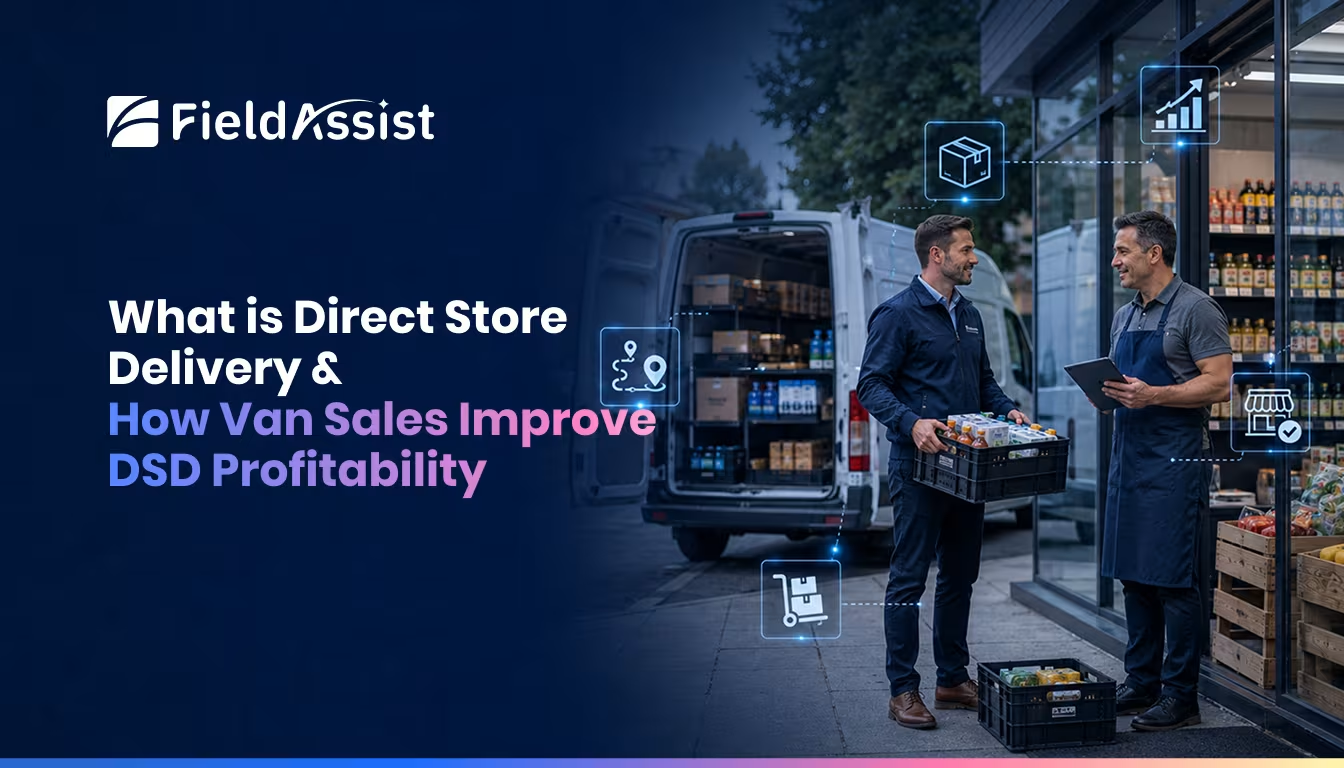
In the van sales model, the representative serves a powerful dual role: they are both the delivery driver and the brand's territory manager. They carry the physical inventory, assess the retailer's immediate needs, pitch new SKUs, generate the invoice, deliver the goods, and collect payment—all in a single, fluid interaction at the store level.
When equipped with modern Van Sales Automation software, the delivery fleet transforms into an agile, localized revenue engine capable of solving the five biggest pain points of fragmented distribution:
1. Penetrating Low-Connectivity Territories (Offline-First Execution)
- The Pain Point: In rural or densely congested areas, network blackouts halt digital billing, forcing reps back to paper ledgers and delaying operations.
- The Software Solution: Modern van sales applications are built "offline-first." Reps can access historical customer data, generate GST-compliant invoices, and apply trade promotions without an internet connection. The data instantly syncs with the central ERP the moment a connection is restored, ensuring zero downtime in retail execution.
2. Slashing the "Cost-to-Serve" with Predictive Routing
- The Pain Point: Sending fully loaded vans into dispersed territories using static, manual beat plans results in massive fuel waste, high vehicle wear-and-tear, and reps spending more time driving than selling.
- The Software Solution: AI-driven route optimization analyzes traffic, outlet density, and historical order volumes to create dynamic daily beat plans. This guarantees the van is routed to the highest-yielding outlets first, dramatically lowering the operational cost per delivery while maximizing daily coverage.
3. Accelerating Cash Flow & Securing Collections
- The Pain Point: Fragmented markets are heavily reliant on credit. Manual cash collection is prone to errors, theft, and agonizingly slow reconciliation, leading to dangerously high Days Sales Outstanding (DSO).
- The Software Solution: Automated van sales digitize the transaction at the point of sale. Reps can accept digital payments, capture secure OTP verifications for cash drops, and instantly sync the transaction with corporate finance ledgers. This transparency speeds up the cash conversion cycle and eliminates outstanding dispute delays.
4. Plugging Inventory Shrinkage and Spoilage
- The Pain Point: When vans act as blind "mobile warehouses," companies suffer massive margin leaks through pilferage, undocumented damages, and expired perishables.
- The Software Solution: System-driven SKU matching and live van inventory tracking hold the route rep accountable for every unit. Features like batch-number and expiry-date tracking ensure older stock is offloaded first, drastically reducing write-offs for perishable FMCG goods.
5. Hyper-Localizing Trade Schemes in Real-Time
- The Pain Point: In highly competitive local markets, offering the right discount at the right time secures the shelf space. Manual execution means reps often forget to apply promotional schemes, or miscalculate them, leading to retailer distrust.
- The Software Solution: The software auto-applies eligible trade schemes, volume discounts, and loyalty rewards directly on the rep's mobile device. This not only builds immense trust with the local retailer but naturally nudges them toward higher-volume purchases (increasing average drop size).
How Automated Van Sales Improve DSD Profitability?
Conclusion:
Direct Store Delivery is no longer just a supply chain option for handling perishables; it is a definitive corporate strategy for protecting margins and winning market share at the retail shelf. When executing in fragmented or hard-to-reach territories, a blind delivery fleet becomes an expensive operational bottleneck. Conversely, a digitized, automated van sales network transforms into an agile, highly resilient revenue driver.



.avif)