Doing More with Less: Unified Route Planning in High-Density SEA Markets
Discover how FMCG leaders use Unified Route Planning to maximize field force ROI, tame distribution chaos, and win in high-density SEA markets.

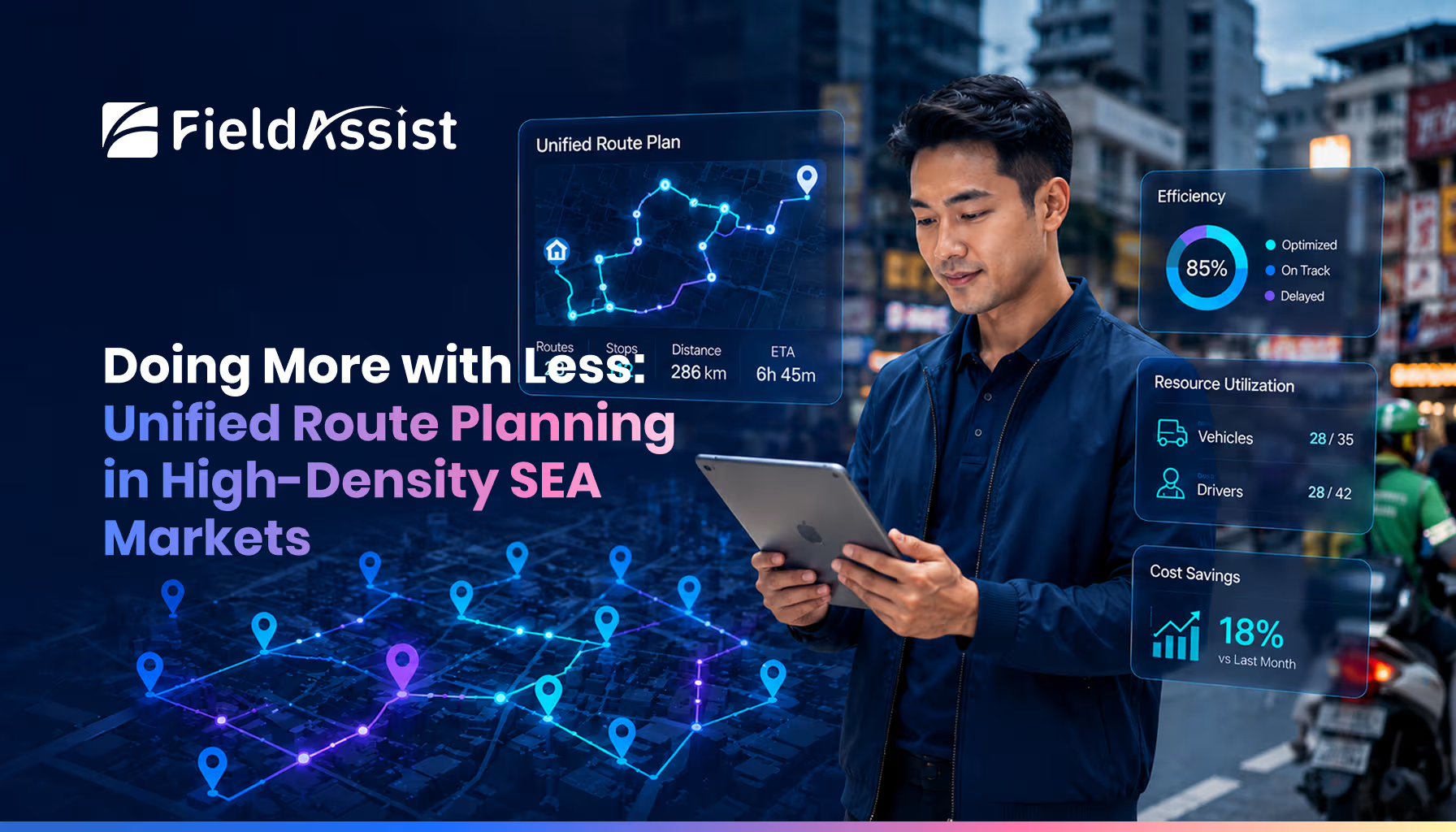
Have you ever stopped to calculate how much money your business loses every day just sitting in traffic in Jakarta, Manila, or Bangkok?
We all know General Trade is everything in Southeast Asia. But the old way of winning this market-just hiring more and more field reps to cover the chaos-isn't working anymore. The math just doesn't add up.
Right now, a massive shift is happening right under our noses.
Most brands are still doing things the hard way. They hand their reps static, fixed route plans and cross their fingers. The result? Their best salespeople end up stuck in a three-hour traffic jam just to visit a tiny shop that barely brings in revenue. It’s frustrating for the reps, and it’s a massive leak in your operational budget.
But your sharpest competitors? They’ve stopped playing that game.
They aren't hiring huge new teams. Instead, they are quietly stealing market share by making their existing teams incredibly efficient. They aren't just cutting travel costs; they are using smart technology to figure out exactly which shops to visit and when.
This isn't just about giving your sales team a slightly better map on their phones. It’s a completely different way of doing business. It’s the difference between hoping your reps hit their daily targets and mathematically guaranteeing they are standing in your most profitable stores at the exact right moment.
If your sales data and your route planning aren't talking to each other in real-time, you aren't just losing hours in the day. You’re actively handing over revenue to the competitors who have figured it out.
It’s time to talk about Unified Route Planning.
Why Static Route Planning is Failing SEA Brands?
For decades, the Permanent Journey Plan (PJP) has been the bible for FMCG field teams. Managers would draw up a monthly route, hand it to the reps, and expect them to stick to it. But in the fast-paced, ever-changing markets of Southeast Asia, managing your field force like this is a recipe for burnout and wasted money.
Here is why the old way is breaking down:
1. The Trap of the Rigid PJP
Cities in SEA are dynamic. A route that looked perfectly efficient on a spreadsheet a month ago is useless today when faced with unpredictable traffic, road closures, or shifting market realities. When reps are forced to blindly follow a static plan, they end up crisscrossing the same congested areas, racking up fuel costs, and exhausting themselves before they even walk into a store.
2. The Great Data Disconnect:
The biggest flaw in traditional routing is that it’s completely disconnected from your actual sales data.
Imagine this: Your Sales Force Automation (SFA) system knows that a massive, high-volume retailer just two kilometers away is completely out of stock on your fastest-moving product. But your static route plan tells the rep to go visit three tiny, low-performing shops first—just because they happen to be next on the list.
When your routing software doesn't talk to your sales data, your reps are just visiting stores to tick a box. They aren't making strategic, revenue-driving visits.
3. The Metric That Matters: Driving vs. Selling
This all boils down to one critical C-suite metric: Idle Travel Time vs. Active Selling Time.
Every minute your rep spends navigating traffic or standing in an unprofitable outlet is a minute they aren't pitching new product lines, building relationships, or taking high-value orders. Static route planning maximizes idle time.
To win in high-density markets, you have to flip that script. You need a system that ensures your reps are spending the vast majority of their day actually selling. The shift in these core metrics is where you find your hidden ROI:
The Core Pillars of Unified Route Planning
The Unified Route Planning system isn't just about tweaking your mapping software; it’s about building an intelligent, interconnected ecosystem. It takes the guessing out of field operations by merging geographical data with real-time sales intelligence.
For a system to be truly "unified," it must stand on three core pillars:
1. AI-Driven Workload Balancing
In high-density cities, distance is a deceptive metric. Two kilometers in downtown Manila or Jakarta can take longer to navigate than ten kilometers in a rural area.
Instead of drawing generic circles on a map, an intelligent system calculates routes based on actual effort. It factors in localized traffic patterns, the complexity of the specific stores (e.g., a hypermarket vs. a small corner shop), and historical visit durations. The system then automatically balances the workload across your team, ensuring no single rep is overloaded while another finishes early.
2. Prioritizing the "High-Selling Outlet"
Not all stores are created equal. A unified system integrates directly with your Sales Force Automation (SFA) and Distributor Management System (DMS) data to rank outlets by their commercial value.
Rather than sending a rep to a store just because it's geographically next in line, the algorithm dynamically ranks the route based on data hooks:
- Which stores have the highest historical order volumes?
- Where is an out-of-stock crisis brewing?
- Which accounts are due for an upsell or a premium product launch?
The system ensures your reps hit your most profitable, highest-priority stores first. If time runs short due to unexpected delays, it’s the low-priority, low-margin outlets that get pushed to tomorrow—not your primary revenue generators.
3. Dynamic Execution & Rerouting
A plan is only good until your rep hits the morning rush hour. A unified platform operates in real-time. If a rep gets stuck at a major outlet, or if sudden flooding gridlocks a neighborhood, the system doesn't break down.
It recalibrates on the fly, pushing updated stop sequences directly to the rep's mobile app. Concurrently, sales managers receive instant deviation alerts if a rep drifts significantly off-track, giving leadership complete visibility without micromanaging.
Here is how these three pillars transform daily operations for your team:
The Financial Impact: Measuring the ROI
Every new technology investment eventually faces the same question: How does this protect our margins and drive revenue?
When it comes to Unified Route Planning software, the financial impact isn't a vague promise of "digital transformation." It is a measurable, hard-dollar return that shows up on the P&L within the first few quarters. By treating your route planning as a strategic asset rather than a back-office chore, you flip field operations from a massive cost center into a profit multiplier.
Here is how the ROI breaks down:
1. Slicing Through Operational Expense (OpEx)
When reps follow poorly designed, static routes, your company is essentially paying for them to sit in traffic. By eliminating backtracking, optimizing for the shortest viable path, and avoiding known congestion zones, unified systems immediately cut down on fuel allowances and travel reimbursements. More importantly, it reduces costly wear and tear on your human capital—leading to lower turnover rates in your field teams.
2. Increasing Market Penetration (Without Headcount)
Growth in SEA usually meant hiring an army of new reps to cover new territories. Unified Route Planning breaks that expensive cycle. By organizing beats efficiently and eliminating unnecessary trips to low-yielding stores, your existing reps can visit 15% to 20% more high-priority outlets each week. You are expanding your market footprint and capturing more shelf space without adding a single salary to your payroll.
3. The Ultimate ROI: Time Spent Selling
This is the metric that should make every Chief Revenue Officer (CRO) sit up and pay attention. If a rep spends five hours driving and three hours selling, you are losing money. By automating the planning and optimizing the travel, Unified Route Planning flips that ratio.
When you shift an average rep from spending 30% of their day selling to 65% of their day selling, you haven't just saved time—you have effectively doubled the size of your sales force.
Here is a quick snapshot of the financial outcomes you should expect:
It is time to stop treating route planning as an isolated mapping exercise. To truly win in the complex, high-density markets of Southeast Asia, your routing strategy cannot exist in a vacuum. It must be natively integrated with your Sales Force Automation (SFA) and Distribution Management System (DMS).
When these systems operate as a single, unified ecosystem, intelligence flows seamlessly. Market data dictates the route, and the route dictates the revenue. You stop paying your reps to navigate chaos and start empowering them to dominate their territories.
If your field force is still battling traffic with outdated, static journey plans, you aren't just losing time—you are actively bleeding margin. The technology to fix it is already here. It’s time to rethink your distribution strategy, evaluate your current field metrics, and discover how FieldAssist’s Route Optimization Software can help your operations do more with less, turning every beat into a profitable journey.





%20(1).avif)
.avif)