What Is Secondary Sales Tracking Software? A Complete Guide for FMCG Businesses
Learn how secondary sales software helps FMCG companies track distributor performance, monitor retailer sales, manage stock, and improve distribution efficiency.

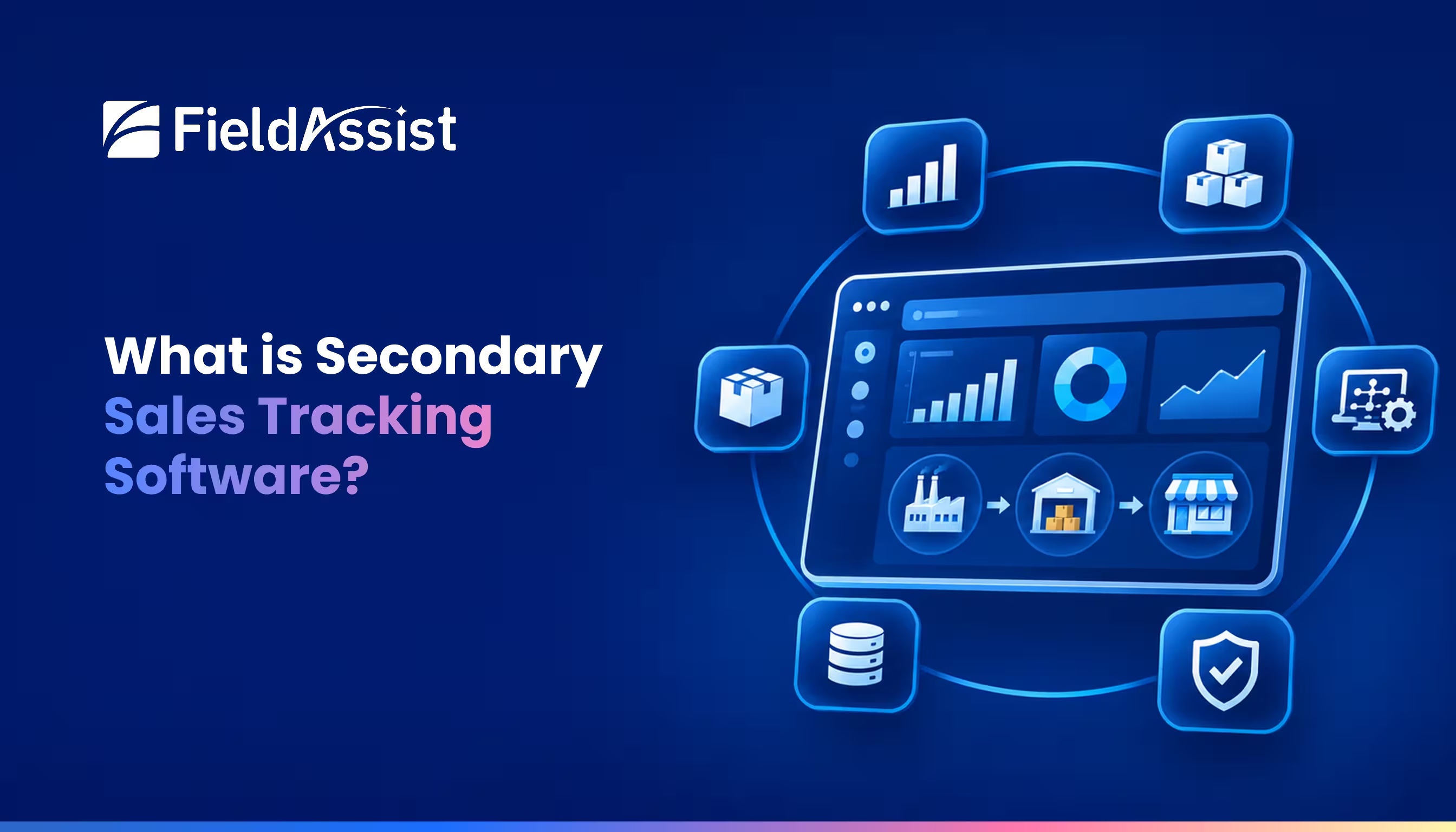
Primary billing shows what left the warehouse. What actually moved from distributors to retailers is the number that decides growth, and that is where the last-mile execution gap lives. Choosing the right secondary sales tracking software is how FMCG teams close it. This guide covers what it is, why it matters, which features count, and how FieldAssist approaches the job.
What is secondary sales tracking software?
Secondary sales tracking software is a specialized digital platform designed to capture, monitor, and analyze the flow of goods from distributors or wholesalers to retail outlets. Instead of a month-end spreadsheet roll-up, secondary sales tracking software brings orders, invoices, returns, and closing stock into one live record, linking your field force to your distributor books. Modern secondary sales software also validates schemes and claims against actual sell-through.
Understanding secondary sales in retail?
To optimize distribution, FMCG leaders must distinguish between primary and secondary sales in retail:
Primary Sales: Goods billed and dispatched from the manufacturer’s factory or warehouse to a distributor or super-stockist.
Secondary Sales: Goods sold and delivered by the distributor to neighborhood kirana stores, supermarkets, and retail outlets.
Understanding secondary sales in retail is critical because high primary sales can mask stagnant market demand, a phenomenon known as channel stuffing.
Why is secondary sales tracking software important?
Tracking secondary sales pays back in six places.
- Real-time visibility into distributor and retailer sales
Month-end reports explain what went wrong weeks ago. Live outlet-level data on secondary sales in retail exposes a lapsing beat or an under-billing distributor while you can still fix it.
- Better inventory management and stock availability
Overstocking leads to expiry write-offs, while understocking hands shelf space to competitors. Automated tracking of secondary sales software balances distributor closing stock against active retail demand, preventing out-of-stock (OOS) scenarios on high-velocity SKUs.
- Improved sales forecasting and demand planning
Forecasts built on primary billing inherit every distributor's stocking habits. Gartner predicts that 70% of large organizations will adopt AI-based forecasting by 2030, and those models need clean, outlet-level data to learn from.
- Greater control over distributor performance
Brands can benchmark distributors objectively on fill rates, on-time deliveries, outlet coverage, and credit utilization, ensuring channel partners actively service their assigned territories.
- Reduced sales leakage and reporting errors
Manual entries, duplicate invoices and delayed claims quietly erode margin. The top secondary sales tracking software replaces them with one system of record.
- Better decision-making through sales analytics
In a 2026 analysis with NIQ, Bain & Company found that winning US brands grew velocity about 7% a year and distribution 1.5 points a year, while peers leaned on price. Both signals show up first in secondary sales in retail data, not primary billing.
Key features of secondary sales tracking software
Whichever top secondary sales tracking software you shortlist, check that it covers these eight capabilities.
1. Real-time secondary sales monitoring and reporting
Orders, invoices and returns flow in as they happen, with views by territory, distributor, beat and salesperson.
2. Distributor stock and inventory management
Opening, closing and in-transit stock per distributor, with aging and near-expiry alerts that surface slow movers early.
3. Retailer-wise and SKU-wise sales tracking
Drill from region to outlet to SKU to see which retailers are lapsing and which products are losing shelf pull.
4. Sales order management and order fulfillment tracking
Follow an order from the retailer's request to dispatch and delivery, including partial fills and cancellations.
5. Beat planning and field sales tracking
Route-based beats, visit compliance, and GPS-verified calls connect field effort to sell-through.
6. Trade scheme and claims management
Configure schemes once, apply them at invoice level, and validate distributor claims against actual sales.
7. Sales analytics and performance dashboards
Role-based views for the area manager, the regional head, and the CXO, without waiting for a monthly deck.
8. ERP, DMS, and SFA integrations
Secondary sales software that cannot talk to your ERP, DMS, and SFA only adds another silo.
Why FieldAssist is the best secondary sales tracking software?
When comparing the top secondary sales tracking software, the real test is whether field and distributor data connect. Here is how FieldAssist answers it.
Ready to see FieldAssist in Action
See how FieldAssist closes the last-mile execution gap, from the beat to the distributor ledger. Book a demo, watch our secondary sales software work on your own distributor data, and judge whether it is the best secondary sales tracking software for your network.
Frequently Asked Questions (FAQs)
1. What is the difference between secondary sales and sell-out data?
Sell-out is the retailer-to-shopper sale, usually from POS. Tracking of secondary sales software captures the distributor-to-retailer leg instead, which is closer to what a brand can influence.
2. How can FMCG companies improve secondary sales performance?
Brands can boost secondary sales by deploying top secondary sales tracking software, optimizing field rep beat plans, automating trade schemes, and aligning distributor inventory with outlet-level demand.
3. Who is responsible for tracking secondary sales in FMCG?
Sales operations usually owns the data, area managers act on it, and distributor teams reconcile it. Shared secondary sales software keeps all three on one number.
4. How often should secondary sales data be updated?
Daily at minimum. The best secondary sales tracking software syncs as invoices are raised, so stock and order decisions never rest on last month's numbers.
5. What challenges do FMCG companies face in secondary sales management?
Manual distributor reporting, delayed claims, poor stock visibility, scheme leakage, and disconnected ERP, DMS, and SFA data. The top secondary sales tracking software resolves these in one workflow.