Gamification for FMCG Sales: Turning Targets into Achievements
Transform field activities into measurable achievements with sales gamification. Learn how incentives and real-time tracking improve execution.

.avif)
The fast-moving consumer goods (FMCG) sector operates on wafer-thin timelines, aggressive distribution metrics, and relentless volume. For sales leaders, managing a distributed fleet of field representatives is a constant battle against operational friction. Traditional incentive models, often compiled manually on static spreadsheets at the end of the month, fail to move the needle in real time.
To bridge this execution gap, forward-thinking consumer packaged goods (CPG) brands are moving away from stale carrot-and-stick models. Instead, they are turning to sophisticated sales gamification software. This strategic shift does not mean adding trivial distractions to an enterprise application. True gamification for sales teams means embedding psychological triggers, behavioral mechanics, and transparent data structures directly into daily field operations. By converting abstract corporate targets into immediate, bite-sized field milestones, brands can drive sustainable behavioral change at the retail shelf.
The High-Volume, High-Friction Reality of FMCG Field Sales
Field sales in the FMCG and CPG industries are uniquely grueling. A typical field representative starts their day with an ambitious Beat Plan (or permanent journey plan), an overwhelming order book, and a mandate to visit 30 to 40 distinct retail outlets. At every single touchpoint, they encounter real-world friction: uncooperative store owners, stockouts, aggressive competitor trade promotions, and the sheer fatigue of repetitive execution.
When performance data sits siloed within legacy infrastructure, field reps operate in an informational vacuum. They have no immediate visibility into how today’s order volumes impact their monthly commissions or quarterly performance tiers. Lack of transparency leads directly to disengagement, high frontline turnover, and execution drop-off.
As per industry reports, the global gamification market size was valued at USD 36.86 billion in 2025. The market is projected to grow from USD 46.69 billion in 2026 to USD 308.85 billion by 2034, driven by an urgent organizational need to boost workplace productivity and frontline commitment. In high-velocity retail environments, enterprise software cannot simply be a passive system of record. It must actively drive execution.
CPG brands that rely on traditional field force management software without motivational design find themselves losing the battle for secondary placement, shelf visibility, and active dealer mindshare.
Demystifying Field Sales Gamification: More Than Just a Leaderboard
A common misconception among sales leaders is that gamification is merely a glorified leaderboard showing who sold the most cases this week. In a complex distribution ecosystem, basic leaderboards can backfire. If the top 5% of veteran reps permanently dominate the top spots, the remaining 95% of the sales force becomes demoralized, leading to lower motivation and higher disengagement.
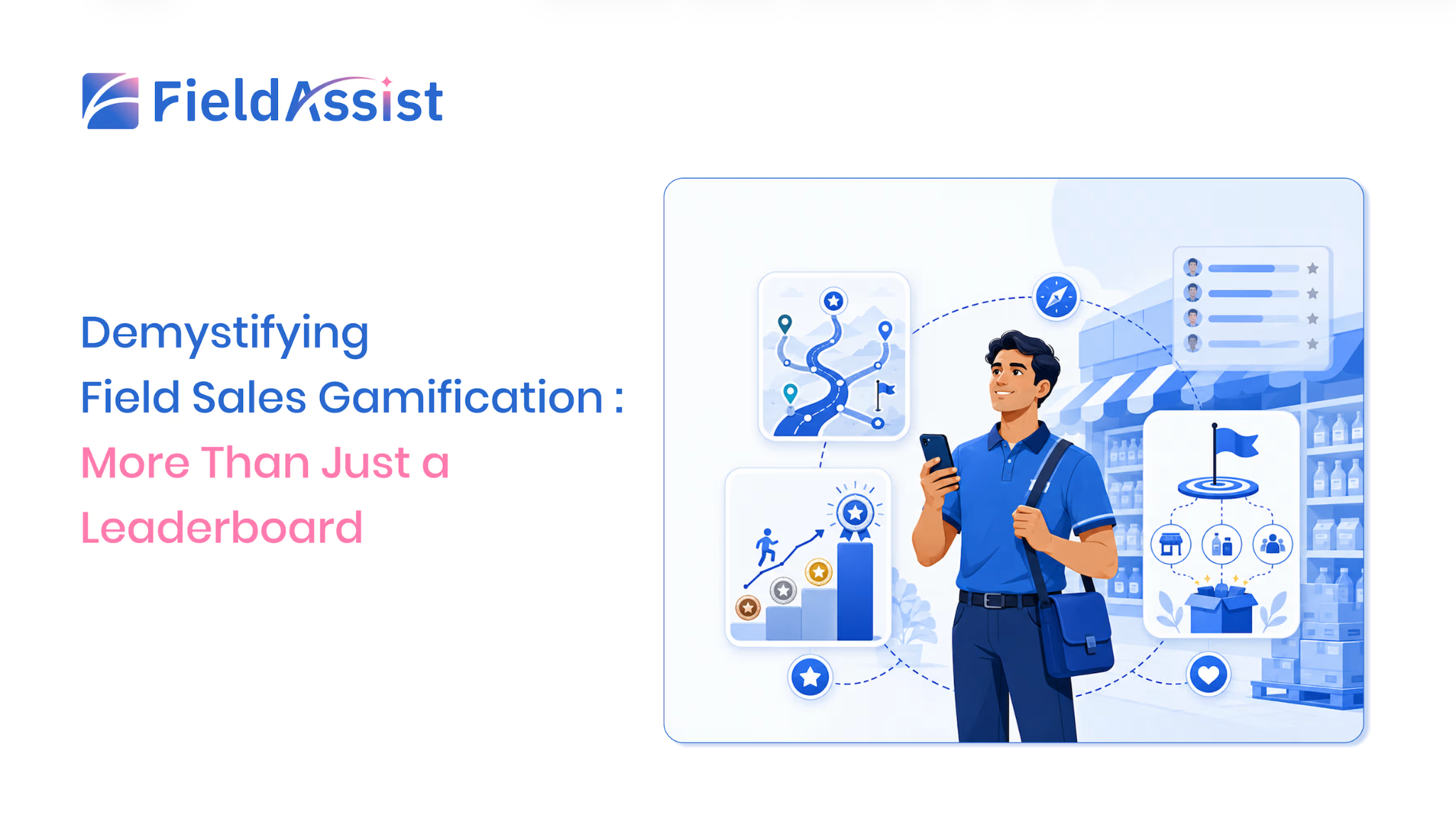
Effective sales gamification software goes far beyond public rankings. It builds an immersive framework based on clear intrinsic and extrinsic psychological motivators:
- Autonomy: Giving field representatives clear paths to choose how they hit their daily milestones.
- Mastery: Breaking down long-term career progression into achievable micro-credentials and skill badges.
- Purpose: Connecting baseline compliance tasks directly to visible rewards and strategic brand initiatives.
Modern retail gamification shifts the competitive focus from rep vs. rep to rep vs. their own past performance. By utilizing automated leveling systems, dynamic goal-pacing, and customized peer cohorts, field forces stay continuously engaged. Academic research published in the Journal of Personal Selling & Sales Management demonstrates that structured gamification mechanics in sales training and performance management significantly increase frontline motivation and improve declarative sales knowledge by an average of 16.0%- rising to 18.8% for highly experienced professionals. When game elements are woven directly into field workflows, raw data is transformed into a continuous engine for operational excellence.
Balancing Act: Tracking Output KPIs vs. Input KBIs
The ultimate goal of any field sales automation rollout is to drive revenue growth. However, exclusively tracking output Key Performance Indicators (KPIs), such as total revenue booked or total cases shipped, is a lagging strategy. By the time a sales manager notices a rep missed their monthly revenue target, it is already too late to fix the root cause.
Sustainable sales success relies on Key Behavioral Indicators (KBIs), the specific inputs that directly drive revenue outputs. Gamification for sales teams provides a unique mechanism to incentivize these critical input behaviors before revenue slumps occur.
An enterprise-grade sales gamification software platform allows commercial teams to assign points, levels, and badges to these vital input KBIs. When a field agent realizes that executing a flawless visual merchandising audit or maintaining perfect route compliance earns them immediate points toward their weekly incentive payout, they naturally prioritize the behaviors that lead to long-term market share growth.
A 5-Step Playbook to Gamify Your FMCG Sales Process
Implementing a successful gamified strategy requires a balance of behavioral psychology, clear data models, and native field force management software integration. CPG brands can use this five-step operational playbook to turn high-level corporate targets into everyday achievements.
- Step 1: Cascade Corporate Targets to Individual Field Reps
An annual corporate mandate to grow numeric distribution by 12% across an entire territory means very little to an individual field representative working a rural beat. The first step is translating large-scale organizational objectives into localized, daily targets inside the rep's mobile application. The software automatically recalculates macro targets into manageable daily goals, such as "onboard 2 new retail outlets today" or "sell 4 focus SKUs on this specific route".
- Step 2: Weight Your Points Based on Strategic Priority
Not all field actions carry equal commercial weight. If booking a standard order of high-velocity, low-margin products awards the same points as securing a premium display for a high-margin product launch, reps will take the path of least resistance. Sales leaders must intentionally weigh points based on current strategic priorities:
[Standard Order Booking = 10 pts]
└── [Adding New Range/SKU = 25 pts]
└── [Perfect Store Execution Visual Verification = 50 pts]
This clear point structure ensures that field behaviors instantly realign whenever corporate strategies shift.
- Step 3: Enable Real-Time Tracking and Live Leaderboards
Delayed recognition kills motivation. If a field agent completes a difficult upsell at 9:00 AM, they should see their progress update on their live dashboard by 9:01 AM. Real-time feedback loops create positive behavioral reinforcement. Field teams can easily track their daily point accumulation, see how close they are to unlocking the next reward tier, and view contextual peer comparisons that stimulate healthy, productive competition.
- Step 4: Deploy Dynamic and Engaging Reward Structures
Predictable rewards quickly lose their psychological appeal. To maintain long-term engagement, brands should deploy varied reward structures within their retail gamification framework:
- Milestone Rewards: Guaranteed payouts when a rep reaches a specific performance tier (e.g., maintaining a 95% attendance rate for a full month).
- Surprise Streaks: Bonus points awarded for consecutive days of perfect route compliance or consistent range-selling execution.
- Team-Based Challenges: Aggregating individual points into regional branch totals to foster collaborative accountability across distributor territories.
- Step 5: Leverage Gamification Data to Spot and Fix Skill Gaps
Gamification is not just a tool for motivation; it is an invaluable diagnostic engine. If an analytics dashboard reveals that a specific territory is lagging in point accumulation for new SKU placement, managers can instantly pinpoint the issue. Instead of issuing generic warnings about missed sales targets, field managers can deliver targeted coaching on specific behavioral mechanics, closing skill gaps before they impact the bottom line.
How FieldAssist Turns Gamification Theory into Field Reality?
To bridge the "last mile" gap permanently, enterprise consumer brands require a robust platform designed specifically for high-velocity retail environments. This is where FieldAssist’s specialized Route-to-Market platform transforms theoretical psychological triggers into automated daily workflows. FieldAssist builds motivational mechanics directly into the frontline operational loop through two core engines:
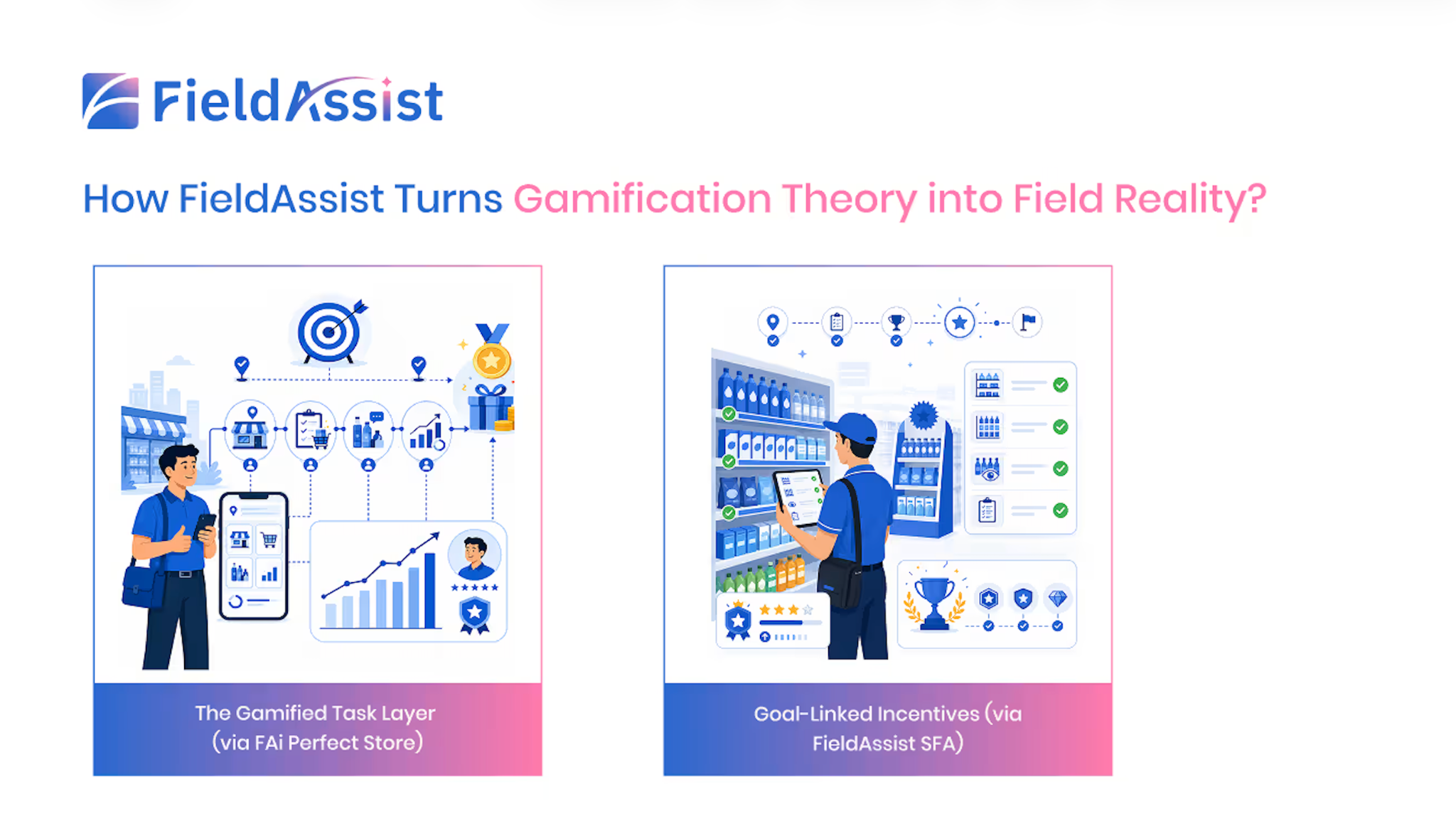
The Gamified Task Layer (via FAi Perfect Store)
Embedded seamlessly within FAi Perfect Store, this module turns tedious store compliance into a rewarding daily challenge:
- Instant Gratification: Sales representatives are instantly rewarded with coins, badges, and leaderboard points upon successful task execution.
- Behavioral Continuity: The system leverages daily streaks and performance rewards to foster consistent field discipline.
- Strategic Alignment: Leadership can dynamically align gamified KPIs to high-priority goals like brand blocking, product visibility, and shelf share.
- Targeted Coaching: Managers gain access to engagement data to identify, support, and coach underperforming reps in real time.
Goal-Linked Incentives (via FieldAssist SFA)
Driven by the core execution capabilities outlined in the SFA APP, the FieldAssist Sales Force Automation app turns raw field effort into clear milestones:
- Contextual Nudges: Reps receive real-time, smart product recommendations and in-app triggers to proactively grow basket size and reduce outlet churn.
- Workflow Integration: Features like geo-tagged check-ins and dynamic, AI-guided beat plans streamline daily routes while ensuring maximum outlet adherence.
- Transparent Metrics: Frontline KRAs are tied directly to meaningful visit outcomes rather than static activity logging, boosting overall visit productivity by over 21%.
By deploying FieldAssist’s connected ecosystem, CPG brands actively empower their field forces to take ownership of their territories, transforming baseline data entry into an engine for market dominance.
High-Impact Use Cases: Where Gamification Wins the Shelf
When applied to real-world field workflows, gamification directly solves the "last mile" execution issues that drain profitability from CPG brands.
1. Accelerating New Product Launches & Nudging Slow-Moving SKUs
Introducing a new product to market is notoriously difficult; field reps often default to selling established, familiar inventory. To break this habit, sales leaders can launch time-bound challenges that award double points for every order containing the new launch. This instant incentive encourages reps to pitch the new line at every single counter, dramatically accelerating market penetration.
2. Driving Perfect Store Execution & Visual Merchandising
Securing optimal shelf placement and pristine point-of-sale (POS) displays is critical for consumer conversion. By combining integrated image recognition within your field force management software with gamified mechanics, reps can earn instant points for capturing high-quality photos of compliant displays.
Reps receive clear, immediate validation that their visual merchandising efforts meet brand guidelines, converting a tedious compliance task into a rewarding daily win.
3. Optimizing Route Compliance and Attendance
Inefficient route execution increases fuel costs and reduces total market coverage. By gamifying route compliance, field agents unlock special badges and safe-driving ranks for following their optimized journey plans precisely. This systematic tracking significantly reduces unauthorized route deviations and maximizes daily retail throughput.
4. Territory Expansion and Numeric Distribution
Expanding into unmapped geographic territories requires intense physical effort and resilience. Traditional commissions often fail to offset the initial rejection reps face when pitching new stores. By introducing specific territory expansion quests that reward reps for every new storefront onboarded, brands can turn difficult market expansion into an engaging, structured challenge.
From Mundane Routine to a Winning Sales Culture
Gamification is not an operational gimmick; it is a fundamental restructuring of how frontline human capital is motivated, evaluated, and retained. In the fast-moving consumer goods sector, where field execution dictates market share, brands cannot afford to leave frontline motivation to chance.
By upgrading from legacy tracking systems to intelligent sales gamification software, CPG brands can transform routine field activities into engaging, goal-driven execution. With FieldAssist’s Route-to-Market platform, sales teams gain clear visibility into their achievements, driving stronger accountability, higher engagement, and better retail execution.



.avif)

.avif)