6 Ways Decision Intelligence Drives FMCG Growth and Market Performance
Explore six ways Decision Intelligence helps FMCG brands optimize retail execution, boost field productivity, and accelerate profitable growth.

.avif)
The Fast-Moving Consumer Goods (FMCG) and Consumer Packaged Goods (CPG) sectors have shifted. Traditional systems of record, like legacy Sales Force Automation (SFA) and basic Enterprise Resource Planning (ERP) setups, are no longer enough to win the retail shelf. They capture vast amounts of historic data, but they fail to answer the most critical question field teams and sales leaders face every single day: "What action should we take right now to maximize revenue?"
In a landscape defined by fragmented distribution networks, fluctuating consumer demand, and intense regional competition, relying on raw visibility alone creates an execution gap. To close this gap, forward-thinking brands are turning away from passive data dashboards and embracing proactive commercial execution. At the core of this operational transformation is the shift toward automated, data-driven action across the entire supply chain.
Decoding Decision Intelligence in the FMCG Ecosystem
Before exploring its commercial impact, it is essential to define what this technology actually means for a brand's field operations. Decision Intelligence is the practical application of advanced analytics, artificial intelligence, and machine learning models to help business users make faster, more accurate operational decisions.
Unlike traditional business intelligence tools that merely visualize past metrics, a modern Decision Intelligence Platform models human decision-making workflows, assesses potential business outcomes, and provides clear, actionable recommendations.
According to Gartner, by 2028, 25% of Chief Data and Analytics Officer (CDAO) vision statements will become explicitly "decision-centric," completely surpassing outdated, passive "data-driven" corporate slogans. For CPG brands, this means shifting focus from merely collecting market data to systematically operationalizing it.
Implementing custom-built Decision Intelligence Software allows brands to move beyond human cognitive limits. Instead of expecting a regional sales manager or an on-field representative to manually parse complex spreadsheets, the platform automatically reviews real-time store variables to recommend precise actions.
This infrastructure seamlessly scales across thousands of distributors and retail touchpoints, turning raw data into an active driver of market share.
6 Critical Ways Decision Intelligence Platforms Drive FMCG Growth
1. Optimizing Store Execution and Perfect Store Compliance
Achieving perfect store compliance requires continuous, granular monitoring of on-shelf availability, share of shelf, and promotional display positioning. When field sales representatives rely on manual shelf tracking, errors run high, and critical shelf-space opportunities are missed.
Deploying specialized Decision Intelligence Software changes this dynamic entirely. By integrating automated image recognition and historical store-level performance tracking, the software instantly alerts representatives to precise execution gaps while they are inside the retail outlet.
2. Boosting Field Sales ROI with Route Optimization
Field sales forces are often a brand's largest operational expense. When field agents follow rigid, outdated routes or rely entirely on personal intuition, they waste valuable time traveling to low-yield outlets while high-potential retail accounts remain underserved.
Implementing intelligent route optimization and integrating real-time Decision automation solves this issue by continually recalculating field routes based on dynamic market inputs. Instead of static, weekly schedules, the algorithm analyzes factors like localized order patterns, outlet potential, transit times, and current stock levels to construct optimal daily routes.
A comprehensive study by McKinsey & Company highlights that advanced automation and intelligent decision tools can increase total sales productivity by 3% to 5% globally.
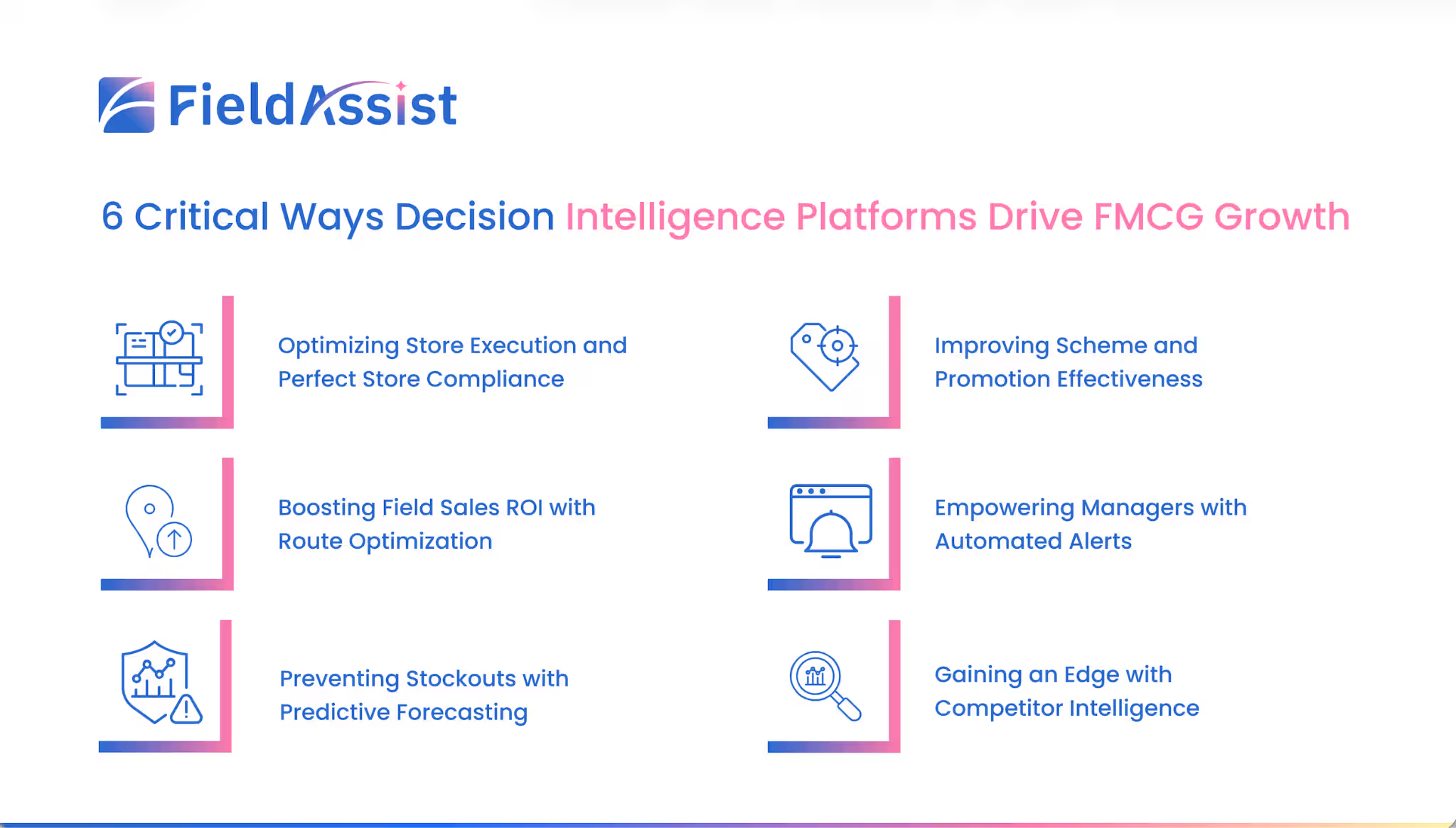
3. Preventing Stockouts with Predictive Forecasting
The financial impact of supply chain imbalances is severe: out-of-stock scenarios cause immediate revenue loss, while overstocking ties up valuable working capital in slow-moving inventory. Traditional inventory re-ordering methods rely on historical averages, missing sudden, localized demand spikes.
Embracing intelligent decision making models allows FMCG brands to dynamically forecast demand at a hyper-local level. The predictive engine analyzes past distributor orders alongside external variables like regional holiday shifts, seasonal weather patterns, and ongoing micro-marketing initiatives.
With better forecasting, brands can improve replenishment planning, optimize inventory allocation, and ensure products remain available where demand is highest.
4. Improving Scheme and Promotion Effectiveness
CPG brands invest heavily in trade promotions, retail discounts, and distributor schemes. Yet, a large percentage of these trade promotions fail to deliver a positive return on investment (ROI) because managers lack real-time visibility into how specific schemes perform across different territories.
Utilizing a unified Decision Intelligence Platform enables active, mid-campaign optimization. Instead of analyzing a scheme's performance months after it concludes, sales leaders can monitor real-time uptake across specific channels and geographies.
5. Empowering Managers with Automated Alerts
Middle management, including Area Sales Managers and Regional Sales Directors, is often burdened with vast amounts of raw data but lacks the time to uncover actionable patterns. They risk spending hours looking for operational errors instead of actively coaching their field teams.
Applying structured Decision automation lifts this analytical burden. Instead of requiring managers to run manual reports, the underlying software continuously monitors performance metrics and delivers proactive, role-based triggers directly to their devices.
Automated Alert Example: "Distributor Y in Sector 4 has experienced a 12% drop in primary ordering velocity over the past 14 days, driven by a shortage of your top-selling SKU. Review allocation immediately."
This shift allows middle management to transition from passive oversight to highly targeted, high-impact interventions.
6. Gaining an Edge with Competitor Intelligence
In hyper-competitive retail environments, a competitor's pricing adjustment or new product launch can erode your market share within days. Field agents regularly witness these shifts firsthand, but their observations rarely reach senior leadership quickly enough to inform a strategic response.
Modern decision intelligence platforms turn the field sales force into an active intelligence network. When a representative spots a competitor's new promotional display or altered retail pricing, they log it directly into the mobile interface.
The platform aggregates these localized data points to detect broader competitor strategies, prompting immediate commercial recommendations. This allows corporate leadership to adjust pricing structures or launch defensive marketing campaigns before sales volumes are impacted.
What to Look for in an FMCG-First Decision Intelligence Platform?
Many general business software tools claim to offer analytical decision support, but general platforms lack the specific capabilities required to manage complex, multi-tiered retail distribution models.
An enterprise-grade Decision Intelligence Platform built specifically for the CPG industry must possess distinct capabilities:
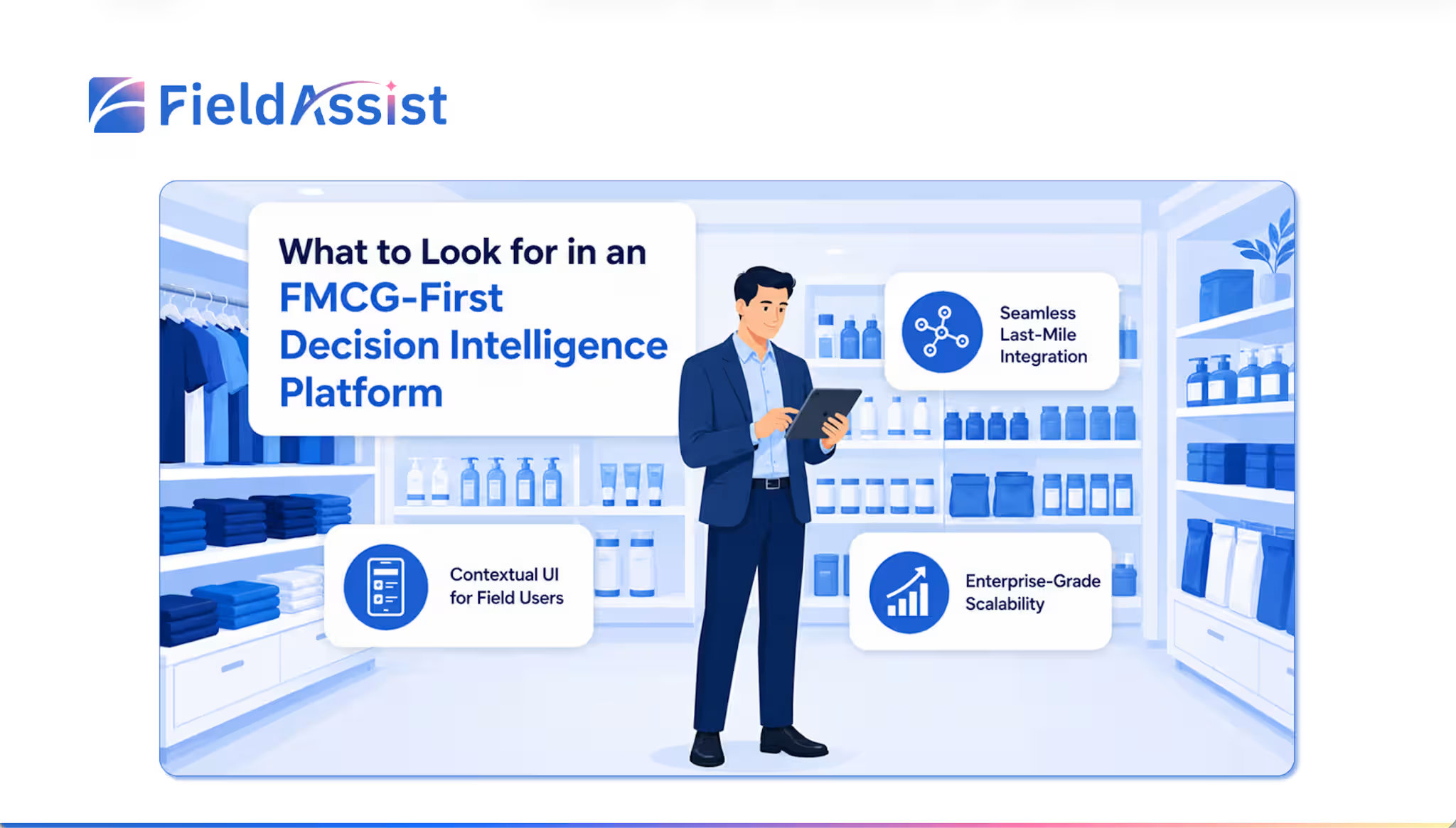
Seamless Last-Mile Integration: The platform must sit directly on top of your existing Sales Force Automation (SFA) and Distributor Management Systems (DMS) to pull real-time data from the field without disrupting daily operations.
Contextual UI for Field Users: The platform should display role-specific, actionable recommendations within daily workflows, helping field teams make faster, data-driven decisions without analyzing complex dashboards.
Enterprise-Grade Scalability: It must handle millions of daily transactional inputs across thousands of distinct stock-keeping units (SKUs) and retail routes without performance drops.
As a global leader in AI-driven retail execution, FieldAssist provides an enterprise-ready Decision Intelligence Platform built from the ground up to solve the retail execution gap. By turning passive operational data into real-time, prescriptive actions for field agents, distributors, and corporate leaders, FieldAssist empowers CPG brands to drive predictable, profitable market growth.
The Future of FMCG Growth Will Be Driven by Intelligent Decision Making
The era of relying on historical spreadsheets and retrospective dashboards to run consumer goods sales operations is coming to an end. As retail environments become increasingly complex, organizations need more than reporting tools. They need a Decision Intelligence Platform capable of turning insights into execution.
The rise of Decision Intelligence and decision automation is fundamentally changing how FMCG brands operate. From shelf execution and route optimization to forecasting and promotion management, every growth lever becomes more effective when supported by intelligent decision-making.
For brands looking to improve execution, maximize field productivity, and accelerate market performance, investing in the right Decision Intelligence Software is no longer optional; it is becoming a competitive necessity.




.avif)