Autonomous Merchandising: How AI & Computer Vision Are Revolutionizing Retail Operations
Discover how autonomous merchandising eliminates out-of-stocks, automates planogram compliance, and optimizes retail shelf operations with FieldAssist.

We must admit that static planograms are visual fiction. Corporate space planning teams spend millions designing perfect 3D shelf blueprints, only for in-store execution compliance to hover at a miserable 50% to 60%. Comprehensive retail data from Kantar Worldpanel reveals a staggering global problem: on-shelf out-of-stocks and planogram non-compliance cost retailers and consumer goods brands over $1 trillion in lost sales revenue every single year. Nearly half (48%) of all on-shelf unavailability is caused directly by poor store execution and non-compliant planograms.
When a customer encounters an empty shelf facing for their preferred brand, 31% buy a competing brand, while 26% leave the store entirely. The traditional merchandising model (relying on static paper planograms and quarterly store resets) is fundamentally broken. To protect our brand equity and stop stockout revenue destruction, we must shift from static visual merchandising to dynamic, autonomous shelf operations.
Why Strategy Breaks Down at the Store Shelf?
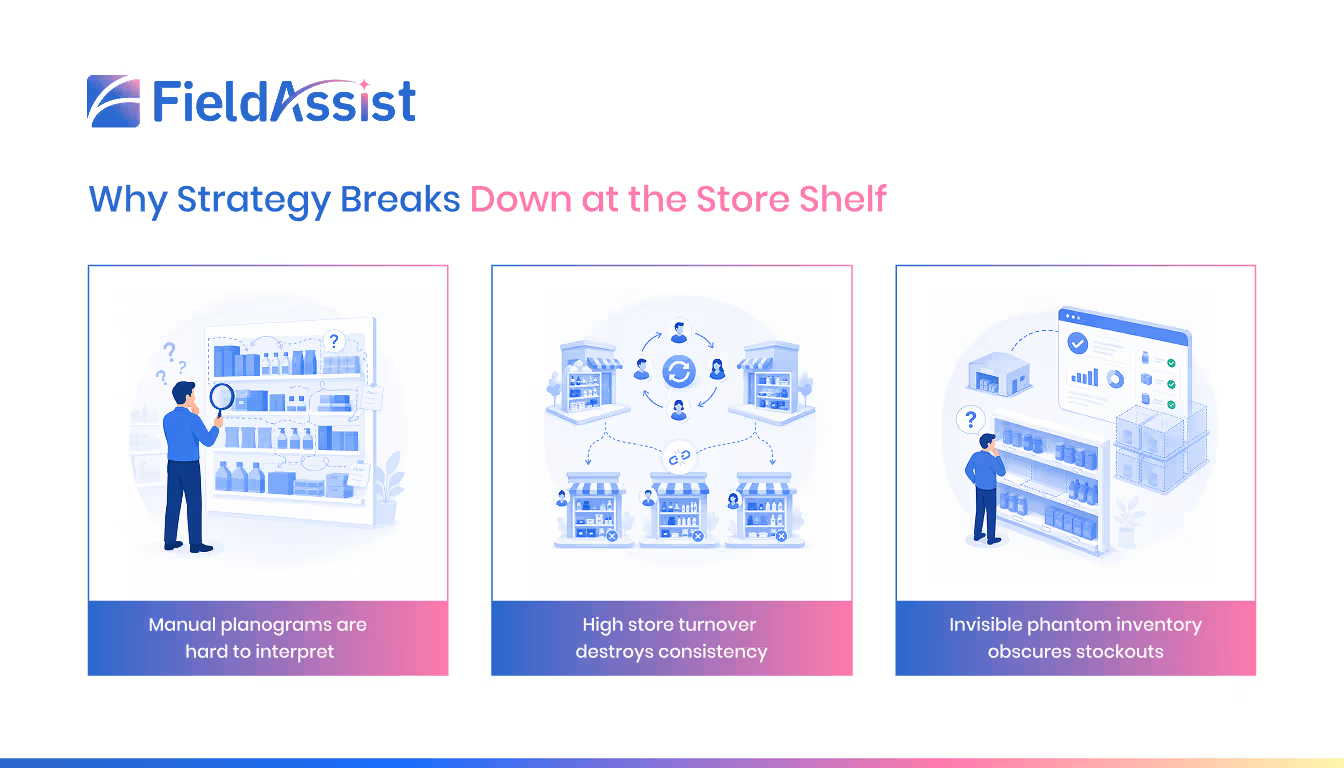
The planogram compliance gap represents one of the largest structural leaks in retail operations. Our central category teams use advanced software to design optimal shelf facing ratios. But once planograms reach regional stores or field merchandisers, execution fails for three reasons:
When we pay premium slotting fees for eye-level facings, only for store staff to place our products on bottom shelves or behind competitor inventory, we suffer immediate revenue loss and waste our marketing dollars. We must bridge the gap between corporate space planning and store execution.
- Manual planograms are hard to interpret. Store staff struggles to decipher dense 2D paper planograms, leading to incorrect facing counts and misplaced SKUs.
- High store turnover destroys consistency. Rapid turnover in store personnel eliminates institutional execution knowledge, causing chaotic shelf arrangements.
- Invisible phantom inventory obscures stockouts. Inventory management systems show products in stock when items are actually misplaced in backrooms or hidden behind competing products.
Autonomous merchandising solves this crisis by replacing manual resets with continuous AI shelf monitoring and automated task dispatching using tools like FieldAssist Retail Merchandising Software, ensuring physical shelf reality matches our strategic intent.
How Autonomous Merchandising Systems Work?
Autonomous merchandising combines visual edge sensing, predictive analytics, and automated task dispatching.
1. Real-Time Planogram Auditing via Computer Vision
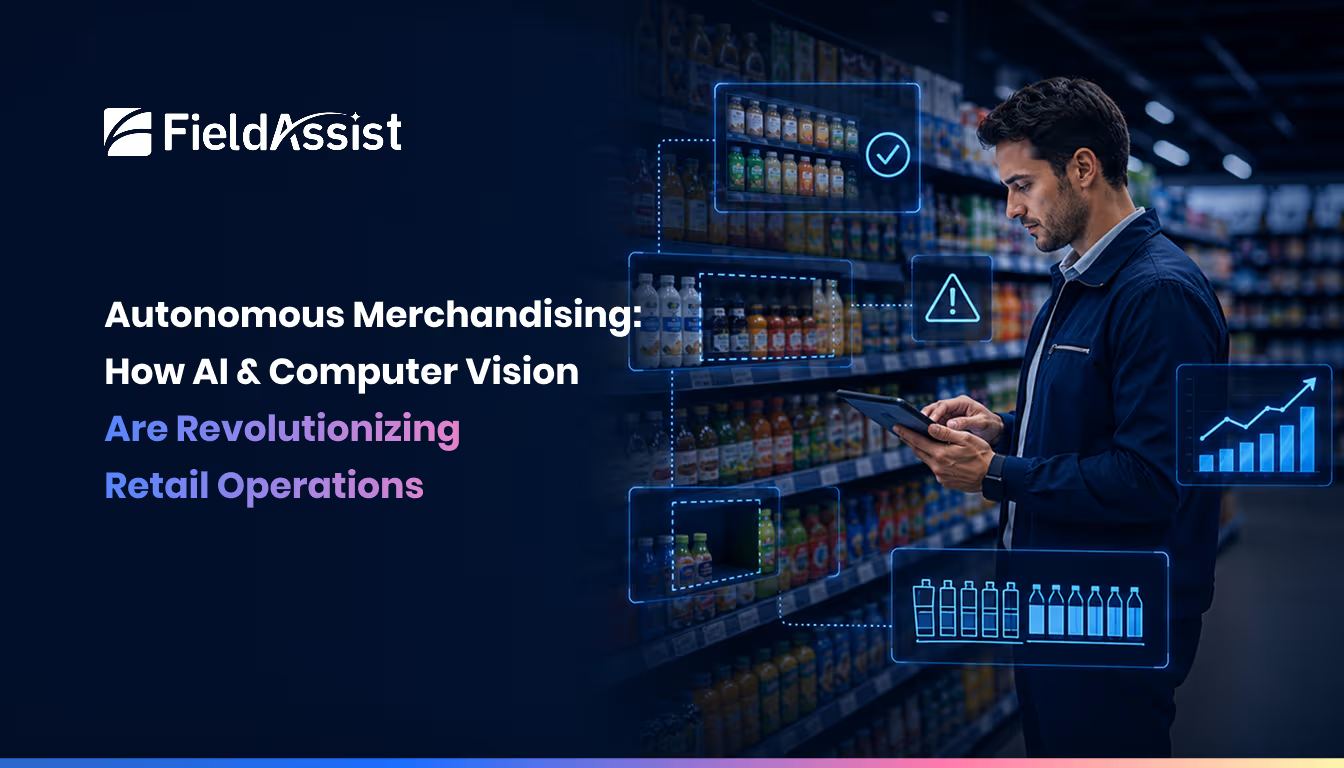
Using smartphone cameras, shelf sensors, or store robots, computer vision algorithms compare physical shelf configurations against master digital planograms continuously. Any discrepancy—an incorrect facing ratio, missing price tag, or stockout—triggers an instant visual alert.
Autonomous merchandising turns static planograms into real-time operating instructions. Computer vision shelf sensors analyze physical displays continuously, sending prioritized corrective tasks directly to merchandisers' mobile devices whenever facings are displaced or tags are missing.
2. Prioritized Task Dispatching for Merchandisers
Instead of asking merchandisers to inspect aisles manually, autonomous systems generate prioritized mobile task queues directly inside platforms like FieldAssist Sales Force Automation and FieldAssist Perfect Store Execution. Merchandisers receive exact instructions (e.g., 'Restock 6 units of SKU X on Shelf 3, Aisle 2'), cutting task execution time in half and ensuring high-margin SKUs remain continuously available.
Assortment Localization: Matching Space to Store Velocity
Generic nationwide planograms fail to account for localized demographics and sales velocity variations.
Autonomous AI merchandising platforms analyze captured images and detect anomalies to tailor shelf space per store. Allocating extra facings to high-velocity local favorites while rationalizing slow-moving SKUs maximizes sales per square foot.
Assortment localization goes far beyond generic regional clusters. By integrating real-time POS velocity data from FieldAssist Online Distributor Management System, our platforms tailor shelf space per store, ensuring high-velocity items never run out of stock and faster replenishment.
Tracking visual compliance metrics through central executive dashboards gives us total visibility over store compliance across national markets, driving a 3% to 5% revenue lift.
Evaluating Merchandising Models: The CXO Decision Matrix
As we evaluate merchandising operating models, we must analyze compliance rates, labor efficiency, stockout reduction, and EBITDA impact. The matrix below outlines our choices.
Comparing our operational options reveals that static paper planograms leave compliance at a dismal 50%. Upgrading to autonomous AI merchandising increases compliance to >95% while reducing on-shelf stockouts to under 2%, driving a direct 3% to 5% category margin lift.
Our Phased Execution Roadmap for Merchandising Scaling
A successful autonomous merchandising transformation requires a structured rollout that minimizes operational risk while delivering measurable business value. Our three-phase implementation roadmap enables C-suite leaders to validate outcomes, accelerate adoption, and scale AI-driven merchandising across retail networks.
Phase 1: Digitize Master Planograms & Integrate APIs (Days 1–30)
- Convert all master planograms into structured digital formats that AI models can accurately interpret.
- Integrate ERP, DMS, SFA, and product master data to create a unified source of truth.
- Standardize SKU taxonomy, shelf layouts, and merchandising compliance rules across markets.
- Establish secure API connectivity between enterprise systems and mobile field applications.
- Define governance, success KPIs, and executive dashboards before pilot deployment.
Phase 2: Launch Mobile AI Audit Pilots (Days 31–60)
- Equip field merchandisers with mobile image recognition tools.
- Automate shelf audits, planogram compliance checks, and out-of-stock detection using computer vision.
- Benchmark AI recommendations against manual audits to measure accuracy and productivity gains.
- Identify recurring execution gaps, high-risk stores, and merchandising exceptions in real time.
- Train field teams using AI-assisted workflows while collecting operational feedback for optimization.
Phase 3: Synchronize Secondary Restocking Orders (Days 61–90)
- Automatically trigger secondary replenishment orders whenever AI detects inventory falling below predefined thresholds.
- Synchronize distributors, sales teams, and merchandising operations through real-time workflow automation.
- Prioritize replenishment based on outlet potential, demand velocity, and promotional activities.
- Enable executives to monitor merchandising performance, shelf availability, and sales impact through live command-center dashboards.
- Create a continuous closed-loop merchandising system where every shelf insight immediately drives corrective action, reducing stockouts, improving on-shelf availability, and maximizing retail revenue.
Executive Boardroom FAQ
Q: What is AI merchandising and how does it differ from traditional visual merchandising?
A: AI merchandising uses computer vision and real-time data to continuously monitor, analyze, and optimize shelf displays automatically.
Q: What is the typical compliance rate of traditional retailer planograms?
A: Planogram compliance in store averages only 50-60%, resulting in significant revenue loss for CPG manufacturers.
Q: How does AI merchandising reduce store associate labor costs?
A: It eliminates manual shelf auditing, guiding associates directly to out-of-stock items via automated task lists.
Q: Can AI merchandising integrate with existing ERP and POS systems?
A: Modern systems integrate via REST APIs to trigger automated reorders when shelf stock drops below safety thresholds.
Q: What role do fixed shelf cameras and ceiling sensors play in AI merchandising?
A: They provide continuous 24/7 shelf monitoring, capturing out-of-stocks and misplacements without human intervention.
Q: How does dynamic merchandising impact category management?
A: Enables category managers to test shelf layouts digitally and measure sales velocity lift in real time across test stores.
Q: What ROI can C-suites expect from an AI merchandising investment?
A: Retailers typically see a 3-5% increase in category sales, 20% reduction in stockouts, and 30% savings in audit labor.



%20(1).avif)