How AI-Powered Inventory Management Reduces Stockouts and Excess Inventory in FMCG
Learn how AI-powered inventory management improves demand forecasting, stock optimization, and replenishment to reduce stockouts and excess inventory in FMCG.

Ask any National Sales Manager what keeps them up at night, and the answer is rarely “growth.” It’s the kirana that ran out of stock during a festive surge, while a warehouse three towns over sits on six weeks of the same SKU. This is the paradox of FMCG distribution: stockouts and excess inventory happen simultaneously, in the same network, often for the same product.
AI Inventory Management exists precisely to close this gap, replacing gut-feel replenishment with demand-led, field-validated decisions. This blog breaks down why traditional inventory planning fails CPG brands, and how AI demand forecasting and stock optimization are rewriting the playbook for last-mile execution.
What is AI-Powered Inventory Management?
AI Inventory Management refers to the use of machine learning models, real-time sales data, and predictive analytics to determine what to stock, where, and how much, down to the distributor and outlet level. Unlike legacy ERP-driven planning, which relies on static reorder points and historical averages, inventory optimization software powered by AI continuously ingests primary sales (factory-to-distributor), secondary sales (distributor-to-retailer), and even weather or local-event data to recalibrate forecasts daily.
For CPG brands operating across general trade, modern trade, and emerging geographies, AI inventory management for FMCG companies is no longer an IT upgrade; it’s the operating system for revenue growth management.
Why Traditional FMCG Inventory Management Fails?
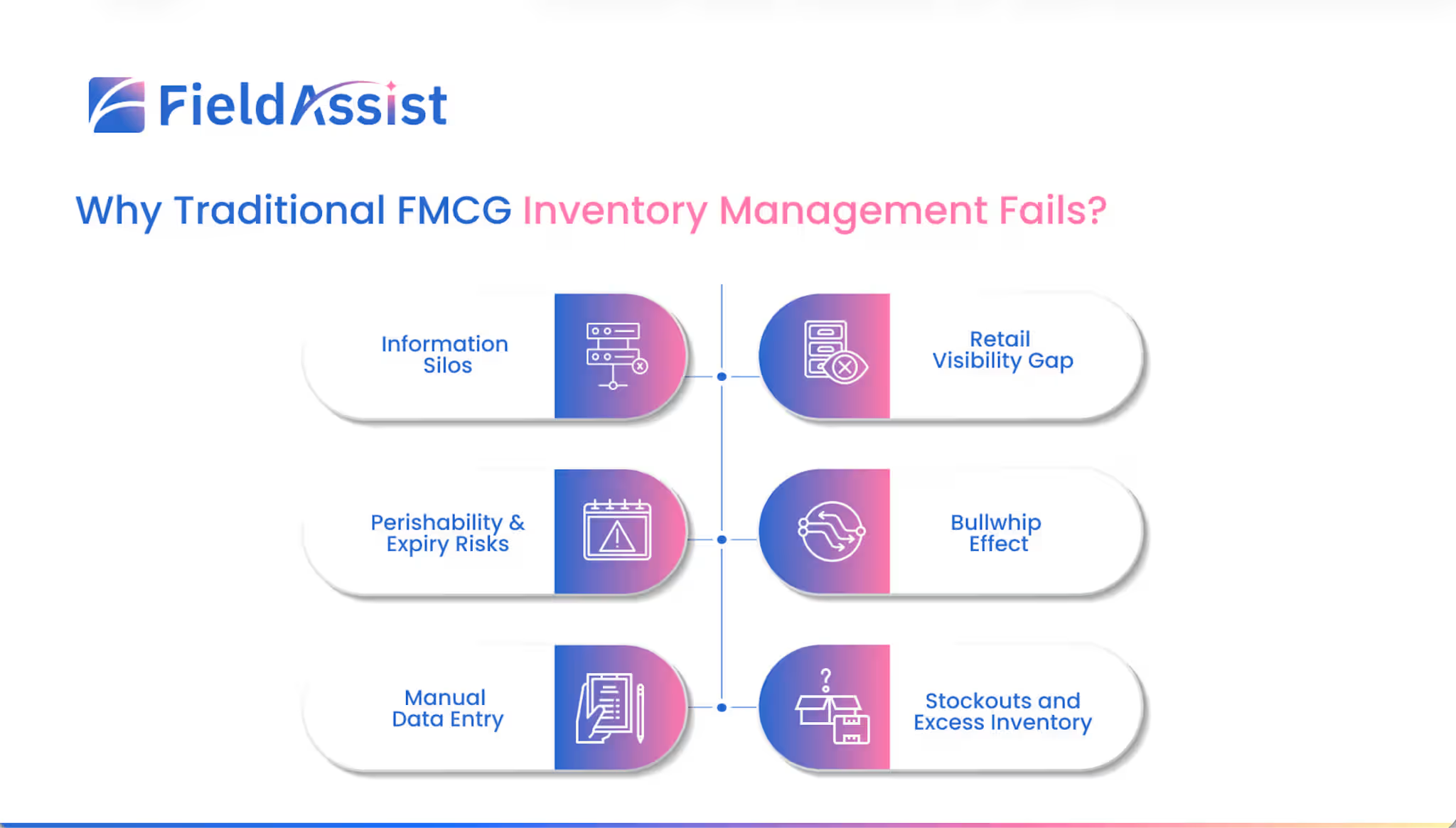
Most FMCG supply chains were architected for a slower, less volatile market. Today, they buckle under SKU proliferation, hyperlocal demand shifts, and fragmented trade channels. Here’s where the cracks show up most often:
1. Information Silos
Sales, supply chain, and finance teams typically work off disconnected spreadsheets and disparate ERP systems. Without a unified data layer, nobody has a single, trusted view of what’s actually moving off the shelf at the kirana, duka, or warung level.
2. Perishability & Expiry Risks
For food, dairy, and personal care categories, a forecasting miss isn’t just a lost sale; it’s write-offs, scheme redemption losses, and damaged shelf credibility with the trade partner.
3. Manual Data Entry
Beat-level orders, secondary sales, and scheme claims are still logged manually across thousands of field reps in many markets. Manual entry introduces lag and error precisely where real-time accuracy matters most.
4. Retail Visibility Gap
Brands plan production and primary dispatch based on what they ship to distributors, not what actually sells through at the outlet. This blind spot between primary and secondary sales is where most distortion originates.
5. Bullwhip Effect
A small demand fluctuation at the retail shelf gets amplified at each upstream node- distributor, super-stockist, and factory- leading to wildly exaggerated overproduction or underproduction relative to actual consumer demand.
6. Stockouts and Excess Inventory
The financial scale of this problem is staggering. IHL Group reports that global retail loses $1.73 trillion annually to inventory distortion, the combined cost of out-of-stocks and overstocks, equivalent to roughly 6.5% of global retail sales. Without AI demand forecasting, FMCG brands keep solving one symptom at the cost of creating another.
Transforming the Supply Chain with AI Inventory Management
AI Inventory Management doesn’t just patch these failure points; it restructures how planning decisions get made, shifting brands from reactive firefighting to proactive, field-data-led execution. Here’s how reducing stockouts using AI plays out across the value chain:
- Demand Forecasting
AI demand forecasting models learn from seasonality, scheme cycles, local events, and outlet-level sell-through to generate SKU-level predictions that traditional spreadsheets simply cannot match. According to McKinsey, applying AI-driven forecasting to supply chain management can reduce forecast errors by 20 to 50%, translating into up to a 65% reduction in lost sales from product unavailability. This is precisely the value a robust demand forecasting software for FMCG delivers: fewer surprises at the depot, fewer empty shelves at the outlet.
- Automated Replenishment
Instead of fixed reorder cycles, AI-triggered replenishment recommends order quantities by distributor and SKU based on live secondary sales velocity, lead times, and scheme calendars, a core lever for stock optimization at the last mile.
- Unifies Primary & Secondary Market Signals
By stitching together primary dispatch data with secondary, outlet-level sell-out, AI closes the retail visibility gap that traditional ERPs leave open, giving TSIs, ASMs, and RSMs one version of demand truth instead of three conflicting ones.
- Real-Time Visibility
Field execution apps capture productive calls, planogram compliance, and numeric and weighted distribution as they happen, feeding live signals back into the forecasting engine rather than waiting on month-end reconciliation.
- Predictive Analytics
Predictive analytics layered on top of inventory optimization software flags at-risk SKUs before they run dry or pile up. McKinsey finds that embedding AI in distribution operations can reduce inventory levels by 20 to 30%, while improving fill rates, proof that reducing stockouts using AI and trimming working capital are not competing goals, but outcomes of the same model.
How FieldAssist Helps with Inventory Management for FMCG?
FieldAssist was built around one conviction: the last-mile execution gap, not a lack of ambition, is what costs CPG brands the most revenue. Our 3i Intelligence Framework (Insights, Intelligence, Intervention) operationalizes AI inventory management for FMCG companies across general and modern trade.
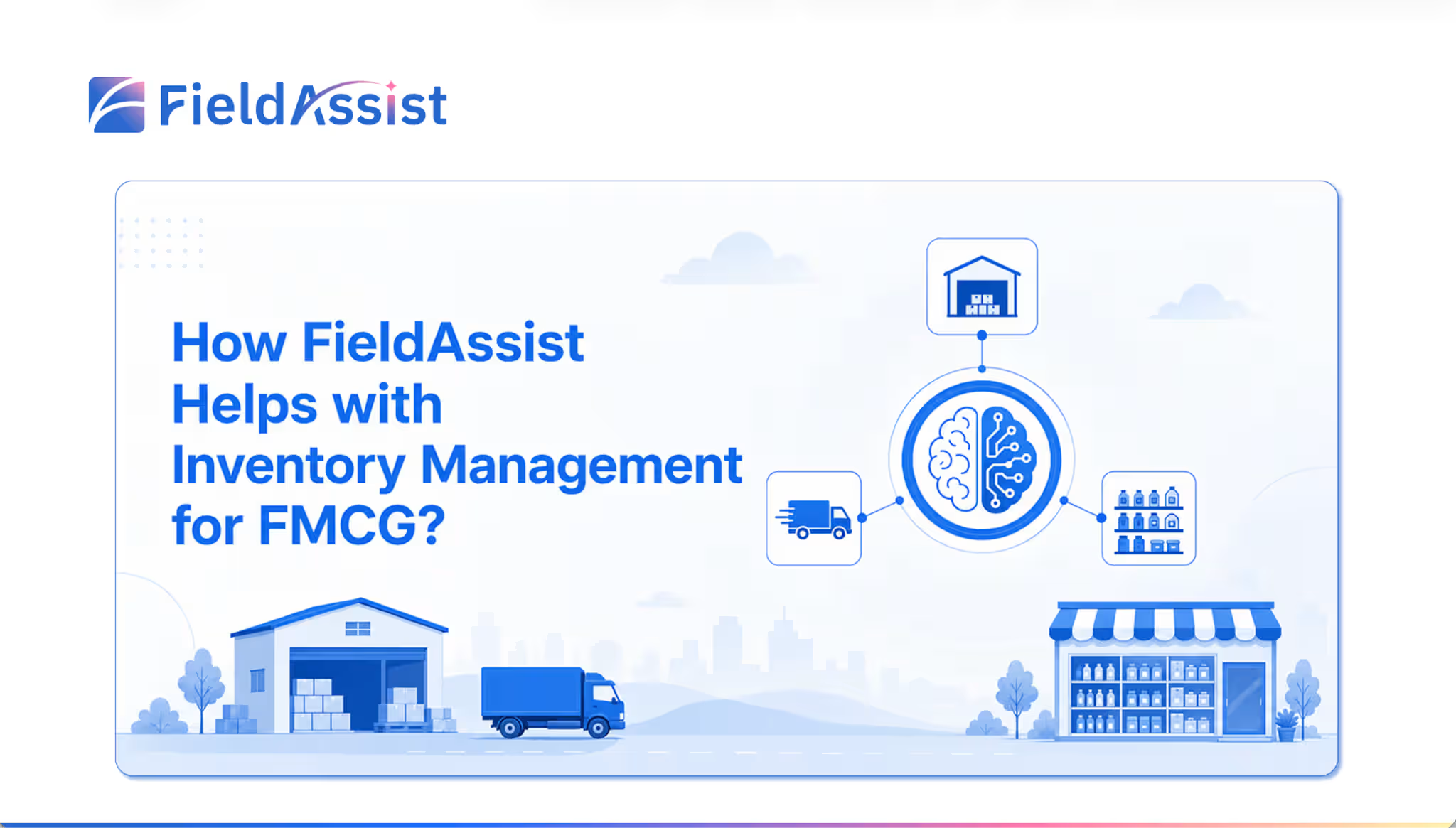
FAi NOVA captures granular field data, beat plans, productive calls, and scheme redemption, while FAi IRIS uses computer vision for planogram and Perfect Store compliance, ensuring shelf-level reality feeds back into planning.
The FAi DMS Agent and Product Recommendations engine apply AI demand forecasting at the distributor level, automatically suggesting order quantities to prevent both stockouts and dead stock.
ARS (Auto Replenishment System) operationalizes stock optimization without manual intervention, and Route Optimization ensures the right products reach the right duka, kirana, or warung without wasted field time. Together, this is demand forecasting software for FMCG built for the realities of fragmented retail, not a repurposed Western retail tool.
Conclusion
Stockouts and excess inventory are two faces of the same underlying problem: brands making supply decisions without real, last-mile demand signals. AI Inventory Management fixes this at the root, unifying primary and secondary data, forecasting with precision, and automating replenishment so CPG brands stop choosing between availability and working capital efficiency.
For FMCG companies serious about reducing stockouts using AI while protecting margins, the shift isn’t optional anymore; it’s the difference between scaling profitably and quietly losing share, one empty shelf at a time.




.avif)