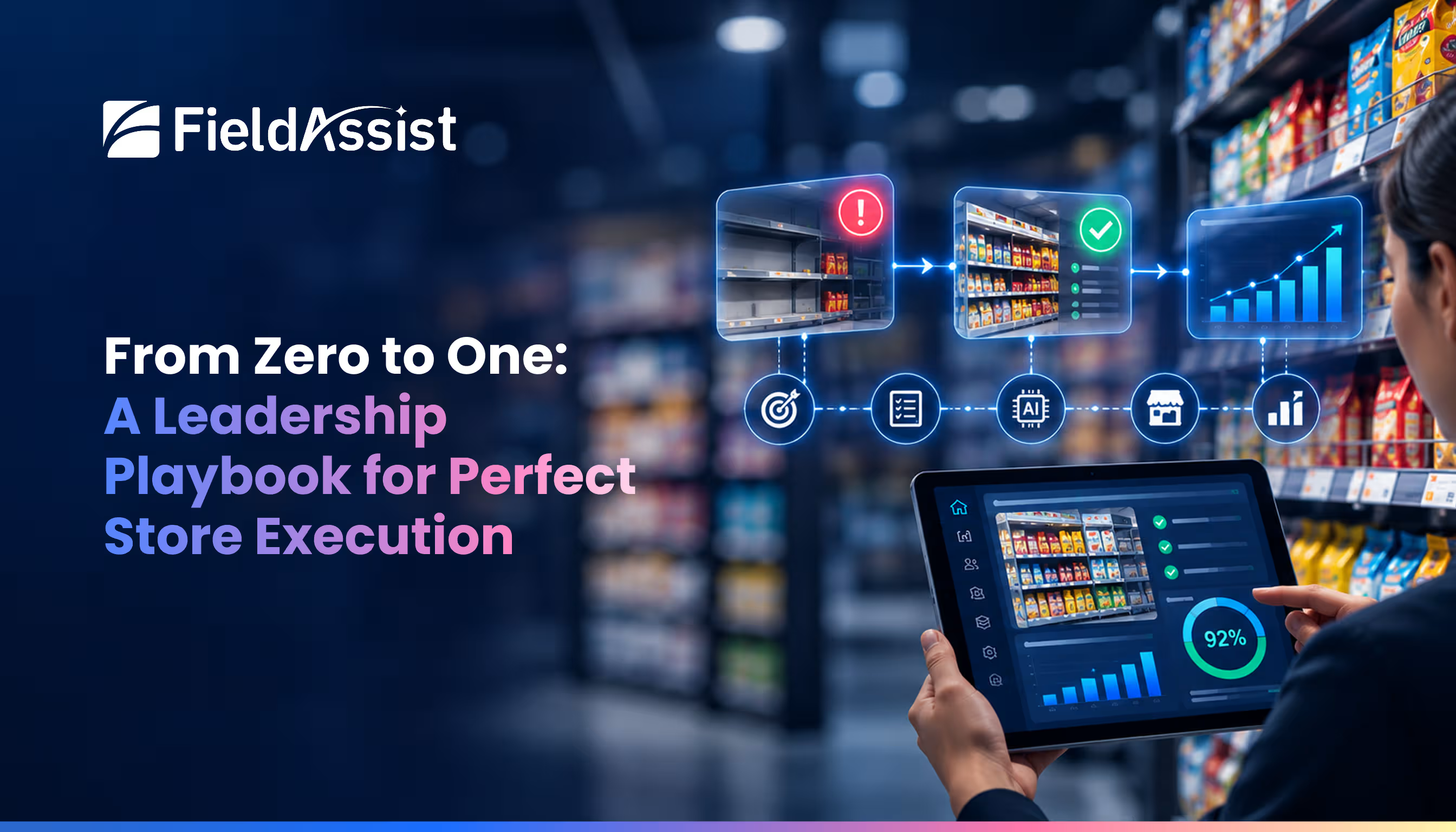
Why Shelf Intelligence Is Critical for Modern Trade Success in Africa
Discover how shelf intelligence helps FMCG brands in Africa improve retail execution, reduce stockouts, ensure planogram compliance, and drive sales with real-time visibility.


Africa’s Modern Trade Is Booming, but Execution Hasn’t Kept Up
Your product was shipped, your promotion was planned, and your targets were set, but is your product actually on the shelf where the customer is ready to buy?
Modern trade in Africa is expanding rapidly across Africa, with supermarkets and organized retail growing in markets like Nigeria, Kenya, and South Africa. This creates a strong opportunity for FMCG and CPG brands to reach more consumers at the point of purchase. In fact, research from McKinsey & Company projects that household consumption in Africa will reach $2.5 trillion by 2030, driven largely by an emerging middle class transitioning from informal markets to formal retail chains.
But opportunity doesn’t always translate into revenue.
Brands invest in strategies, planograms, and promotions, yet often lack visibility into how well these are executed in-store. This gap between plan and reality is where sales are lost.
Shelf intelligence addresses this gap in Africa.
With retail execution software in Africa, brands can enable real-time shelf monitoring across stores, tracking availability, placement, and promotions. In Africa’s modern trade landscape, this level of visibility is no longer optional; it is essential.
Unique Execution Challenges of African Modern Trade
.png)
Africa’s retail market is not one-size-fits-all. What works in one country or even one city may not work in another. This makes execution much more complex than in more standardized markets like Europe or North America.
According to McKinsey & Company’s 2026 State of Grocery Retail report, while consumer confidence in the Middle East and Africa is rising, retail growth for many established players has slowed. The research highlights an "undifferentiated grocery ecosystem" where customer satisfaction levels with current store formats often sit below 40%. This indicates a massive gap between what brands plan at HQ and what consumers actually experience on the floor.
Here’s what makes it challenging:
1. Different store formats, different problems
Modern trade ranges from large supermarkets to small mini-marts and kiosks, each with very different shelf sizes and layouts. Managing planogram compliance across these varying shelf dimensions without automated shelf monitoring solutions in Africa is a logistical nightmare.
For instance, a beverage brand may design a perfect planogram for a large supermarket, but when the same is rolled out in smaller stores, it simply doesn’t fit. Store staff then adjust placements on their own, often pushing the brand to less visible areas, which directly reduces sales.
2. Managing multiple markets at once
Brands often operate across multiple countries, making it difficult to get timely and accurate data. A regional manager in Johannesburg overseeing operations in Zambia, Zimbabwe, and Mozambique faces massive data latency. By the time a report from a remote region reaches headquarters, the insight is often 7–10 days old, far too late to fix a weekend stockout.
3. Heavy reliance on promoters, limited visibility
Promoters play a key role in managing shelves, but without visibility, brands rely heavily on what gets reported. In many cases, a promoter may mark a store as fully compliant, while in reality, competitor products dominate eye-level placement. The brand assumes everything is on track, while quietly losing share at the shelf.
4. Manual processes that don’t scale
Many teams still depend on manual audits, spreadsheets, or WhatsApp updates to track execution. As a brand scales from 50 to 500 outlets, this quickly becomes unmanageable.
According to Deloitte’s 2026 Global Consumer Products Outlook, 74% of surveyed companies are now simplifying their organizational structures and turning to AI to reduce complexity.
Teams end up sorting through hundreds of unclear images and inconsistent reports, delaying decisions and making it hard to identify real issues on the ground. This is where retail execution software in Africa becomes critical.
Shelf Problems Silently Draining Your Revenue
- Out-of-Stock at the Moment of Purchase
There is no greater "retail sin" than a customer standing with cash in hand in front of an empty shelf. In Africa, supply chain volatility means stockouts are frequent. Without real-time shelf monitoring, a brand might lose sales for an entire week before the distributor realizes the shelf is bare.
- Planogram Non-Compliance Going Undetected for Days
Your marketing team spent months designing the "Perfect Store" layout. But in the real world, a store manager might move your premium juice to the bottom shelf to make room for a local competitor who offered a personal incentive. If you can’t see the shelf, you can’t enforce the planogram compliance you paid for.
- Promotions Activated on Paper, Not on the Shelf
A “Buy 1 Get 1 Free” offer may look good in planning. But if the display materials are not put up and the stock is still in the backroom, the promotion isn’t really live.
In reality, the customer never sees it, and the brand loses the impact of that spend. Without shelf monitoring solutions, this weakens your overall retail execution strategy.
Why Traditional Retail Execution Is No Longer Fit for Purpose?
Traditional retail audits are slow, inconsistent, and no longer practical at scale. A typical audit involves someone visiting a store, manually checking shelves, and submitting a report — a process that can take hours. Because of this, most stores are audited only a few times a month, leaving long gaps where brands have no visibility into what’s happening on the shelf.
These audits are also highly subjective. Two auditors looking at the same shelf may report different observations, as there is no standard, objective way to measure compliance or availability. Field sales reports face similar challenges. Reps are under pressure to cover multiple stores, and while they do submit updates, there is often no way to verify whether the visit happened as reported or if the shelf conditions were accurately captured.
But the biggest issue is timing. Even when problems are identified, like stockouts or poor placement, the information usually reaches managers hours or days later. Research highlights that 70% of purchase decisions are made at the shelf; if the customer doesn't find your product, the sale doesn't just wait—it goes to a competitor. In African modern trade, waiting for reports is no longer enough; issues need to be identified and fixed during the same store visit to protect your market share.
How FieldAssist’s IRIS Solves Modern Trade Execution Challenges in Africa

FieldAssist has developed IRIS, an AI Image Recognition tool specifically designed to handle the grit and complexity of the African market. IRIS transforms the field representative’s smartphone into a powerful data-gathering engine.
1. AI Shelf Intelligence:
IRIS uses AI to analyze shelf images captured during store visits and instantly identifies brands, SKUs, and their placement. This means brands no longer depend on manual interpretation of shelf conditions. Instead, they get structured, reliable data on how products are actually displayed, enabling faster and more informed decisions.
2. On-Shelf Availability:
IRIS tracks whether key SKUs are present on the shelf during every visit. If a product is missing or running low, it is flagged immediately, allowing the field team to take action on the spot. This helps brands prevent missed sales by ensuring products are consistently available when customers are ready to buy.
3. Share of Shelf & Competitor Intelligence:
IRIS measures how much shelf space your brand occupies compared to competitors. If a competitor gains more visibility or starts dominating key sections, this is quickly identified. Field teams can then respond immediately, helping brands maintain strong shelf presence and avoid a gradual loss of visibility.
4. Planogram Compliance:
IRIS compares actual shelf images with predefined planograms and calculates a compliance score instantly. If products are misplaced or not arranged as planned, the issue is highlighted during the visit itself. This allows corrections to be made in real time, ensuring consistent execution across all stores.
5. Trade Promotion Execution:
IRIS verifies whether promotional displays, signage, and secondary placements are set up correctly in-store, strengthening your retail execution strategy. Instead of assuming execution, brands get visual confirmation of what is actually live on the shelf. This ensures that trade spends translate into real visibility and impact.
6. Task & Audit Automation:
IRIS replaces manual checklists and long audit forms with simple image capture. A single photo completes multiple audit tasks automatically, reducing the time spent per store visit. This allows field teams to cover more outlets in a day without compromising on data quality.
7. Real-Time Execution Tracking:
All shelf data is updated instantly on a central dashboard, giving managers a live view of execution across regions. Instead of waiting for reports, teams can identify issues, track trends, and take action quickly, improving overall control and responsiveness.
Business Impact for African CPG Brands
The transition to shelf intelligence in Africa isn't just about "better data", it's about the bottom line. Brands using FieldAssist’s AI-powered image recognition have seen measurable improvements:
1. 30% Improvement in Planogram Compliance
By holding field teams and retailers accountable with visual data, brands see their "Perfect Store" vision realized more consistently.
2. 25% Faster Stockout Detection and Correction
When you reduce the "Visibility Gap," you reduce the time a shelf stays empty. This translates directly into recovered sales that would have otherwise gone to a competitor.
3. 20% Increase in Must-Sell SKU Visibility
In African retail, focus is everything. IRIS ensures that your high-margin "Must-Sell" items are always in the "Golden Zone" (eye level), maximizing their rate of sale.
4. Measurable Trade Promotion ROI and Stronger Retailer Relationships
When you approach a retailer with hard data, not complaints about shelf performance, the conversation changes. You become a category consultant rather than just another vendor.
Closing Thoughts
What You Can’t See, You Can’t Fix!
African modern trade is evolving rapidly, and brands relying on delayed reports or manual audits are already at a disadvantage. The shelf is where purchase decisions happen without real-time visibility; decisions are based on incomplete information. FieldAssist software- IRIS Gives You Visibility and Control. It captures what’s happening on the shelf, analyzes it instantly, and enables immediate action. It helps brands move from reactive tracking to proactive execution with clear, reliable insights.
Book a demo to see how IRIS works in real time and understand what’s truly happening across your shelves because better visibility today drives stronger performance tomorrow. Contact us



%20(1).avif)