What is a Product Recommendation Engine?
Learn how product recommendation software analyzes buying patterns, outlet behavior, and sales data to recommend the right products and drive revenue growth.

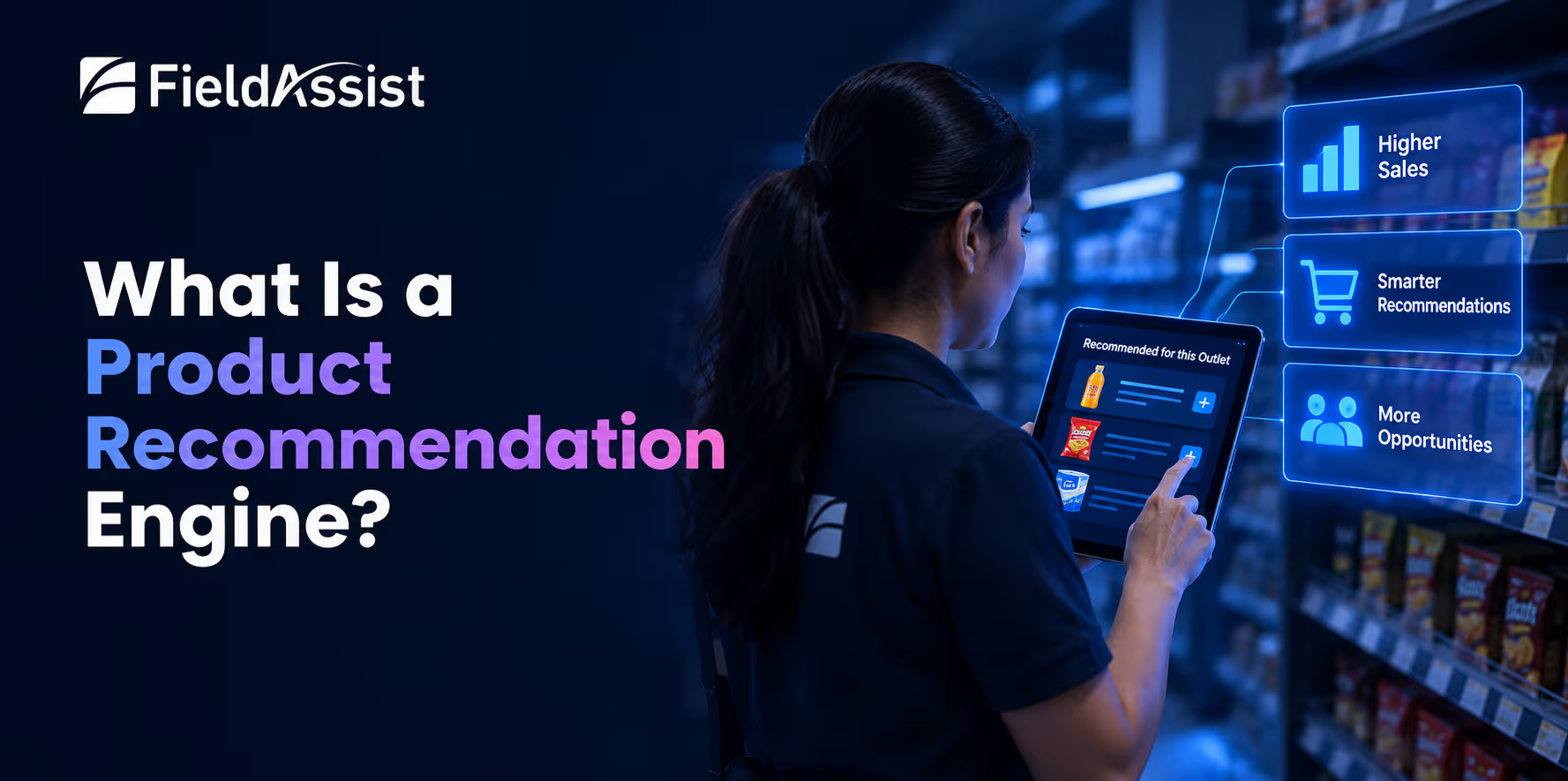
A field sales rep walks into an outlet with 40 SKUs to sell and ten minutes to sell them. She knows the top three moving lines from memory, pushes those, and moves to the next stop. What she doesn't know, because no human can hold this in their head across 30 to 40 outlets a day, is which of those SKUs is actually a high-probability add for this outlet, based on its own purchase history, cluster behavior, and category gaps. That's the gap a product recommendation engine closes.
This is the last-mile execution problem CPG and FMCG brands live with every day. Portfolios keep growing, outlet counts keep growing, and rep bandwidth doesn't, so the only way to close that gap at scale is with data-led recommendations rather than memory and habit. That's exactly why product recommendation technology has moved from a nice-to-have to a core part of the sales stack, and why this guide walks through what these systems are, how they work, and how to choose one for a distribution-led business.
What is a product recommendation engine?
A product recommendation engine is a software system that analyses historical and real-time data, purchase patterns, outlet attributes, seasonality, and stock levels to recommend the next-best product or combination of products to sell, order, or stock. Unlike a generic catalog or a static best-seller list, a true product recommendation engine adapts its output to the specific customer or outlet it is talking to.
In consumer commerce, this looks like “customers who bought this also bought.” In B2B and field sales, the same underlying logic solves a very different problem: helping a distributor sales rep or key account manager know which SKUs to pitch to which outlet, on which visit, to maximize the chance of an order. The core idea of a product recommendation system stays the same in both contexts, using data instead of guesswork to match the right product to the right buyer at the right time.
Why Businesses Need Product Recommendation Software?
Most CPG and FMCG brands don't have a demand problem; they have a discovery problem. Their portfolios often run into hundreds of SKUs, but frontline reps, distributors, and even retailers keep pushing the same fast movers, visit after visit. New launches struggle to earn shelf space. Cross-sell opportunities sitting right next to a repeat order go unnoticed. And stock-outs quietly erode revenue:
NielsenIQ has found that 7.4% of CPG sales go unrealized because of out-of-stock items, a gap worth an estimated $82 billion a year in the U.S. alone.
This is precisely the blind spot product recommendation software is built to close. Instead of relying on a rep's memory or a distributor's gut feel, the software continuously mines order history, outlet segments, and stock data to surface the SKUs most likely to sell at each specific outlet. For a CPG brand running thousands of outlets across a market, that difference compounds fast, in fill rates, in new-SKU adoption, and in revenue per outlet.
How Product Recommendation Technology Works?
Underneath every recommendation is a fairly consistent pipeline. Whether it's powering an e-commerce storefront or a field sales app, product recommendation technology moves through the same five stages, collecting data, understanding behavior, segmenting customers, generating recommendations in real time, and learning from what happens next. For a distribution business, this pipeline has to run against messy, real-world field data rather than a tidy e-commerce clickstream, which is what makes the underlying product recommendation technology genuinely difficult to get right.
1. Collecting and analyzing customer and outlet data
It starts with data capture: order history, outlet type (kirana, supermarket, wholesaler), geography, visit frequency, category mix, and even competitor presence on shelf. For field sales specifically, this also includes data captured during the visit itself: shelf-share photos, stock counts, and rep notes logged through the sales app. The wider and cleaner this dataset, the sharper the engine that runs on top of it, which is why brands that already run structured SFA and DMS data collection tend to see faster, more accurate recommendations than those bolting the engine onto fragmented spreadsheets.
2. Understanding buying patterns and purchase history
The system looks for patterns in what an outlet has bought, how often, and in what combinations, flagging repeat cycles, seasonal spikes, and categories the outlet buys from a competitor instead of from the brand. This purchase-history layer is what separates a genuine recommendation system from a simple “top sellers” report.
3. Intelligent outlet segmentation and clustering
Outlets are grouped into segments based on shared characteristics, size, category mix, price sensitivity, and urban or rural location, so recommendations reflect what similar outlets are actually ordering, not a one-size-fits-all national average. Clustering is what lets the system scale personalized recommendations across tens of thousands of outlets without a human reviewing each one.
4. Real-time recommendation generation
As new data comes in, a fresh order, an updated stock count, a rep's visit- recommendations refresh in real time, usually surfaced directly inside the sales rep's ordering app or the distributor's dashboard as a ranked list of “next-best SKUs” for that specific outlet.
5. Continuous learning through machine learning and AI
Every accepted or rejected recommendation becomes training data. Over time, machine learning models refine what they suggest, picking up on shifting demand, new launches, and changing outlet behavior without needing to be manually reprogrammed, which is what keeps an AI product recommendation engine accurate as a market evolves.
Types of Product Recommendation Systems
Not all product recommendation systems work the same way. Broadly, they fall into five categories, each suited to a different data maturity level and business need.
- Collaborative filtering
This method recommends products based on the behavior of similar customers or outlets, “outlets like yours also stock X.” It works well once you have a reasonably large dataset of orders to compare across.
- Content-based filtering
Here, recommendations are based on product attributes, category, price band, pack size, matched against what a specific outlet or customer has bought before, rather than comparing across other buyers.
- Hybrid recommendation systems
Most mature product recommendation systems in production today are hybrid, combining collaborative and content-based signals so recommendations stay accurate even for new outlets or newly launched SKUs with limited order history.
- Rule-based recommendation engines
These run on explicit business rules, “always recommend the new SKU alongside this bestseller,” or “flag this outlet for restock if inventory falls below X.” They're simple to set up and easy to audit, though they don't adapt on their own the way a learning-based engine does.
- AI-powered recommendation systems
The most advanced tier uses machine learning and, increasingly, generative AI to predict what an outlet is likely to order next, even accounting for factors a human rule-writer would never think to code for. This is where the term AI product recommendation engine really applies, and it's the direction most enterprise deployments are heading.
Benefits of FieldAssist’s AI Product Recommendation Engine
When it's implemented well, an AI product recommendation engine changes the day-to-day economics of a sales operation, not just the reporting dashboard.
1. Personalized Recommendations
Every outlet gets a recommendation list built around its own buying pattern rather than a blanket brand push, so reps spend their limited visit time pitching SKUs that are actually likely to convert. This isn't just a field-sales phenomenon: McKinsey research shows that personalization typically lifts revenue by 5 to 15%, and that faster-growing companies draw 40% more of their revenue from it than slower-growing peers, the same principle that makes an outlet-level recommendation more effective than a generic sell-in list.
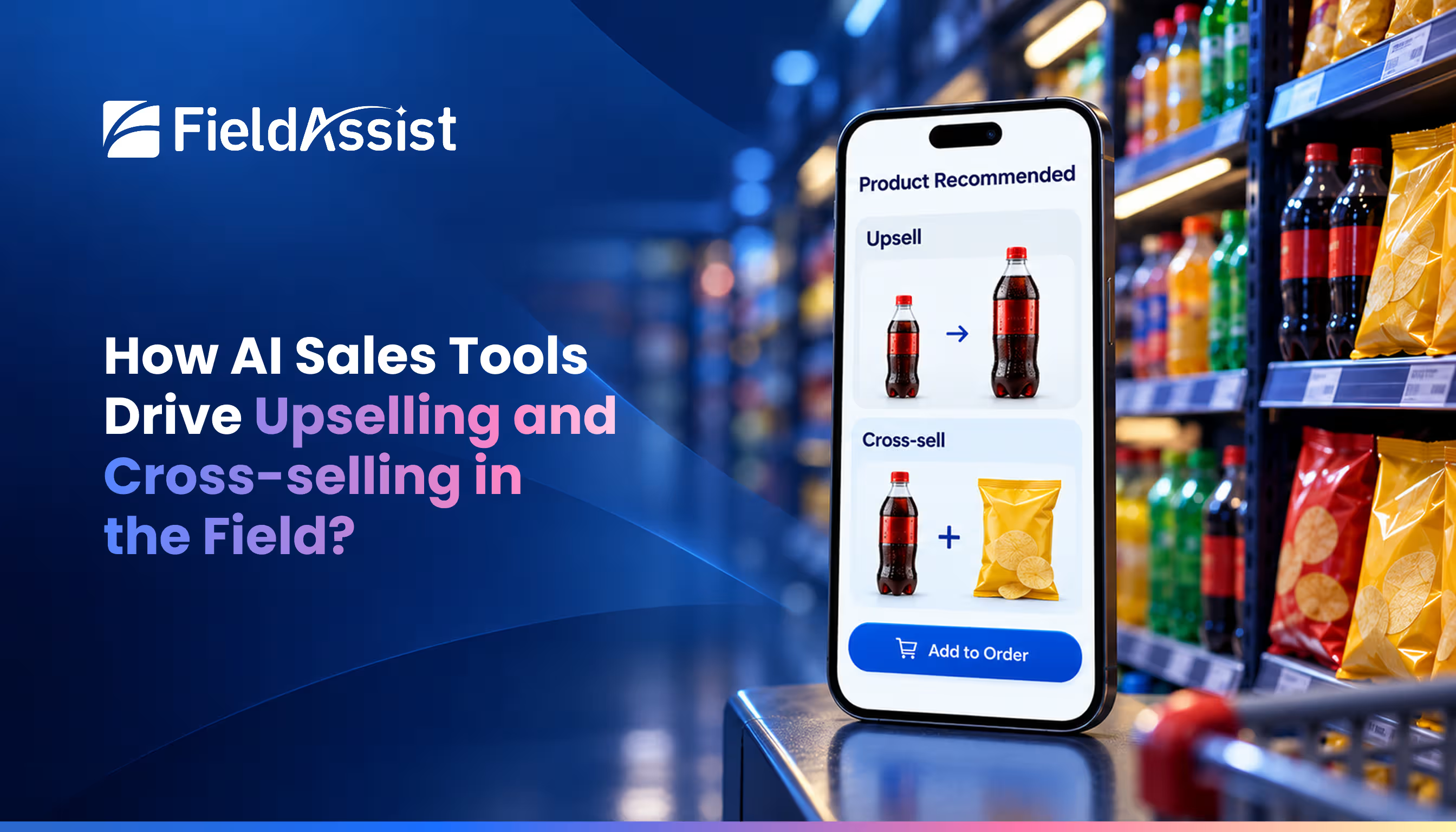
2. Better Cross-Selling & Upselling
Recommendation engines are particularly good at spotting adjacent-category opportunities a rep would miss. Bain & Company's work with a client on machine-learning-based cross-sell models found roughly 25% in additional revenue potential over standard cross-selling methods, a pattern that holds directionally across categories wherever structured buying data exists.
3. Faster SKU Adoption
New launches are the hardest thing to push through a habit-driven distribution network, because reps default to what's easy to sell rather than what's new. A recommendation engine can proactively surface a new SKU to the outlets statistically most likely to stock it first, based on their category mix and past willingness to try new listings, shrinking the time it takes a launch to reach meaningful distribution.
4. Higher Order Values
By consistently prompting reps toward relevant add-ons instead of leaving cross-sell to memory, average order values tend to rise, often the single biggest lever available without adding a rupee to trade spend.
5. Smarter Inventory Planning
Recommendation data doubles as a demand signal. Brands and distributors can use it to anticipate which SKUs are gaining traction at the outlet level and plan production and stock allocation accordingly, rather than reacting after a stock-out has already cost a sale.
6. Data-Driven Sales Decisions
Perhaps the biggest shift is cultural: sales decisions move from “what worked last time” to what the data says is working now, at the outlet level, in real time.
How FieldAssist's AI product recommendation engine helps drive smarter sales growth
FieldAssist's AI product recommendation engine is built directly into the field sales workflow, not bolted on as a separate analytics tool. It analyses each outlet's order history, category mix, and stocking behavior to surface the SKUs a rep should pitch on that visit, inside the same ordering app the rep already uses, with no extra step required.
You can see how this works on FieldAssist's product recommendation software page.
How to Choose the Right Product Recommendation System for Your Business
Not every product recommendation system is built for field sales and distribution. A handful of criteria separate the ones that hold up in the field from the ones that stay stuck in a pilot.
- AI & Predictive Recommendations
Look for genuine machine-learning-based prediction, not a static rules list dressed up as AI. The system should get measurably better with every order cycle.
- Real-Time Recommendations
Recommendations that only refresh overnight are already stale by the next sales visit. The system needs to reflect the latest order, the latest stock count, the latest visit, in the moment a rep is standing in front of the outlet.
- System Integrations
Your product recommendation software should plug directly into your existing SFA, DMS, and CRM stack; a recommendation engine is only as useful as the workflow it sits inside, not a separate app reps have to check.
- Scalability & Analytics
As outlet count and SKU range grow, the system should scale without a drop in recommendation quality, and give sales leadership visibility into adoption, acceptance rates, and revenue impact, not just a black-box output.
- The Future of AI Recommendations
The next wave is generative and agentic, product recommendation technology that doesn't just rank SKUs but explains the “why” behind a recommendation and, eventually, initiates the reorder itself. Brands evaluating a product recommendation system today should choose one built on a data foundation flexible enough to grow into that future.
Conclusion: Turning product recommendations into a competitive advantage
The businesses winning share in CPG and FMCG right now aren't necessarily the ones with the biggest portfolios; they're the ones getting the right SKU in front of the right outlet, every single visit, without relying on a rep's memory to make that call. A well-implemented product recommendation engine turns that from a hope into a repeatable process: less guesswork on the ground, faster adoption for new launches, and a measurable lift in order values and retention.
As AI product recommendation engine technology matures, from simple rule-based systems to fully predictive, real-time platforms, the gap between brands that adopt it early and those that wait will only widen. For a last-mile execution business, that gap doesn't stay theoretical for long; it shows up directly in fill rates, sell-through on new launches, and, eventually, on the P&L.




.avif)