How Retail Location Intelligence Will Transform FMCG Sales in 2027
How retail location intelligence helps FMCG brands improve outlet coverage, identify market whitespace, and build smarter sales territories in 2027.

Every FMCG sales head knows the feeling. The territory plan looks airtight in the boardroom. Three weeks into the quarter, a distributor is serving outlets nobody has mapped, a high-potential pocket two kilometers away has never seen a rep, and the beat plan still reflects the market as it looked two years ago.
That is the last-mile execution gap. It is not a strategy problem, and it is not a data-volume problem. It is a location problem: not knowing precisely where demand sits, which outlets are worth the visit, and where your coverage quietly stops. In 2027, closing that gap will separate the FMCG teams that grow from the ones that merely defend.
This blog breaks down how location intelligence is changing FMCG field execution, what the research says, and how sales leaders can put it to work.
Why Retail Location Intelligence in 2027 Is a Growth Question, Not a Mapping Question
For most of the last decade, location data lived with the GIS team or the supply chain planner. It produced maps: useful ones, but still just maps. The commercial question that actually matters, which outlets the next rep should visit, was answered by a manager's memory and last quarter's sales report.
That no longer holds, because the growth model underneath FMCG has changed. McKinsey's State of Food & Beverage report finds that volume growth for food and beverage CPG companies remains constrained at under 1% a year, far short of what the sector once delivered. When the market itself is barely growing, share has to be won outlet by outlet and pincode by pincode.
The brands winning that fight are small and local. Bain & Company's 2026 Insurgent Brands list shows that insurgent brands captured nearly 36% of FMCG growth in NielsenIQ-tracked channels in 2025, up from roughly 23% in 2024, while holding less than 2% of total market share. These brands do not outspend incumbents. They out-position them, picking the right neighborhoods, formats, and outlets early.
Location is turning from a reporting layer into a decision layer. The brands that treat it that way will see where growth is hiding long before it shows up in a sell-out report.
The Last-Mile Execution Gap Is Still Costing FMCG Brands Real Money
Better data has not fixed leakage at the shelf. IHL Group's 2026 Inventory Distortion Study puts the global cost of out-of-stocks and overstocks at $1.7 trillion a year, equal to 6.2% of worldwide retail sales. The trend is improving, but the number is still enormous.
For a brand, the pain is sharper at the outlet level. NielsenIQ's on-shelf availability analysis found that 7.4% of U.S. CPG sales went unrealized in 2021 because products were out of stock or off the shelf, roughly $82 billion in missed revenue. The data is a few years old, but anyone who has walked a general trade beat knows the pattern has not gone away.
Here is what those numbers hide from a sales leader's desk. Stock-outs and missed visits are not random. In the field, they tend to cluster in specific outlets, routes, and micromarkets, usually the ones where coverage was planned on outdated assumptions. A rep can be perfectly disciplined and still visit the wrong 40 outlets.
Consider an illustrative example. A beverage brand reaches 12,000 outlets through 30 distributors in one state. On paper, it covers 80% of its target universe. On the ground, a third of the "covered" outlets are visited irregularly, and an entire semi-urban belt sits outside every beat because nobody ever logged it. The problem is not rep effort. It is visibility.
From Static Maps to Local Market Intelligence
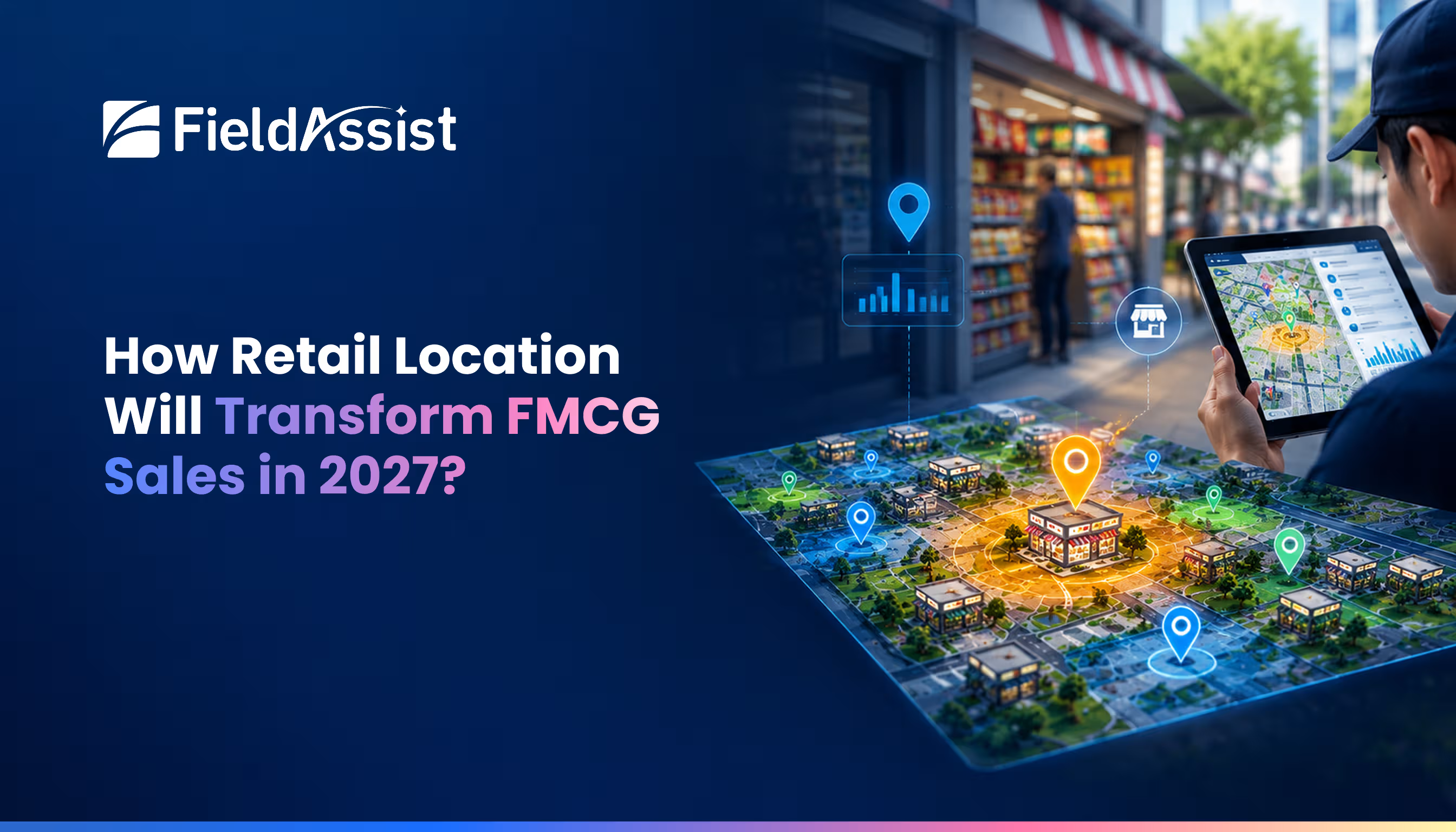
Traditional territory design starts with the distributor's boundary and a list of outlets the team already knows. Location intelligence starts from the other end: the actual market. It layers outlet universe, footfall patterns, competitor presence, demographics, and road access, then tells you where to play and with what intensity.
That is what we mean by local market intelligence: a ground-truth view of every micromarket you sell into, refreshed often enough to act on rather than just admire. Three things change when you have it.
- Coverage becomes measurable. You can see which outlets inside a distributor's area are served, under-served, or completely invisible.
- Whitespace becomes specific. Instead of "the North region has potential," you see the exact clusters where outlet density is high, and your numeric distribution is low.
- Investment becomes defensible. Trade spend, van routes, and merchandising effort follow the opportunity, not the loudest territory manager.
Retail Store Location Analysis Beyond Outlet Counts
Retail store location analysis used to mean counting outlets in a pincode. The modern version asks harder questions. Which outlets sit on high-footfall corridors? Which sit beside a competitor's cooler? Which are in catchments where your category over-indexes, and which are one more visit away from becoming a top-quartile account? Outlet count tells you where stores are. Store-level analysis tells you which of them deserve your next hour of field time.
Retail Market Analysis at the Pincode and Micromarket Level
Retail market analysis at the national or state level hides more than it reveals. A state may be growing while three of its districts shrink for your category. A city may be saturated at the center and wide open at the edge. Micromarket-level analysis turns a regional average into a ranked list of places to act: where to add outlets, where to deepen assortment, and where a distributor is stretched too thin.
Three Shifts That Will Define Location-Led FMCG Selling in 2027
1. From outlet lists to a living outlet universe. Outlets open, close, change hands, and change formats. A census that is a year old is already a liability. Leading teams are moving to outlet data that is verified in the field and updated as reps work, so the map improves with every visit.
2. From annual planning to continuous planning. Beat plans used to be redrawn once a year, usually in a hurry. In 2027, the planning cycle compresses. Coverage, whitespace, and route load get reviewed monthly, and sometimes weekly, as the market moves.
3. From one channel to many. General trade, modern trade, wholesale, and quick commerce now compete for the same shopper in the same neighborhood. A dark store opening nearby changes demand for the kirana next door. Location data is the only way to see those shifts across channels before they hit your numbers.
How AI Sales Intelligence Software Turns Location Data into Field Action
Maps and dashboards still leave a gap, because someone has to interpret them. This is where AI changes the economics. AI Sales Intelligence Software reads outlet, territory, and sales signals together and converts them into specific next steps for the rep or the area manager.
Gartner's May 2026 survey of 227 chief sales officers found that sales organizations that give sellers AI-enabled next best actions are 2.6 times more likely to achieve commercial growth. In FMCG, the best next action almost always has a location attached: which outlet to add to tomorrow's beat, which to drop, where to launch a new SKU first.
The practical shift for 2027 is from reporting to recommending. A territory manager should not have to export three sheets to find the problem. The system should say, for example: these outlets in this cluster have not been visited in 30 days, two competitors are active nearby, and the route can absorb them with a small resequencing.
AI Location Intelligence for Beat and Territory Planning
AI location intelligence earns its place when it replaces the annual beat-redesign exercise with a continuous one. Outlets open and close, a new flyover changes footfall, a competitor places a cluster of coolers. A model that watches those changes can flag when a beat has drifted from the market and propose a rebalanced version, keeping workload fair and coverage tight.
What to Look for in Location Intelligence Software
Not every tool that draws a map qualifies. When you evaluate location intelligence software, hold it to five tests.
- Fresh, ground-verified outlet data, not a one-time census.
- Coverage and whitespace views tied to your distributor and route structure.
- Recommendations a rep can act on inside the field app, not just insights for analysts.
- Integration with SFA and DMS, so insight flows into beats, orders, and targets.
- Built for emerging-market formats, from kiranas and wholesalers to modern trade.
If the insight cannot reach the rep's phone, it is reporting, not intelligence.
How FieldAssist Micromarket Closes the Last-Mile Gap
At FieldAssist, we don't just sell software. We work on the gap between a brand's plan and the outlet it actually reaches. Micromarket, our location intelligence product, is built for exactly that gap. It helps CPG sales teams see where their outlets are, how well those outlets are covered, and where whitespace remains, so that planning decisions connect to what happens in the field.
The goal is simple: take the decision away from guesswork and put it where the rep works.
A Practical Roadmap for FMCG Sales Leaders Heading into 2027
You do not need a multi-year transformation to start. You need one state, one category, and a willingness to test.
- Audit your coverage baseline. Compare the outlets you serve with the outlets that actually exist in your priority micromarkets.
- Rank micromarkets by opportunity, not history. Last year's sales show where you won. They do not show where you were absent.
- Pilot two or three rebuilt beats. Track numeric distribution, strike rate, and lines per call against control beats.
- Connect insight to execution. Push beat changes, outlet priorities and targets straight to the field app.
- Set a refresh cadence. Decide who owns the data, how often it is reviewed and what triggers a beat redesign.
The Bottom Line
Retail location intelligence will not replace field sales judgment. It will sharpen it. The FMCG teams pulling ahead will be the ones that treat location as a live input to every beat, every distributor conversation, and every trade-spend call.
The data to do that already exists. The open question is whether it reaches the people who walk the market. That is where Retail Location Intelligence in 2027 will be won: not in the dashboard, but in the last mile.
Ready to see where your coverage stops and your whitespace begins? Explore FieldAssist Micromarket.