How FMCG Managers Get a Real-Time Coverage and Performance Overview Without Chasing Reports
Explore how real-time FMCG reporting in Africa enables live coverage tracking, faster decisions, and stronger field execution with FieldAssist Analytics.

Africa’s FMCG opportunity is massive. Household consumption across the continent is expected to touch USD 2.5 trillion by 2030, driven by population growth, urbanisation, and rising daily consumption.
But capturing even a fraction of this growth depends on one thing most FMCG managers still struggle with: knowing what is actually happening on the ground- today, not last week.
In Africa’s fast-moving FMCG markets, conditions in the field can change within hours. A distributor may stock out by noon. A sales representative may skip a high-potential outlet. A competitor may gain shelf space during peak hours. Yet managers often discover these issues only after end-of-day or weekly reports are generated—when the damage is already done.
This is why FMCG leaders across Africa are rethinking reporting.
The Execution Gap in African FMCG — Why Real-Time Coverage Matters?
As an FMCG leader in Africa, how often do you feel accountable for results you can’t fully see? You’re expected to drive growth across thousands of fragmented outlets, distributor networks, and fast-changing demand — yet visibility into what’s working and what’s breaking is often incomplete.
In markets where informal trade drives nearly 80% of FMCG retail spend, these blind spots are costly. A single missed visit or delayed replenishment can quickly impact weekly sales. That’s why real-time coverage matters. It gives managers live visibility into execution as it happens, so issues are caught early, not after targets slip.
- Live visibility into outlet visits
- Immediate stock and SKU status at the store level
- Real-time field force execution visibility
- Territory- and route-level performance tracking
- Distributor execution transparency
Why Traditional FMCG Reporting Fails on the Ground?
Most FMCG companies operating in Africa still depend on legacy reporting systems designed for organised and more structured markets. In a region defined by informal trade, fragmented distribution, and rapid demand shifts, these systems fail to deliver reliable FMCG coverage tracking.
- Reports Arrive Too Late to Matter
By the time a regional or territory manager reviews end-of-day or weekly reports, the selling window has already closed. A missed visit, a distributor stock-out, or a pricing issue that happened on Monday only becomes visible on Thursday—often when sales moved to competitor’s basket.
- Fake Sales Data and Unverified Reporting
In the absence of real-time validation, reported sales and visit data can sometimes be incomplete, delayed, or even misrepresented. Managers may believe coverage has been completed or targets are being met, only to realise later that execution on the ground did not match what was submitted in reports.
- Missing Where Most Sales Actually Happen
In many African markets, daily sales momentum is driven by kiosks, street stores, and small independent retailers - not supermarkets. Yet reporting systems are often built around distributor billing or organised retail data, which restricts their ability to access true on-ground reality.
- Inventory Mismatch Without Real-Time Validation
Traditional reporting also struggles to reconcile what distributors show as “available stock” versus what is actually present at the outlet. Without live inventory and shelf-level validation, brands face frequent mismatches—leading to unexpected stock-outs, inefficient replenishment, and lost sales opportunities.
- Showing Numbers, Not What Really Happened in Stores
When a manager sees a dip in sales in a report, the data rarely explains why it happened. There is no visibility into whether a sales rep skipped key outlets, rushed visits, ignored merchandising guidelines, or simply failed to execute the plan. Managers are forced into assumption-based reviews, chasing explanations from teams instead of having evidence-backed clarity on execution gaps.
- Too Much Manual Work, Too Little Action
For a regional or territory manager, reporting often means chasing spreadsheets and distributor clarifications instead of managing execution and improving sales targets. By the time the data are reconciled, it’s already too late to fix issues.
In Africa’s rapidly expanding FMCG landscape, where distribution is fragmented, and execution happens at the last mile, these reporting gaps directly translate into missed sales, weak shelf presence, and lost market share.
How Real-Time FMCG Reporting Improves Field Force Visibility Across Africa?
Real-time coverage gives managers the ability to see live, continuously updated field data - not summaries compiled hours or days later.
This level of visibility is critical for managers to instantly track:
1. Which outlets have been visited today
Managers get a live view of daily coverage by rep, route, and territory, making it immediately clear where beat plans are slipping. This allows missed or delayed visits to be corrected during the same selling window, rather than being discovered after the day’s sales opportunity is already lost.
2. Which products are stocked or out of stock at each store
As coverage data flows in, managers can track how each outlet is performing in their beats against sales targets and expected order volumes. When an outlet’s contribution drops or key products selling slows, it becomes easier to flag potential stock or availability gaps early and take corrective action before the impact spreads across the territory.
3. Sales performance by territory, route, and salesperson
With visit and stock data in context, real-time sales performance shows where execution is translating into orders and where it is not. Managers can quickly identify underperforming routes or reps and intervene before daily or weekly targets start slipping.
4. SKU availability and visibility at the store level
Beyond sales numbers, real-time reporting shows whether priority SKUs are actually present and visible on shelves. This helps managers detect execution gaps in pricing, placement, or promotions that often go unnoticed in aggregated reports but strongly influence purchase decisions in competitive traditional trade outlets.
5. Distributor and route performance across regions
As the full picture comes together, managers can also track how distributor-led routes are performing across regions. Delayed deliveries, missed routes, or uneven coverage patterns surface early, allowing corrective action while the market opportunity is still active.
Traditional reporting struggles in these conditions because data collection is manual, delayed, and often incomplete. With real-time FMCG reporting in place, managers gain true field-force visibility across Africa. This enables faster decisions, quicker market corrections, and stronger execution at the last mile.
How FieldAssist Automates FMCG Reporting for African Markets?
If you’re an FMCG manager operating in Africa, you know the frustration of being asked to explain a sales drop without having real visibility into what actually happened on the ground. Which outlets were missed? Where did stock-outs occur? Was it a distributor delay or an execution gap?
That’s exactly what FieldAssist is built to fix. Designed for Africa’s fragmented, high-velocity FMCG environment, FA Analytics Studio is FieldAssist’s next-gen sales analytics and custom reporting platform, designed for FMCG brands operating across fragmented, high-velocity markets. Instead of waiting for MIS teams or reconciling spreadsheets, managers get a unified, real-time performance view across field execution and distribution data.
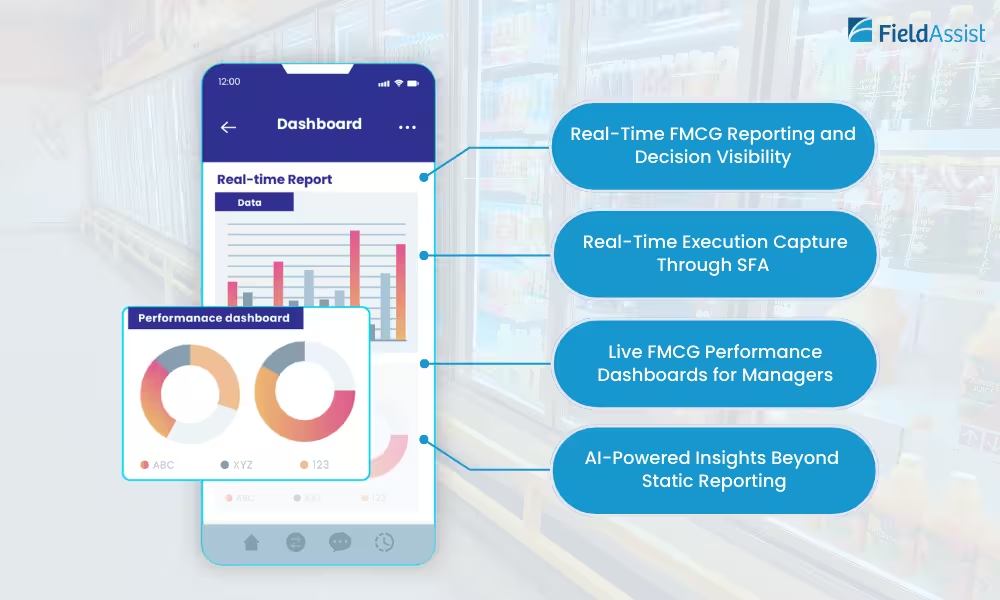
1. Real-Time FMCG Reporting and Decision Visibility
Traditional reporting fails because data sits across disconnected systems. FA Analytics Studio solves this by bringing sales and distribution data into one intelligent reporting layer, giving managers a single source of truth.
- Unified dashboards across outlet coverage, distributor performance, and territory trends
- Self-serve reporting without IT dependency
- Real-time answers instead of week-end report delays
2. Live FMCG Performance Dashboards for Managers
FieldAssist replaces static weekly reports with cloud-based, real-time dashboards that update continuously as field data flows in.
Managers get instant visibility into:
- Outlet coverage and visit compliance
- SKU availability and stock-out gaps
- Sales performance by rep, route, and territory
- Inventory movement across distributors and routes
3. Real-Time Execution Capture Through SFA
In African FMCG markets, where informal and micro-outlets dominate, FieldAssist helps brands digitize outlet networks that are often invisible in traditional systems.
- Accurate mapping of performing kiosks, street-side stores, and informal retailers
- Clear identification of uncovered or underserved routes
- Route adherence and compliance improve last-mile coverage efficiency
4. AI-Powered Insights Beyond Static Reporting
Instead of only showing what happened, FieldAssist Analytics Studio helps managers spot what’s coming next.
- AI forecasting to anticipate demand shifts
- Early identification of revenue leaks and distribution inefficiencies
- Actionable insights linked directly to field execution
With FA Analytics Studio, FMCG managers across Africa move from chasing reports to leading with intelligence, combining execution data, distributor visibility, and real-time analytics into one performance command center.
With FieldAssist, FMCG managers across Africa gain true real-time visibility, not through more reports, but through live execution data that reflects what’s actually happening on the ground.
Key Metrics Managers Track in One View
For FMCG leaders operating across complex and informal African markets, performance management depends on visibility. Without a consolidated view of field execution, leaders are forced to rely on delayed summaries and fragmented reports. This limits their ability to control coverage, prioritise resources, and step in before execution gaps widen.
Africa-ready FMCG reporting automation delivers all this in one view. Here's what matters the most:
What Changes When Reporting Goes Real-Time?
Moving from traditional reports to real-time FMCG reporting fundamentally changes how performance is monitored, gaps are identified, and execution is managed across the field.
1. Actionable Decision-Making
Managers make decisions based on what’s happening now, not what happened weeks ago. This means faster corrective actions and improved agility.
2. Improved Field Force Productivity
Teams spend less time compiling data and more time acting on insights. Sales reps aren’t asked to chase paperwork; they log visits in real time and move on.
3. Better Customer / Outlet Relationships
Retailers (especially in informal trade) get better service: stock gaps are detected early, promos/schemes are delivered on time, and visits are more predictable thanks to transparent coverage tracking.
4. Higher Distribution Efficiency
Digitized and automated reporting systems improve efficiency, minimize stockouts, and unlock growth in difficult-to-reach markets.
These changes elevate teams from “report submitters” to insight-driven managers capable of guiding growth in complex markets.
Conclusion: From Chasing Reports to Leading with Insight
Africa’s FMCG market is growing fast, but in a landscape defined by fragmented retail and rapid shifts on the ground, delayed reporting becomes a real competitive disadvantage. Managers can’t afford to discover missed visits, stock-outs, or execution gaps after the selling window has already passed.
Real-time FMCG reporting changes this by giving leaders live visibility into coverage, availability, and field performance as it happens. With platforms like FieldAssist, teams can move from chasing reports to acting faster, executing better, and staying in control across Africa’s last mile.
To learn how FieldAssist enables real-time coverage and performance visibility, get in touch.



%20(1).avif)