Beyond the Brink: Why Retail Supply Chains Must Evolve or Erode
Discover why retail supply chains fail at shelf level and how FMCG brands can improve on-shelf availability, retail execution, and distribution visibility with retail supply chain management software.

Have you ever wondered why, in an era of unprecedented technology, the retail shelf still runs empty?
The global retail sector is no longer merely "changing" - it is under siege by a compounding cost structure. For many enterprises, this is not just another budget line item; it is a direct hit to the jugular of their net margins.
When McKinsey suggests that a decade of disruptions could wipe out 45% of annual profits, the conversation shifts fundamentally from "operational efficiency" to "existential survival.
For CPG and FMCG leaders, retail supply chain management is no longer relegated to a back-office function. It is the primary driver of the bottom line.
The Strategic Bottlenecks: What’s Actually Breaking?
You cannot control the Oceans, So You Must Command the Shelf.
For many FMCG and CPG companies, the real breakdown is not in factories or ports. It happens at the last mile - between distribution data and what actually exists on the retail shelf.
Below three structural bottlenecks explain why.
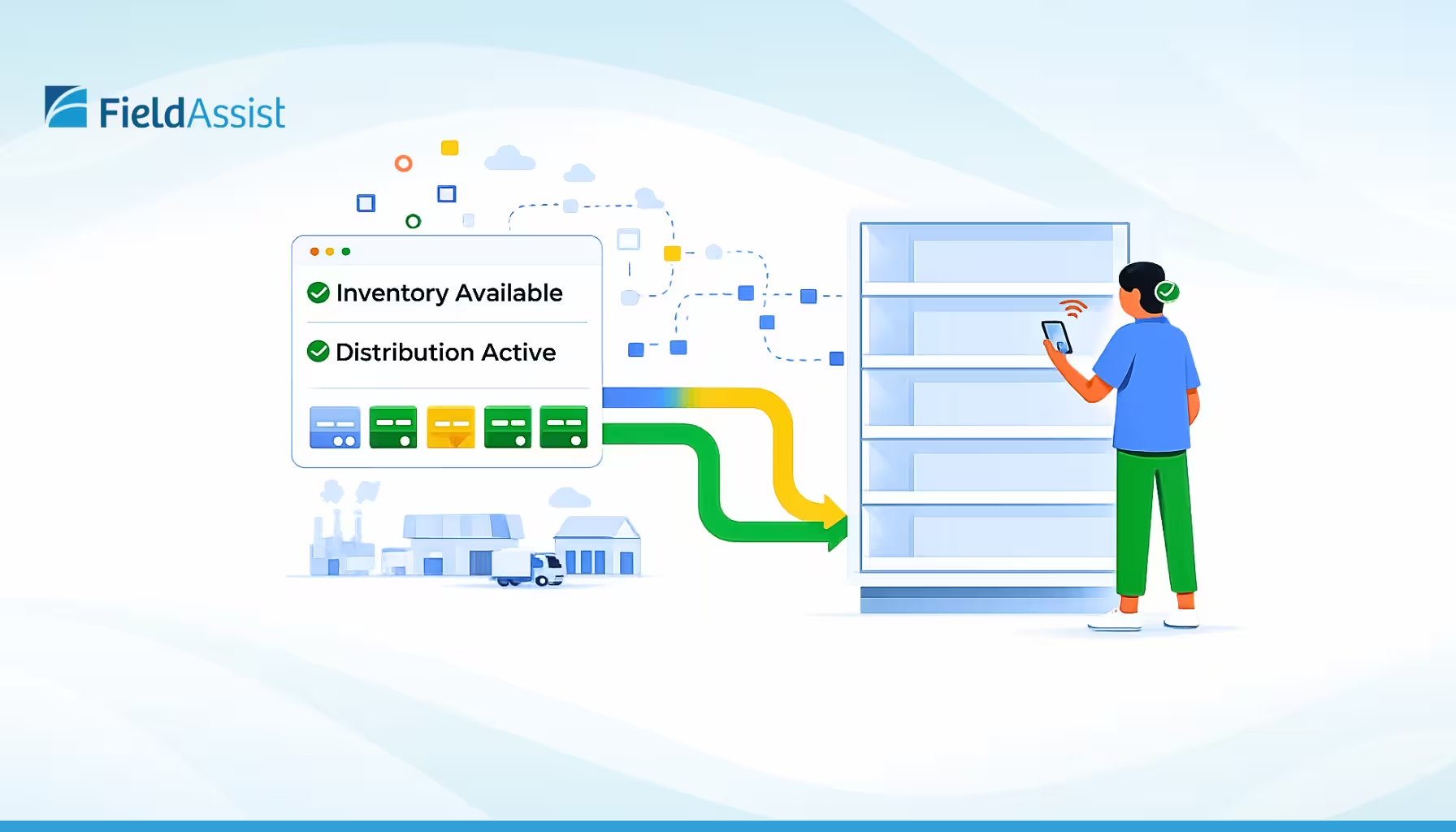
- The "Single Source of Truth" Paradox: Most large FMCG companies operate on a network of disconnected systems, which includes ERP, distributor management platforms, retailer apps, and CRM tools - and they rarely speak the same language. The result is a persistent data fog. Head office dashboards show inventory availability. But when a customer walks into a store, the shelf may still be empty. This phenomenon - often called phantom stock - occurs when systems indicate availability while the product is missing from the shelf. The cost is not just operational inefficiency; it is lost customer trust.
- Execution Volatility at the Retail Edge: Global disruptions—from shipping delays to tariff changes - have made demand patterns increasingly volatile. But the real problem is how slowly this volatility translates into action on the ground. Without real-time visibility into secondary sales, shelf compliance, and distributor inventory, organizations struggle to respond quickly. The result: stock reaches the warehouse but not the shelf, promotions run without execution visibility, and competitors capture share through faster retail response.
- The Multi-Million Dollar Visibility Gap: For large FMCG organizations, small inefficiencies across thousands of stores compound rapidly. Excess inventory locks working capital in warehouses, stockouts hand market share to competitors, and manual audits consume field productivity. The challenge resembles the classic Goldilocks dilemma: too much inventory erodes margins through markdowns; too little inventory results in lost sales and weakened retailer confidence. Without accurate retail intelligence, companies are forced to manage this balance through guesswork rather than insight.
The FieldAssist Execution Framework: 6 Pillars of Operational Dominance
Closing the gap between supply and shelf requires more than digitization. It requires execution intelligence - the ability to translate data into action at the retail edge. FieldAssist enables this transformation through six strategic capabilities.
1. Unified Data Architecture (The Silo Killer)
The "data lag" is the silent killer of operational performance. FieldAssist replaces the "patchwork" approach with a unified architecture that plugs directly into your SAP, Oracle, or Microsoft Dynamics environment, erasing the need for manual reconciliation and ensuring CXOs & on-ground teams operate with one shared version of reality. When data flows continuously across the ecosystem, decision latency disappears.
2. AI-Driven "Smart Nudges" for Precision Execution
Traditional order planning relies heavily on historical averages or field intuition. FieldAssist replaces guesswork with AI-driven predictive analytics.
By analyzing demand signals, local sales patterns, and market volatility, the platform generates smart nudges that guide field teams toward the optimal SKU mix for each outlet. Instead of reacting to stockouts, organizations begin preventing them.
3. Computer Vision & Real-Time Shelf Intelligence
Manual store audits are slow, inconsistent, and expensive. FieldAssist transforms shelf monitoring through image recognition technology. A field representative captures a simple photo of the store shelf. Within seconds, the system analyzes the image to identify:
- Planogram compliance
- Out-of-stock items
- Shelf share versus competitors
This capability turns every store visit into a data-rich execution checkpoint.
4. Intelligent Route-to-Market (RTM) Optimization
Field productivity often determines how effectively brands penetrate the market. FieldAssist leverages geospatial analytics and market data to optimize route planning, beat structures, and store coverage.
By analyzing outlet density, demand frequency, and route efficiency, companies can increase store coverage while reducing fuel and operational costs.
Efficiency in the last mile becomes a measurable advantage with AI-route optimization software.
5. Scenario Planning and Market Adaptability
Retail environments change rapidly. Promotions shift demand patterns, regional disruptions affect distribution flows and competitive activity reshapes local markets.
FieldAssist enables organizations to model these changes and respond quickly through data-driven planning and operational workflows.
Instead of reacting late, companies gain the ability to adapt proactively.
6. Dynamic Inventory & Predictive Replenishment
The ultimate goal of retail supply chain management is simple: the right product, at the right outlet, at the right time. However, profitability dies somewhere between overstock and stockouts. FieldAssist’s predictive replenishment engine synchronizes secondary sales data with primary supply nodes across the distribution network.
This ensures production and distribution align with real demand patterns rather than outdated forecasts.
Quantifying the ROI: The Bottom Line
Organizations implementing intelligent retail execution platforms consistently report improvements across key performance metrics.
The Path to Strategic Primacy
The global retail landscape of 2026 demands more than just "efficiency." It demands resilience. The winners in the FMCG and CPG space will be those who can see through the "data fog" and execute with surgical precision.
FieldAssist provides the enterprise-grade sales and distribution solutions to turn these challenges into your greatest competitive advantage. By unifying data and optimizing for the field, we empower your brand to dominate the market. To know more about how you can bring operational excellence to the supply chain, request a demo.



%20(1).avif)