What is Numeric Distribution? Complete Guide to KPIs, Calculation & Strategy
Master Numeric Distribution (ND) in sales. Learn the calculation formula, the critical difference between Numeric vs. Weighted Distribution, and 3 strategies to fix low coverage.

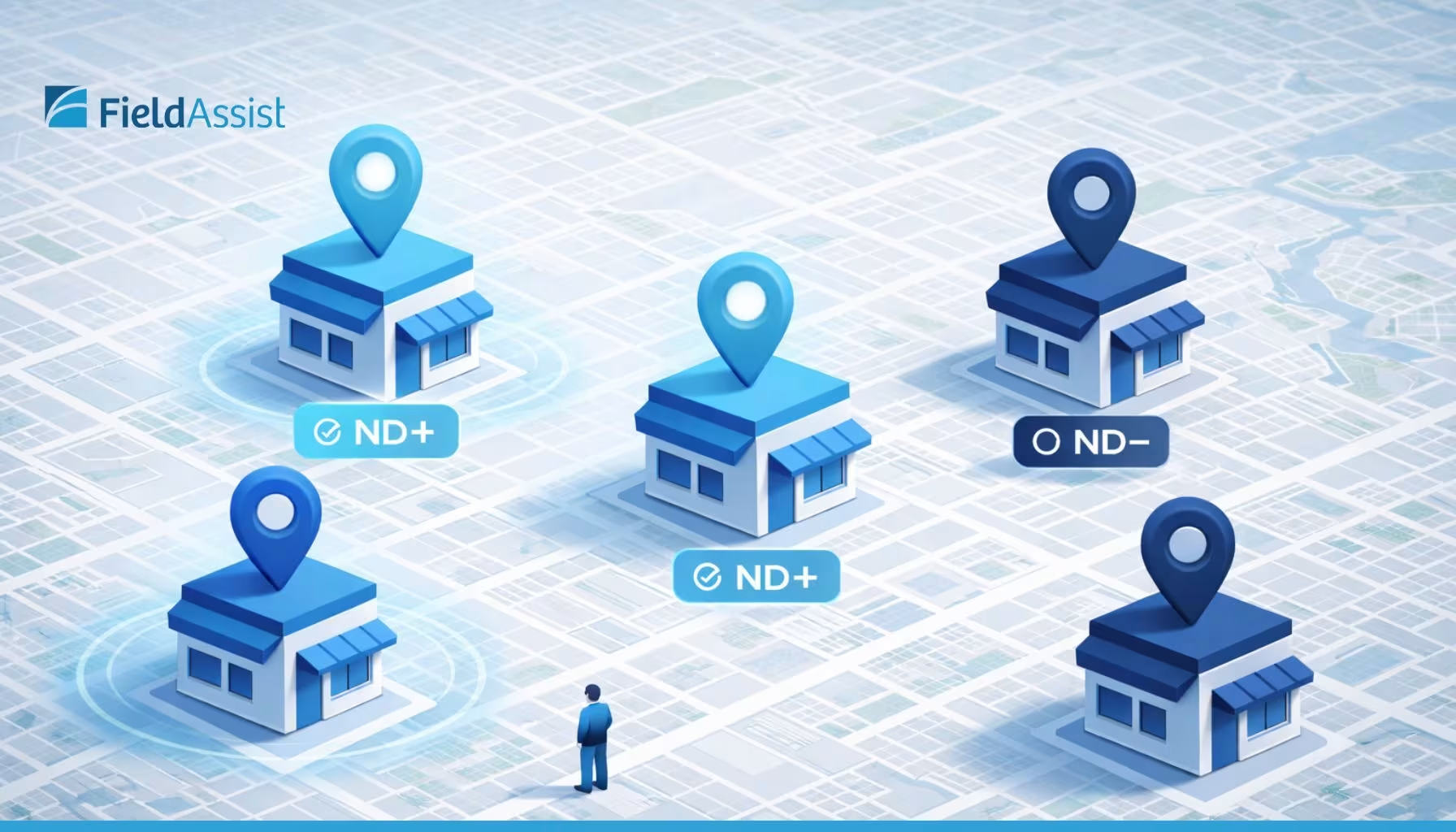
Numeric Distribution (ND) is a fundamental sales KPI that measures the percentage of stores stocking your product out of the total universe of stores in a defined territory. Unlike Weighted Distribution, which measures the quality of stores, Numeric Distribution measures the quantity of your reach.
For example, if there are 100 stores in a city and your product is available in 60 of them, your Numeric Distribution is 60%. It answers the question: "How easy is it for a customer to find my brand physically?"
How to Calculate Numeric Distribution (Formula + Example)?
To calculate ND, you need two data points: (a) the number of outlets with stock and (b) the total number of outlets in your universe.
The Formula to Calculate Numeric Distribution is:
Numeric Distribution (%) = (total stores with brands in stock ÷ total universe in stores with territory)x100
Real-World Example
Imagine you are a Regional Sales Manager for a beverage brand in Mumbai.
- Total Universe: Your territory has 500 potential retailers (Kirana stores, supermarkets, chemists).
- Stock Check: A market audit (or sales force automation app) reveals that 350 of these stores currently have your soda in stock.
So the calculation is:
(350 ÷ 500) x 100 = 70% Numeric Distribution
This KPI Insights shows 30% of the market cannot buy your product even if they wanted to. This 30% is your "Opportunity Gap."
Numeric vs. Weighted Distribution: What’s the Difference?
A high Numeric Distribution does not always guarantee high sales. This is where most Field Sales Managers get confused. You must look at Weighted Distribution (WD) alongside Numeric Distribution (ND).
- Numeric Distribution measures Quantity (How many stores?).
- Weighted Distribution measures Quality (How good are the stores?).
Pro Tip: If your ND is rising but your Sales Volume is flat, you are likely opening "bad" outlets, i.e., stores with very low footfall.
How to Interpret Your Numeric Distribution Data?
Interpreting a numeric distribution requires cross-referencing it with a weighted distribution; only then can you determine whether your sales team is chasing Vanity Metrics or Real Value.
For your reference, we have created a table to identify which quadrant your brand currently sits in and what your next immediate step should be.
Pro tips: The only "worse" position is High ND / Low WD (The "Cost Trap"). This happens when a sales team chases "visit targets" by signing up hundreds of tiny stores while failing to crack the difficult, high-volume supermarkets.
Proven Strategies to Increase Numeric Distribution
If your audit reveals a low ND, here are three best practices to improve the numeric distribution and drive immediate growth.
1. The "Van Sales" Expansion (For General Trade)
For FMCG brands, the biggest barrier to Numeric Distribution (ND) is usually logistics. Small stores order small quantities that big distributors hate to deliver. And also in fragmented markets, small retailers hate pre-ordering stock because they have limited cash flow.
- The Strategy: Deploy Ready Stock Units (Van Sales). These vehicles carry inventory and sell to small retailers on the spot, bypassing the need for pre-orders.
- Why it works: You eliminate the delivery lag. The retailer pays cash, gets the stock immediately, and your ND spikes overnight.
2. Gamify "Must-Stock" Lists
Retailers often forget to reorder slow-moving SKUs.
- The Strategy: Create a "Must-Stock List" (MSL) incentive. If a retailer maintains stock of your Top 5 SKUs for 4 consecutive weeks, they earn a backend rebate or loyalty points. Here you can launch a Retailer Loyalty Program, where store owners earn "points" for maintaining stock every week
- Why it works: It aligns the retailer's profit motive with your availability goals.
3. Optimizing Beat Plans and Routes via SFA
Often, low ND is a result of poor time management. Sales reps may be skipping the "hard-to-reach" stores.
- The Strategy: Use Sales Force Automation (SFA) software to optimize route planning (Beat Plans).
- Why it works: By reducing travel time, you free up 1-2 hours per day for the rep. Mandate that this extra time is spent exclusively on NOO (New Outlet Opening) to widen the funnel.
Frequently Asked Questions (FAQ)
1. What is a "Good" Numeric Distribution percentage?
For a mass-market FMCG brand (like biscuits or soap), a healthy Numeric Distribution (ND) percentage is typically 75-85%. For niche or premium cosmetics, 30-40% is acceptable if those stores are high-value outlets.
2. Can a numeric distribution be 100%?
No. However, your Universe data might be outdated. If you find stock in stores that were not in your original list, you need to update your census data immediately.
3. How does "Out of Stock" (OOS) affect Numeric Distribution?
ND is a binary metric: Present or Not Present. If a store usually sells your brand but is Out of Stock (OOS) on the day of the audit, your Numeric Distribution decreases. This is why supply chain reliability is just as important as sales effort.
4. Why Numeric Distribution matters?
- ND ensures your product is within arm's reach when a consumer has an impulse to buy.
- High Numeric Distribution builds subconscious brand recall, making consumers trust you as a "market leader" simply because they see you everywhere.
- ND ensures your marketing dollars actually convert into sales.
- A high numeric Distribution blocks space for new entrants, forcing them to compete more aggressively for visibility.
- A low Numeric score often reveals that sales reps are skipping the "hard-to-reach" stores in their beat plan.
5. Why Weighted Distribution Matters
- A weighted distribution guarantees you are present in the high-volume outlets that drive 80% of the category's sales
- High Weighted Distribution ensures your logistics costs are allocated to stores that deliver a high Return on Investment (ROI).
- For higher-priced items, High WD with moderate ND confirms you are in the right shops (e.g., A-Class outlets) that attract customers with higher spending power.
- High-weighted outlets ensures your product doesn't expire on the shelf, reducing "Market Returns" and keeping your inventory fresh.
- Tracking Weighted Distribution matters because losing one "High WD" store can affect your monthly target instantly. Tracking the WD metric acts as an early warning system for revenue risk.
The math is simple. The execution, however, is the hard part. For more information on how to improve numeric distribution, and to understand which tech stack is right for your specific goals, contact us today.




.avif)