How Fragmented Distributor Networks Are Costing FMCG Brands Visibility in Indonesia & the Philippines
Fragmented distributor networks are costing FMCG brands millions in lost visibility. Discover how a distributor management system drives secondary sales growth and ROI across Indonesia and Philippines’ FMCG.

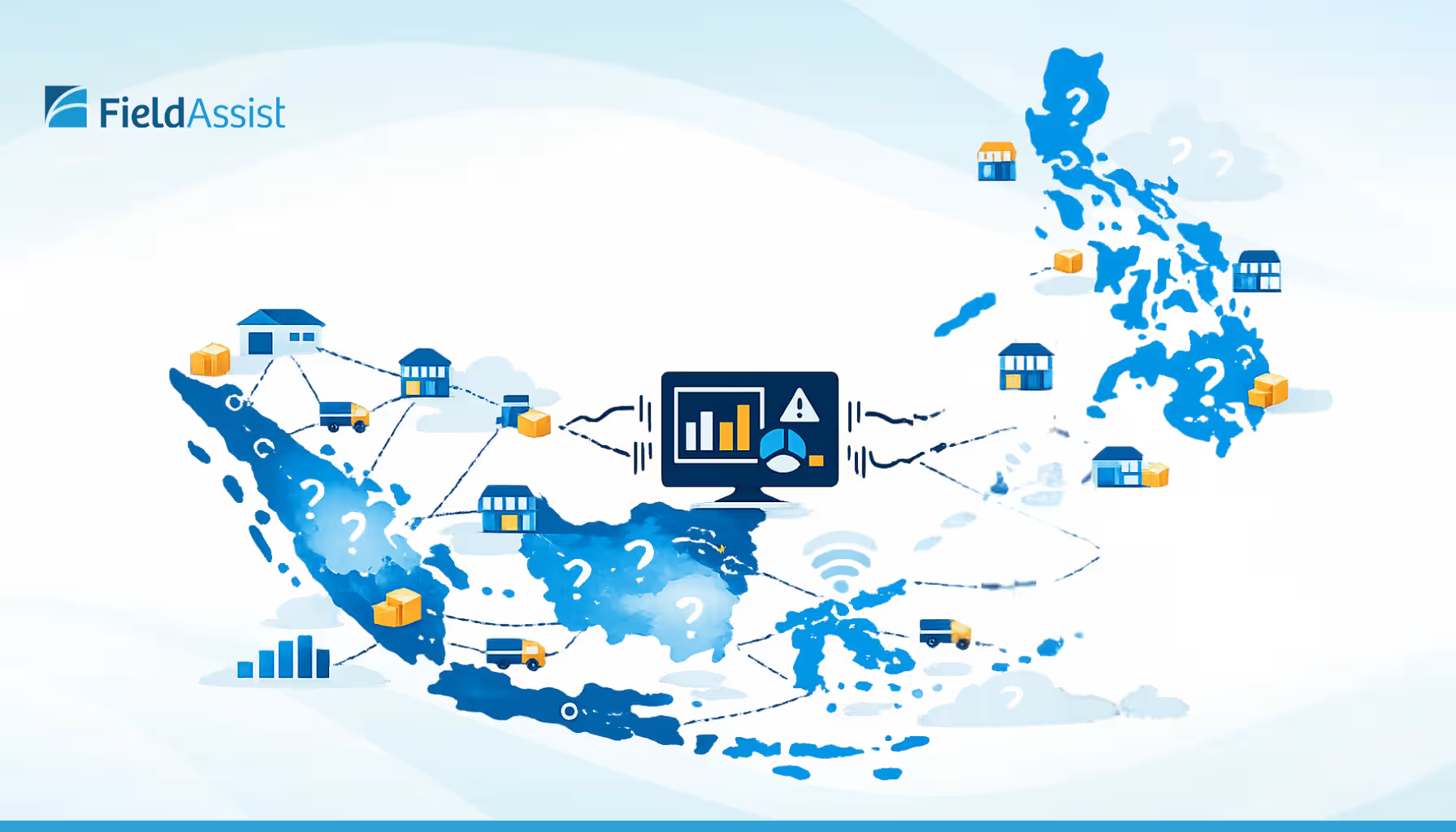
You can’t win the retail race in Southeast Asia when you are legally blind to 4.1 million fragmented retail points in Indonesia alone. And if you combine that with the Philippines market, that’s roughly 24,600 islands - & the distribution math here is extremely brutal.
Brands pump millions into trade promotions, but without secondary sales visibility, how much actually reaches the Sari-sari store or the Warung?
The real question for leadership teams is not whether fragmentation exists. Everyone operating in Southeast Asia knows that it does.
The real question is what that fragmentation is quietly costing the brand every day
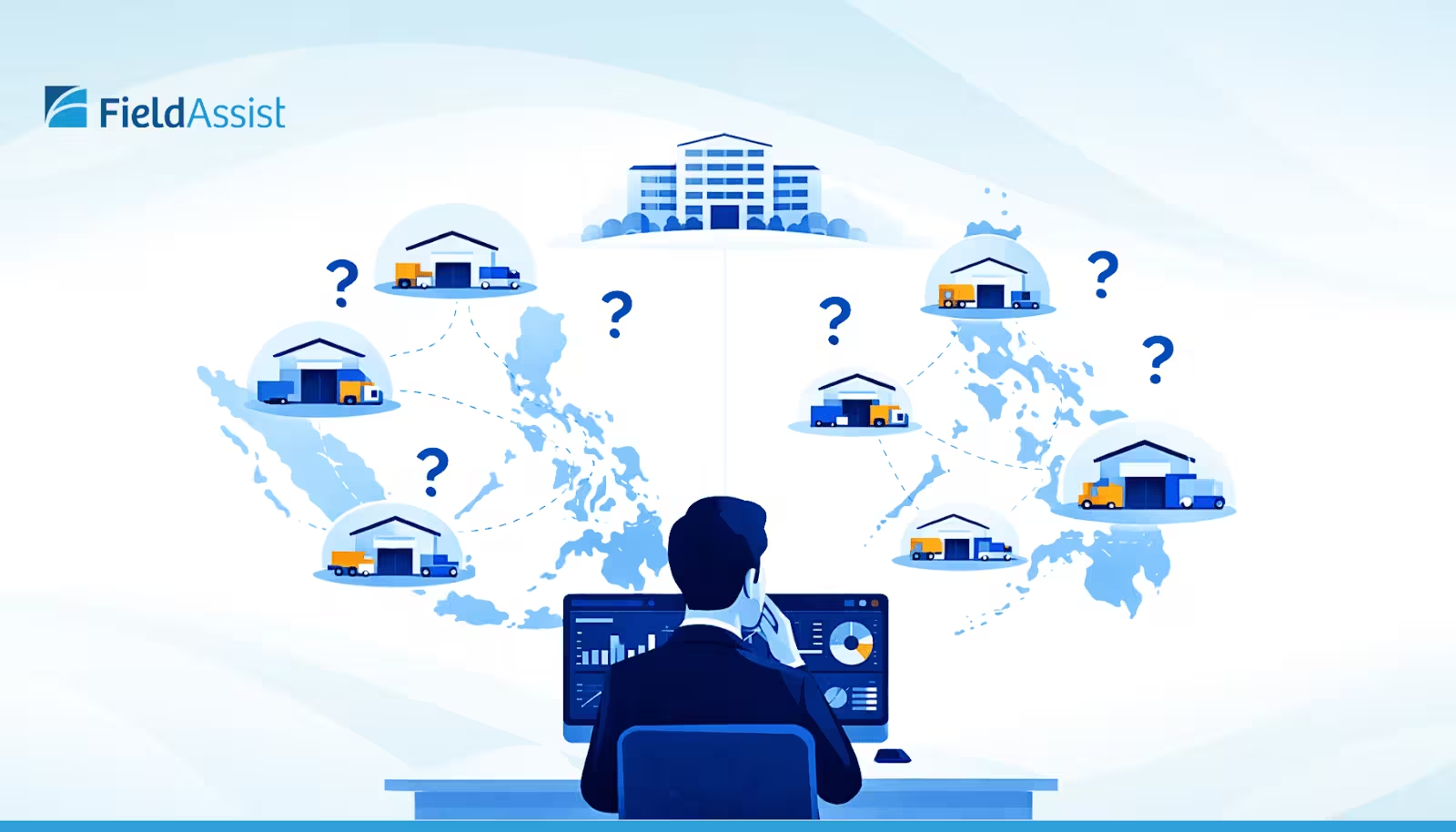
Because once products leave the company warehouse and move into a multi-layer distributor network, visibility often fades quickly. Secondary sales data becomes delayed, inconsistent, or sometimes completely invisible. What the ERP shows as “sales” may simply be inventory sitting somewhere in the channel.
This raises a few uncomfortable questions for CXOs as well - Are trade promotions actually driving retail sell-through? Which distributors are genuinely expanding retail coverage, or where exactly is the next 20% growth supposed to come from if we can’t see what’s happening across millions of fragmented retail points?
These questions matter because fragmented distributor ecosystems create structural blind spots. And the consequences are rarely discussed. Yet surprisingly, this remains one of the least-discussed challenges in FMCG distribution across Southeast Asia.
5 Hidden Costs of Fragmented Distributor Networks
Indonesia and the Philippines are two of the fastest-growing FMCG markets in Southeast Asia, where traditional trade still dominates everyday consumption. The neighbourhood store remains a core buying channel, and sales are far higher than those of supermarkets.
Though the market potential is huge, the path to those potential warungs and sari-sari stores usually passes through multiple layers of distributors, sub-distributors, and wholesalers.
The real cost of fragmentation becomes visible when leadership teams struggle to answer some very basic market questions.
_converted.avif)
How Market Leaders Are Fixing Distributor Fragmentation?
_converted.avif)
Fragmentation in markets like Indonesia and the Philippines will not disappear. The number of warungs, sari-sari stores, and multi-layer distributors will continue to grow.
However, the real shift occurs when brands digitally connect these networks through an online Distributor Management System (DMS), enabling mom-and-pop stores to hold their ground while making digitization an intrinsic part of their operations.
Modern Distributor Management System unifies distributor operations, sales data, and inventory flows into a single system, enabling brands to track orders, stock movements, and claims in real time.
When this layer of visibility is in place, the questions we discussed earlier suddenly start getting real answers.
CXO Playbook: Turning Distributor Chaos into Distribution Intelligence
_converted.avif)
With an Online Distribution Management System (DMS), brands can unify distributor operations, secondary sales data, and inventory flows into one connected intelligence layer.
Instead of asking “Why can’t we see what’s happening?”, leadership teams begin to ask “What insights can we unlock next?”
Below is a practical playbook of what becomes possible.
1. Real-time Secondary Sales Visibility
With the real-time secondary sales visibility from distributors and field teams, leaders can move from guessing demand to seeing real retail sell-through patterns across regions.
What answers does it unlock?
- What products are actually selling across warungs and sari-sari stores?
- Which regions are driving real consumer demand?
- Does distributor billing reflect actual retail sell-through?
Business Impact:
- Accurate demand forecasting
- Reduced channel inventory build-up
- Better production and supply planning
2. Live inventory tracking with AI replenishment signals
Live inventory tracking across warehouses and depots with AI-based auto-replenishment signals prevents stockouts before retailers switch to competing brands.
What answers does it unlock?
- Where stock gaps are forming in the network?
- Which SKUs are overstocked at the distributor level?
- When replenishment needs to be triggered?
Business Impact:
- Faster stock replenishment
- Lower stock-out risks at retail
- Improved inventory health across the channel
3. Centralized trade scheme and claims management
With centralized schemes and claim tracking, trade investments become measurable across distributor networks.
What answers does it unlock?
- Are promotions reaching retailers?
- Which schemes are driving retail sell-through?
- Where are trade investments leaking in the channel?
Business Impact:
- Higher ROI on trade promotions
- Transparent scheme tracking
- Reduced disputes with distributors
4. Distributor performance and outlet coverage monitoring
With outlet-level distribution insights, fill-rate monitoring, and distributor performance dashboards, brands can easily identify high-performing partners and take proactive actions to fix weak coverage zones faster.
What answers does it unlock?
- Which distributors are expanding market coverage?
- Which areas are being serviced regularly?
- Where distribution gaps exist across regions?
Business Impact:
- Higher ROI on trade promotions
- Transparent scheme tracking
- Reduced disputes with distributors
5. Integrated analytics and forecasting dashboards
AI-driven forecasting and analytics dashboards move brands from reactive to proactive execution, giving them the edge in tracking sales, inventory health, scheme spending, and distributor performance. With smart analytics, forecasting becomes accurate.
What answers does it unlock?
- Where are the next growth pockets forming?
- Which SKUs are gaining traction in traditional trade (GT)?
- How does distributor performance impact regional growth?
Business Impact:
- Higher ROI on trade promotions
- Transparent scheme tracking
- Reduced disputes with distributors
Conclusion:
The Modern Distributor Playbook in Southeast Asia requires precisely three things: visibility, coordination, and intelligence.
Visibility to understand what is actually happening across millions of retail points.
Coordination to ensure distributors, field teams, and supply chains operate in sync.
And intelligence to turn fragmented operational data into decisions that drive growth.
By connecting distributors through a distributor management system, FMCG brands can gain a clearer picture of how products move across warungs in Indonesia and sari-sari stores in the Philippines - where the real battle for market share happens every day.
This is where FieldAssist fits into the smart distributor playbook. To know more about FieldAssist DMS software, request a demo.





%20(1).avif)
.avif)