5 Best Product Recommendation Engines & Tools That Boost Sales
Compare 5 AI product recommendation engines for FMCG and e-commerce, including features, use cases, data needs, and tips for choosing the right tool.

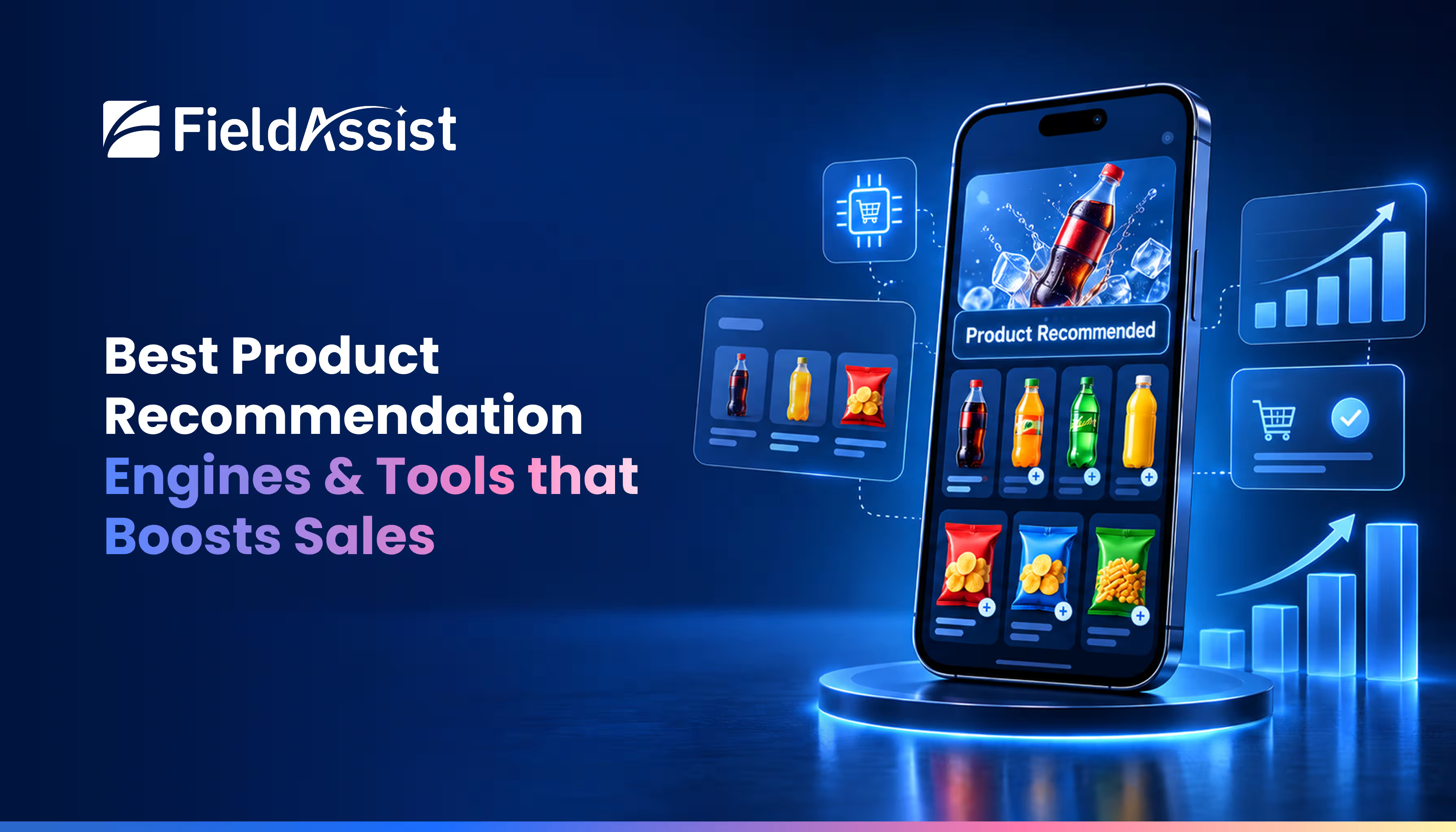
Ask most sales leaders what a recommendation engine does, and they will describe an online store: the shopper browses, the engine suggests, the basket grows. In FMCG, the sale rarely works that way. It happens at a kirana counter, a van window or a distributor's desk, and the recommendation has to land in the ninety seconds a rep gets with the outlet owner.
That gap is why this shortlist covers two kinds of platforms: e-commerce personalization engines and one engine built for CPG route-to-market. We compared five AI product recommendation tools on the data each needs, where the suggestion actually appears, and how well it handles general trade. If you sell through reps and distributors, one of these was built for your world. The other four are capable, but they were built for a different shelf.
Why Product Recommendation Solutions Move Revenue
Done properly, product recommendation solutions are a revenue lever, not a user-experience nicety. McKinsey's personalization research found that personalization most often drives a 10 to 15 percent revenue lift, with company-specific results ranging from 5 to 25 percent depending on sector and execution. It also noted that among consumer packaged goods companies, the fastest growers were far more likely to prioritize personalization than slower ones.
The mechanism matters more than the headline. A Gartner survey of 227 chief sales officers, published in May 2026, found that sales organizations giving sellers AI-enabled next best actions are 2.6x more likely to achieve commercial growth. A recommendation engine for a field team is exactly that: which SKU, to which outlet, on this visit.
The cost of getting it wrong is easy to see on the ground. Reps default to the SKUs they know. New launches stall in the outlets that already stock them. Order value per visit flatlines, and nobody can say why. NielsenIQ quantified the adjacent problem: in 2021, 7.4 percent of US CPG sales went unrealized because of out-of-stock or out-of-shelf items, roughly $82 billion. A recommendation that ignores stock and shelf reality simply sends reps to sell what is not there.
For a CPG brand, the lever shows up in numbers every regional manager already tracks: lines per call, SKU penetration, order value per visit, and new-launch adoption. When a rep sells from habit, those numbers plateau. When the rep is nudged toward the two or three SKUs that similar outlets already buy, they move. That is the practical case for recommendations, and it is why the category deserves more than a plug-in widget.
What the Best Product Recommendation Engines Get Right
Strip away the vendor decks and the strongest engines share four traits:
• Data at the right grain. Outlet-level order history and SKU-level stock, not just clicks.
• Suggestions at the point of decision. In the basket, or on the rep's handheld during order booking, not in a weekly report nobody opens.
• Explainable output. Reps follow suggestions they understand, and managers need to see why an outlet was nudged.
• A feedback loop. Accepted and ignored suggestions should retrain the model.
Most disappointing rollouts fail on the first two. A model trained on clean e-commerce clickstream data performs well online, then falls flat when it is asked to guide a van salesman through forty outlets a day with patchy connectivity and distributor stock that changes by the hour. Data grain and delivery point decide whether the engine is used or ignored.
The Top AI Product Recommendation Tools, Reviewed
The five are ordered by fit for CPG and FMCG selling, not by brand size. Descriptions reflect each vendor's public positioning, so confirm current capabilities and pricing directly before you commit.
1. FieldAssist: Best AI Product Recommendation Engine for FMCG
FieldAssist Product Recommendations is built for the question the other tools on this list never see: which SKU should this rep pitch to this outlet today?
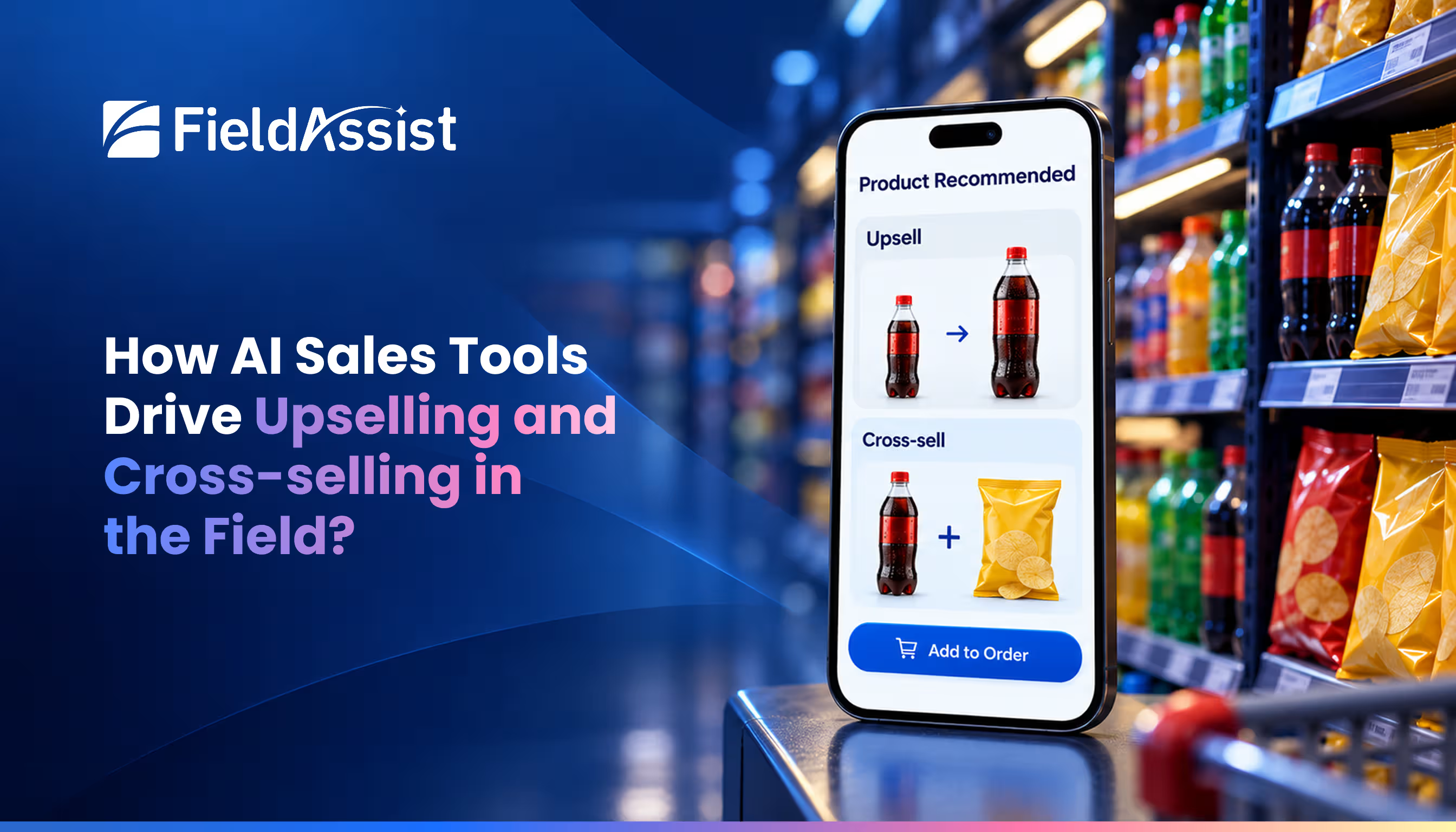
The engine studies one to two years of outlet ordering history, groups outlets with similar buying behavior through collaborative clustering and dynamic segmentation, and builds outlet-level assortments that account for geography. During order booking, reps get real-time nudges for cross-sell and upsell SKUs, factoring in stock levels, daily sales, and recent purchase history. The suggestion is not something the distributor cannot deliver.
Where it earns its place is new-SKU adoption. It surfaces new and underperforming SKUs at the outlets where they fit, instead of relying on reps to remember the scheme. Managers get visibility into assortment performance, so they can coach on SKU penetration rather than just volume.
It is also an AI product recommendation engine for FMCG that does not sit in isolation. It pairs with Perfect Store for outlet audits, Micromarket for white-space intelligence and ARS for automated replenishment, so recommendations stay tied to what is actually on the shelf and in the warehouse.
In practice, a rep opening an outlet sees a short, ranked list rather than a catalog: the SKUs that comparable outlets buy and this one does not yet stock, plus a higher-value companion product for the order already in progress. The rep keeps the conversation with the retailer. The engine does the homework that used to live in a regional manager's head or a spreadsheet nobody refreshed.
Best for: CPG and FMCG brands selling through reps, distributors and general trade across South Asia, Southeast Asia, the Middle East and Africa.
2. Amazon Personalize
A managed machine-learning service from AWS that trains recommenders on your interaction data (views, clicks, purchases) and serves them through an API, including in real time. Strengths: scale, multiple model types and a natural fit for teams already on AWS. Watch-outs: you need engineering capacity for data pipelines and integration, and it only sees what your digital channels see. It has no native view of a rep's beat plan, distributor stock or outlet shelf compliance.
Best for: brands with a strong in-house data team and a large digital storefront.
3. Dynamic Yield
An enterprise personalization platform that combines recommendation strategies with A/B testing, audience segmentation and on-site experience optimization.
Strengths: marketing and merchandising teams can configure and test strategies without heavy engineering.
Watch-outs: it is a digital-experience suite, so its breadth may exceed what a recommendation-only use case needs, and it still learns from web or app behavior.
Best for: large retailers and D2C brands that run continuous experimentation.
4. Algolia Recommend
Recommendation models such as related products, frequently bought together and trending items, built on Algolia's search and event data.
Strengths: quick to deploy for teams already on Algolia, with API-first flexibility.
Watch-outs: it works best where search and browsing drive discovery. It is a layer on a digital catalog, not a field-sales tool.
Best for: product-led e-commerce teams that already use Algolia search.
5. Nosto
An e-commerce personalization platform with recommendation widgets, merchandising controls and integrations with popular storefront platforms.
Strengths: fast to launch for mid-market online stores, with visual merchandising tools. Watch-outs: the same boundary as the rest of the digital-first group. It optimizes the online basket, not the offline outlet order.
Best for: mid-size online retailers that want to go live without a large data team.
How to Choose the Best Product Recommendation Software
Shortlist the Best Product Recommendation Tools by Selling Model
The fastest way to narrow the field is to ask where the order is placed and what data you own.
Three Questions Before You Buy
• Where does the sale happen? If it is a screen, a storefront engine works. If it is an outlet visited by a rep, you need recommendations inside the order-booking flow.
• What data do you actually own? Clickstream data powers storefront engines. Outlet history, distributor stock, and visit data power field engines. Check which one you can feed cleanly.
• Who acts on the recommendation? A shopper can ignore a widget. A rep with a daily call plan needs one clear, explainable suggestion per outlet, and a manager needs to see whether it was taken.
How to Pilot Without Losing a Quarter
Whichever platform you shortlist, run a controlled pilot before a national rollout. Pick a few territories with similar outlet profiles, switch recommendations on in half of them and compare SKU penetration, lines per call and order value per visit over a full beat cycle. Track two adoption signals as well: how often reps accept a suggestion, and which suggestions they skip. Skipped suggestions are free feedback. They usually point to stock gaps, scheme confusion or an assortment rule that does not match how the outlet really buys.
Plan for the data work too. Field engines need clean outlet masters, distributor stock feeds and at least a year of order history. Storefront engines need event tracking implemented correctly. Neither works well on poor data, and fixing it is usually the longest part of any rollout.
Mistakes That Quietly Kill Adoption
• Recommending out-of-stock SKUs. One failed suggestion at the outlet and the rep stops trusting the list.
• Ignoring distributor reality. Suggestions should respect what the distributor can actually deliver this week.
• Measuring clicks, not orders. Judge the engine on SKU penetration and order value per visit, not on how often a suggestion was viewed.
The Bottom Line: Recommend Where the Order Is Placed
The best product recommendation tools are not the ones with the cleverest algorithm. They are the ones whose suggestions show up at the moment of the order. For an online store, that is the product page. For FMCG, it is the outlet, the handheld and the distributor's stock position, all in one view.
If your growth depends on getting the right SKU into the right outlet, the best product recommendation software is the one that reads outlet history, stock and shelf reality together. That is the last-mile execution gap FieldAssist was built to close.
Ready to see it in your own territories? Explore FieldAssist's product recommendation engine or book a demo.




.avif)