Digital Distribution Trends to Watch in Africa [2026 and Beyond]
Key digital distribution trends shaping Africa’s FMCG market, driven by AI-powered DMS, omnichannel ordering, mobile payments, intelligent route optimization, and data-driven forecasting and predictive analytics.

Every market reaches a moment when the old ways can no longer carry the weight of what the future demands, and Africa’s FMCG distribution has just arrived at that moment.
Across the continent, informal retail still drives the majority of FMCG movement, yet its foundations are being reshaped by rapid digital adoption.
According to BCG.Com, Digital marketplaces for inventory, e-payment services, and other tech solutions are transforming traditional retail across Africa.
Business-Sweden’s research in Kenya, Nigeria, and South Africa shows that small shops using digital tools - from mobile payments to order-booking apps and inventory trackers - report measurable gains in turnover and operational efficiency. This shift is accelerating as distributors deploy mobile apps, USSD channels, WhatsApp ordering, and B2B marketplaces to capture outlet-level sales, stock, and coverage visibility.
Modern DMS and Sales Force Automation platforms allow CPG companies to monitor primary and secondary flows in near real time, enforce trade schemes, and benchmark distributor performance across regions.
With AI, cloud, and automation maturing, Africa’s distribution networks are evolving into predictive systems that reduce logistics costs by nearly 15%, cut inventory levels by 35%, and lift service performance by as much as 65%. Thus, unlocking entirely new value pools for brands ready to lead this transformation.
I. The Acceleration of Digital Distribution
Africa’s FMCG distribution is changing fast, and this change is not optional. It is happening because two strong forces are coming together at the same time: rapid mobile and internet growth, and a young, urban population that is ready for digital consumption. These two forces are creating the base for digital distribution to scale across the continent.
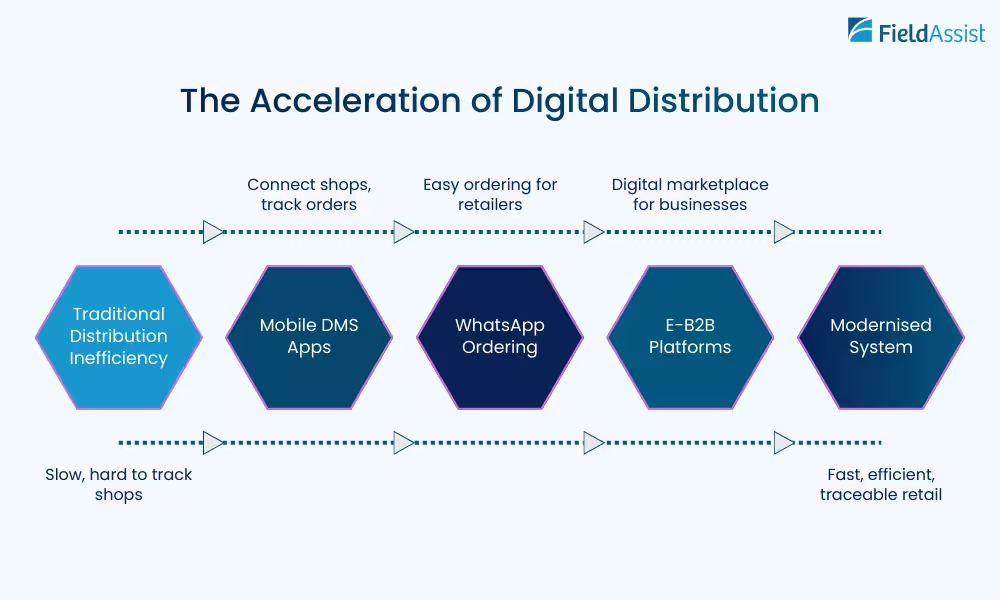
(a) Internet and Mobile Growth: The Digital Leapfrog Effect
Africa did not follow the traditional path of fixed broadband and large modern retail first. Instead, it jumped straight to mobile. This is why digital distribution is growing faster than many expected.
- Growing smartphone connections in Africa means most retailers, even small kiosk-type shops, can now have a digital device in their hands.
- For FMCG companies and distributors, this changes everything. Shops that were earlier hard to track can now be connected through simple mobile DMS apps, WhatsApp ordering, and eB2B platforms.
- Orders, stock levels, and outlet coverage can be captured digitally, even in informal markets.
(b) Urbanization and a Young Consumer Base
Technology works only when consumers are ready. In Africa, the urban population is ready for the Digital Era.
Nearly 60% of the population is below 25 years of age. This young population expect products to be available, prices to be clear, and service to be fast. Hence, putting pressure on traditional distribution systems to modernize for faster turnaround time.
Urbanization adds more momentum. In countries like South Africa, over 68% of people live in cities, and similar kind of trends are visible in other African markets. These cities with urban population are likely to better purchasing power, and frequent buying.
This makes local delivery, faster replenishment, and planned routes more practical. While cities increase competition and complexity, they also make digital distribution more efficient and profitable.
Additionally, the growing middle class and rising incomes give FMCG companies a good reason to invest in digital tools like DMS, SFA, analytics, and AI-based planning. These investments stopped being an experiment a while ago. At this point, they’re a prerequisite for growth.
II. Trends Shaping FMCG Distribution
FMCG distribution in Africa is now being reshaped by how intelligent AI tools and automation are applied on the ground. What we are seeing is not just about digitizing processes but more about using modern technologies to reduce friction, improve decisions, and increase sales predictability.
Some trends are clearly redefining how brands, distributors, and retailers work together in Africa are:
1. AI and Automation in Retailer Engagement and Inventory Management
Distribution efficiency depends on one thing: getting the right stock to the right place at the right time. AI and automation are improving this decision-making.
Modern distributor systems now use:
- Demand forecasting algorithms to predict SKU-level demand by territory.
- Automated replenishment logic to reduce stock-outs and excess inventory.
- Inventory optimization models that balance warehouse stock with market consumption.
For the distributor, this means (a) lower inventory holding costs, (b) better service levels to retailers, and (c) fewer emergency replenishments and returns.
2. Omnichannel Ordering and Mobile Payments
Africa’s FMCG market is moving to omnichannel distribution, where multiple ordering and payment options work together for a seamless operation excellence.
Retailers today place orders through:
- Sales reps using mobile SFA apps.
- WhatsApp and chat-based ordering.
- USSD-based systems for low-data regions.
- eB2B commerce platforms.
- Digital collections and payments via M-Pese Payment
All these channels feed into a single DMS backbone, ensuring consistent pricing, scheme enforcement, and order processing, and further avoids channel conflict and data mismatch.
When payments, orders, digital wallets, and deliveries are digitally linked, distributors gain better cash flow control, and brands reduce leakage and disputes.
For the field teams, this means: (a) Fewer missed orders, (b) Better SKU presence, and (c) less time spent guessing and more time selling
For managers, it brings near real-time visibility into outlet performance, distributor health, and market-level demand shifts.
3. Intelligent Route Optimization
Route planning has always been the weakest link in FMCG RTM (Route to Market) execution. This is because many routes are still planned based on a habit (pen and paper), not data. But now, FieldAssist's AI-powered route optimization is changing this.
Modern route optimization systems use:
- Geo-mapping and GPS data
- Outlet productivity scores
- Beat-level sales history
- Traffic and distance algorithms
By using this data, the RO system suggests the best daily routes. Thus, enabling sales reps visit more productive outlets in less time, boosts outlet coverage, increases productive calls, and gives more time for actual selling.
For managers, route planning software helps answer simple but critical questions:
- Are reps visiting the right outlets?
- Are high-potential stores being under-served?
- Where is coverage leakage happening?
In crowded city markets and spread-out semi-urban areas, smart routing makes fieldwork a process that can be measured and controlled, not just something based on trust.
III. The Role of Data and Analytics
Data and analytics are becoming the control centre of FMCG distribution in Africa. Real-time data from distributors, warehouses, routes, and retail transactions allows brands to see what is happening in the market today - not last month.
Analytics helps convert this data into clear actions, such as - where to send stock, which areas need attention, and how to serve different types of retailers better. When used correctly, data does not slow distribution down. It reduces uncertainty, improves speed, and makes execution more predictable at scale.
(a) Real-Time Decision-Making
Intelligent distribution is all about acting while the market is still moving. Real-time data helps distributors and brands respond quickly to market signals and insights such as:
- Livestock visibility across depots and distributors helps identify early stockout risks.
- Daily sales and dispatch data highlights underperforming territories or routes.
- Exception alerts flag unusual drops in sales, delayed deliveries, or abnormal returns.
- Performance dashboards enable faster corrective actions at region and distributor level.
The result is faster decisions with lower operational risk.
(b) Demand Forecasting
Forecasting in Africa’s informal markets was once considered unreliable because of what can’t neatly measure, can’t predicted. But FieldAssist Analytics Studio and Pulse AI are changing the story. Instead of guessing, we now can analyze real patterns from the SFA and DMS data such as:
- Historical secondary sales data helps predict future SKU demand.
- Seasonality and regional trends improve planning accuracy.
- Distributor-level forecasting reduces overstoocking and emergency replenishment.
- Automated replenishment signals improve service levels without increasing inventory.
(c) Personalization and Custom Offerings
One of the biggest mistakes in distribution was thinking all retailers are the same. They're not. Some buy in large quantities, others in small. Some care about variety, while others care about speed. Analytics finally lets distributors see these differences. It moves us from a one-size-fits-all approach to something much more personalized.
- Segment outlets based on size, buying frequency, and product mix.
- Offer tailored SKU assortments for different retail clusters.
- Customize delivery frequency based on how quickly outlets turn over stock.
- Provide targeted schemes and pricing that match the retailer's potential.
When you personalize distribution, something powerful happens - Retailers feel understood. And distributors get more value from every mile, every visit, every case delivered.
IV. Challenges and Growth Opportunities
Africa's FMCG (Fast-Moving Consumer Goods) distribution market is huge, but there are some challenges. Problems like poor infrastructure, inconsistent rules, and low digital knowledge can make things slow if not managed well.
However, these same problems also create opportunities for brands to build smarter and more flexible distribution systems. The companies that succeed won’t wait for everything to be perfect. They will create systems that work with the current situation while also getting ready for future growth.
(a) Overcoming Infrastructure Gaps, Regulation, and Digital Literacy
To succeed in Africa’s rural and semi-urban markets, brands must overcome challenges like poor infrastructure, complex regulations, and low digital literacy. Here’s what you can do:
- Low-connectivity ready systems - Rural and semi-urban areas need tools that work offline and sync automatically when the network is available. Simple rural DMS platforms and low-data mobile apps make sure operations continue even with weak internet.
- Simple, role-based user interfaces - Distributors and retailers adopt technology more quickly when screens are simple, workflows are guided, and actions are limited to what's needed. A clean UI reduces training time and mistakes in the field.
- Regional language and local context support -Apps in local languages help improve understanding and confidence, especially for first-time digital users. This boosts daily usage and improves the quality of data.
- Compliance built into the system - Automated pricing controls, scheme rules, and transaction logs help brands maintain consistency across regions, even when regulations differ or enforcement is inconsistent.
(b) How Brands Can Seize Emerging Opportunities?
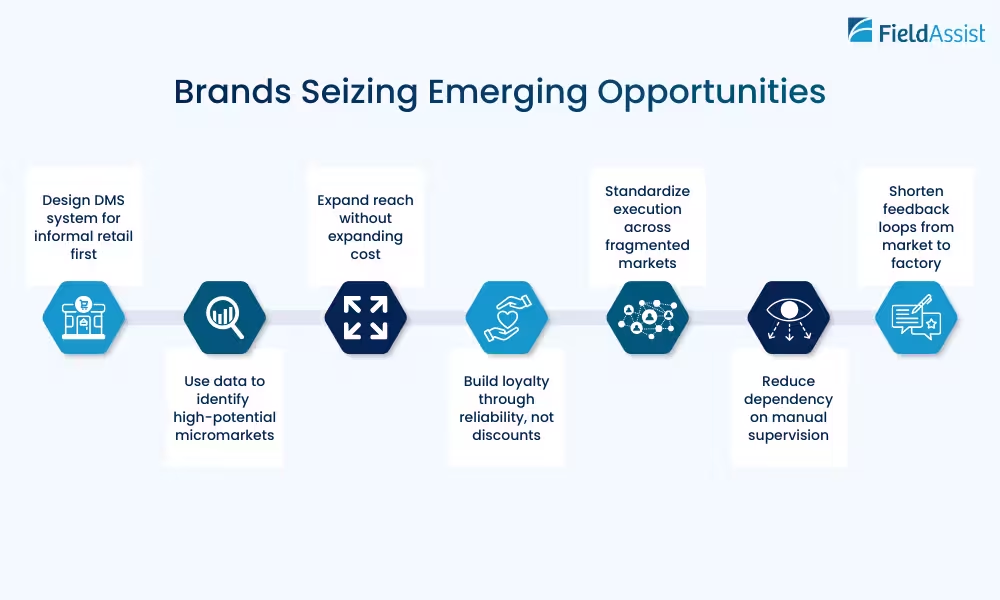
In order to tap into Africa’s emerging FMCG and CPG opportunities, brands need smart strategies that focus on growth, efficiency, and market reach. Here are some steps that one can consider taking:
- Design DMS system for informal retail first: Instead of pushing modern trade models, brands should create systems that respect informal buying habits while providing structure behind the scenes.
- Use data to identify high-potential micromarkets - Local market intelligence such as outlet-level sales, frequency, and basket data help brands focus on those ares where demand is growing faster and likely to sell more.
- Expand reach without expanding cost - Take advantage of route intelligence, delivery mapping, and distributor performance leaderboard, which allows for broader market coverage using existing infrastructure.
- Build loyalty through reliability, not discounts - Instead of relying on temporary discounts, focus on always having stock available, offering fair prices, and delivering on time. These things help build stronger, long-lasting relationships with retailers, rather than just attracting them with short-term offers..
- Standardize execution across fragmented markets - Digital distribution management systems ensure uniform pricing, schemes, and service standards across regions, reducing leakage and market distortion.
- Reduce dependency on manual supervision - Data-driven alerts and dashboards reduce the need for constant field checks. They further allow managers to focus on problems that need attention instead of everyday tasks.
- Shorten feedback loops from market to factory - Faster visibility into secondary sales and returns lets brands adjust production and dispatch plans with less delay.
Conclusion:
Africa's FMCG growth needs distribution strategies that suit local conditions. Brands that invest early in flexible AI technology, easy workflows, and data-driven decisions will turn current challenges into long-term success. To learn how brands are winning in the African market with smart distribution, get in touch with us.




%20(1).avif)
.avif)