Perfect Store Execution in Imperfect Markets: Using SFA + DMS to Win at the Outlet Level
Discover how SFA and DMS integration helps FMCG brands improve shelf visibility, reduce stockouts, and drive consistent perfect store execution across Southeast Asia.

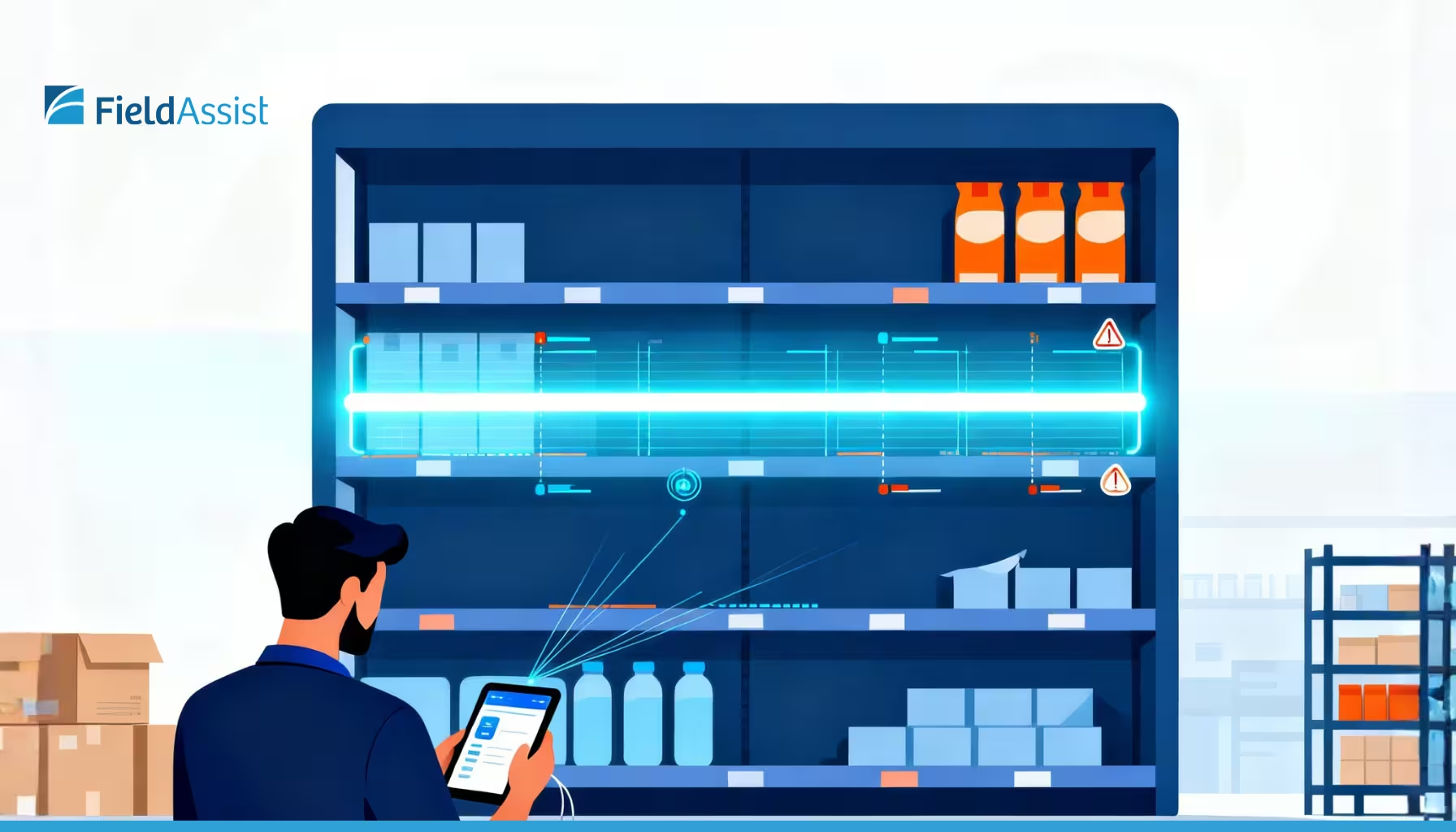
Is your “Perfect Store” strategy actually visible on the retail shelf, or does it remain limited to planning presentations?
For many FMCG companies, there is often a gap between strategies designed at the head office and execution at the retail outlet. Promotions may be planned and targets set, but products might still be out of stock, incorrectly displayed, or missing promotional visibility in stores.
This challenge becomes even more important in fast-growing markets like Southeast Asia. According to McKinsey, the region’s consuming class—households with enough income to spend regularly on branded and non-essential products is expected to double to around 163 million households by 2030. For FMCG brands, this means a rapidly expanding customer base.
However, capturing this growth depends not only on strong products but also on consistent execution across thousands of retail outlets. This is why many field force automation companies that FMCG brands rely on are investing in technology that improves store-level visibility and execution.
By integrating Sales Force Automation (SFA) with a Distributor Management System (DMS), companies can gain better visibility into field operations, improve coordination with distributors, and ensure that their Perfect Store strategy is actually implemented at the shelf level.
Understanding The Concept Of Perfect Store Execution
In the complex retail landscape of Southeast Asia, Perfect Store Execution is a data-driven strategy used by leading FMCG and CPG companies to ensure that every individual outlet, from a modern supermarket in Jakarta to a local Sari-Sari store in Manila, accurately reflects the brand’s core priorities.
Rather than relying on a general sales push, this framework establishes a "Gold Standard" of measurable benchmarks. A store is only considered "Perfect" when it satisfies five critical pillars of retail excellence. Modern Retail Execution Software helps brands track these parameters in real time and ensure that store standards are consistently maintained across large retail networks.
A "Perfect Store" follows these essential rules:
- SKU Availability: The must-sell products are in stock and have high "stock hygiene".
- Shelf Placement: Ideal placement and strict planogram compliance.
- Visibility: POSM (Point of Sale Materials) and signage are placed correctly.
- Price Accuracy: Prices and promotions are 100% accurate at the shelf level.
- New Launches: Immediate presence of "must-sell" and new product launches.
Brands using Sales Force Automation for FMCG in Philippines aim to stop "guessing" whether a store looks good and start "knowing" based on real photos and data.
Why Achieving Perfect Store Execution Remains Challenging in Imperfect Markets?
Achieving perfect store execution is easier said than done. While brands may clearly define what the “perfect store” should look like, translating those standards consistently across thousands of outlets is challenging in real-world retail environments.
Differences in store formats, operational complexity, and the scale of distribution networks often create gaps between strategy and what actually happens at the shelf.
In fact, research on retail shelf availability shows that the average out-of-stock rate in FMCG retail is around 8.3%, meaning a significant portion of consumer demand is lost simply because products are not available on the shelf when shoppers want to buy them.
1. Fragmented Retail Landscape
In markets like the Philippines, retail networks consist of millions of small sari-sari stores. Each store operates differently, making it difficult for brands to monitor product availability, branding, and promotions across all outlets.
2. Limited Visibility into Outlet-Level Execution
Many companies only track overall distributor sales, not what is happening at individual stores. As a result, brands may not realize that certain outlets are already out of stock or not displaying products properly.
3. Manual Field Reporting
When sales reps rely on manual reporting methods, the data often reaches managers with delays. This makes it harder for companies to respond quickly to stock issues or execution gaps.
4. Distributor Disconnect
Sales teams and distributors often work in separate systems. If a sales rep confirms an order but the distributor has no stock, it leads to delays, missed sales, and retailer dissatisfaction.\
5. Inconsistent Promotion Execution
Promotions and in-store displays are not always implemented as planned. Missing materials or incorrect placements can reduce brand visibility and the overall impact of marketing investments.
Leveraging FieldAssist’s SFA and DMS to Strengthen Store-Level Execution
Achieving consistent store execution requires more than just field activity; it requires strong coordination between field sales teams and distributor operations. This is where the combination of Sales Force Automation (SFA) and a Distributor Management System (DMS) becomes essential.
FieldAssist helps connect field execution with distributor operations. While SFA guides sales representatives during store visits and improves on-ground execution, DMS ensures that distributor inventory, billing, and order fulfillment support those efforts. Together, these systems create a connected ecosystem that helps brands maintain better control over product availability, merchandising, and promotions at the outlet level.
How SFA (Sales Force Automation) Powers the Perfect Store?
Sales Force Automation platforms equip field representatives with a mobile application that acts as a digital assistant during store visits, helping them execute tasks more efficiently and consistently.
1. AI-Based Outlet Targeting
The system can prioritize store visits based on factors such as sales potential, outlet performance, or SKU availability gaps. This helps sales reps focus on outlets that have the highest impact on revenue and market share.
2. Offline Capability with Auto-Sync
In markets where connectivity is unreliable, the SFA app works fully offline. Sales reps can complete audits, capture photos, and book orders without internet access. Once a network is available, all data automatically syncs to the system.
3. In-Store Task Management
Sales representatives receive clearly defined tasks during each store visit, such as verifying product placement, checking pricing, or ensuring that promotional materials are displayed correctly. This structured workflow helps maintain consistent execution across outlets.
4. SKU and Shelf Visibility Monitoring
Reps can use checklists and capture geo-tagged shelf photos during visits to verify product placement and availability. This provides real-time proof of execution and allows managers to quickly identify deviations from merchandising standards.
5. Gamified Execution for Field Teams
Some platforms introduce gamification features such as performance points, badges, or leaderboards. These incentives encourage sales representatives to complete merchandising tasks, improve store coverage, and maintain execution standards.
6. Managerial Visibility and Control
Managers can access dashboards that show outlet coverage, store execution quality, and rep performance across territories. This allows them to quickly identify execution gaps and take corrective actions.
How DMS (Distributor Management System) Supports the Shelf?
While SFA strengthens field execution, the Distributor Management System ensures that products move efficiently from distributor warehouses to retail outlets.
- Real-Time Inventory Visibility
Sales teams can check distributor inventory before placing orders, ensuring that retailers order products that are actually available in stock.
- Faster Order Processing
Orders captured in the field are directly transmitted to the distributor system. This reduces manual processing and helps warehouses prepare deliveries faster.
- Seamless Tally Integration
The system integrates with Tally for orders, invoicing, and collections, enabling real-time ledger sync and reducing billing preparation time by up to 80%.
- AI-Based Auto-Replenishment Logic
The DMS analyzes secondary sales and demand patterns to automatically suggest refill orders, reducing stockouts by up to 30% and ensuring key SKUs remain available.
- Automated Scheme Management
Trade promotions, discounts, and free goods are automatically applied during billing. This ensures that retailers receive the correct promotional benefits and reduces billing errors.
- Secondary Sales Tracking
DMS provides brands with visibility into how products move from distributors to retail outlets. This helps companies track demand patterns, monitor distributor performance, and plan replenishment more effectively.
Why Integrating SFA and DMS Is Critical for Effective Retail Execution
In many FMCG companies, field sales teams and distributor operations work on separate systems. This often leads to delays, order errors, and limited visibility into what is happening across the distribution network. Integrating SFA with DMS helps connect field execution with supply chain operations, creating a smoother flow of information and faster decision-making.
1. Sales Teams Sell What Is Actually Available
With integrated systems, sales reps can see real-time distributor inventory while placing orders. This ensures that retailers only order products that are actually available, reducing short deliveries and improving retailer trust.
2. Faster Order-to-Delivery Cycles
Orders captured in the SFA app flow directly into the distributor system, eliminating manual data entry. This speeds up order processing and helps products reach retail shelves faster.
3. Better Promotion Execution
Integration allows companies to track trade promotions from the distributor warehouse to the retail outlet. This ensures that discounts and schemes are applied correctly and reduces leakage in promotional spending.
4. Unified Data for Decision Making
When SFA and DMS work together, companies get a single view of sales, inventory, and field activities. This unified data helps managers make faster and more accurate decisions to improve retail execution.
Winning at the Outlet Level
When Sales Force Automation (SFA) and Distributor Management Systems (DMS) work together with FAi Perfect Store, brands gain real-time visibility into store execution and can translate strategy into measurable results. Here’s the impact that brands have seen with FieldAssist:
1. Better On-Shelf Availability (OSA)
Real-time audits and inventory visibility help reduce stock gaps. Brands using FAi Perfect Store have reported an 18% increase in SKU availability, reducing lost sales from stockouts.
2. Stronger Retailer Relationships
Accurate order capture and faster distributor fulfillment improve retailer confidence. AI-led distribution systems can improve order fulfillment by 10–20%.
3. Improved Promotion Compliance
Photo audits and planogram checks ensure promotions are implemented correctly. Companies have achieved a 25% improvement in planogram compliance through Perfect Store execution.
4. Higher Sales Productivity
AI-driven outlet targeting and digital workflows help reps focus on high-value outlets, improving sales efficiency by 20–25%.
5. Consistent Execution Across Regions
Standardized Perfect Store benchmarks ensure consistent merchandising and visibility, leading to 13% growth in outlet-level ROI.
Closing Thoughts
In the fast-moving world of FMCG, a "Perfect Store" isn't a one-time goal- it’s something you have to do every single day. In tough markets, your biggest advantage isn't just your product; it’s the SFA and DMS technology in Philippines that helps you see what’s happening at the shelf.
By choosing the right Field Force Automation for FMCG Companies, you can stop chasing reports and start winning at the outlet level.
Want to see how your team can execute better? Let's talk about how integrated SFA and DMS can help you dominate the market. Get in touch




.avif)