Sales Force Automation in Indonesia: What FMCG Leaders Actually Need
A practical guide to on sales force automation features and aplikasi sales lapangan for Indonesia’s FMCG market, from warungs to modern trade and rural field execution.

Winning the FMCG market in Indonesia requires a modern sales force automation system capable of operating across a highly fragmented retail landscape - spanning warungs and rural kiosks across more than 17,000 islands - where execution conditions can vary dramatically from one district to the next.
This is because, from dense urban clusters to remote desa-level warungs, sales effectiveness is shaped less by strategy and more by the ability to operate consistently under constraint.
In these shops, daily sales mostly depend on manual work like checking stock by hand, writing orders on paper, and taking cash payments. For field sales teams, these tasks can take up 30 to 40 percent of their useful selling time.
Execution becomes more difficult because visit records are kept on paper, sales routes are not followed properly, store standards are not the same everywhere, and the internet connection is weak in many areas.
The outcome is not just operational inefficiency, but a widening gap between what FMCG leaders plan at headquarters and what actually happens on the ground during each kunjungan toko.
Indonesia FMCG Sales Execution: The Reality Gap
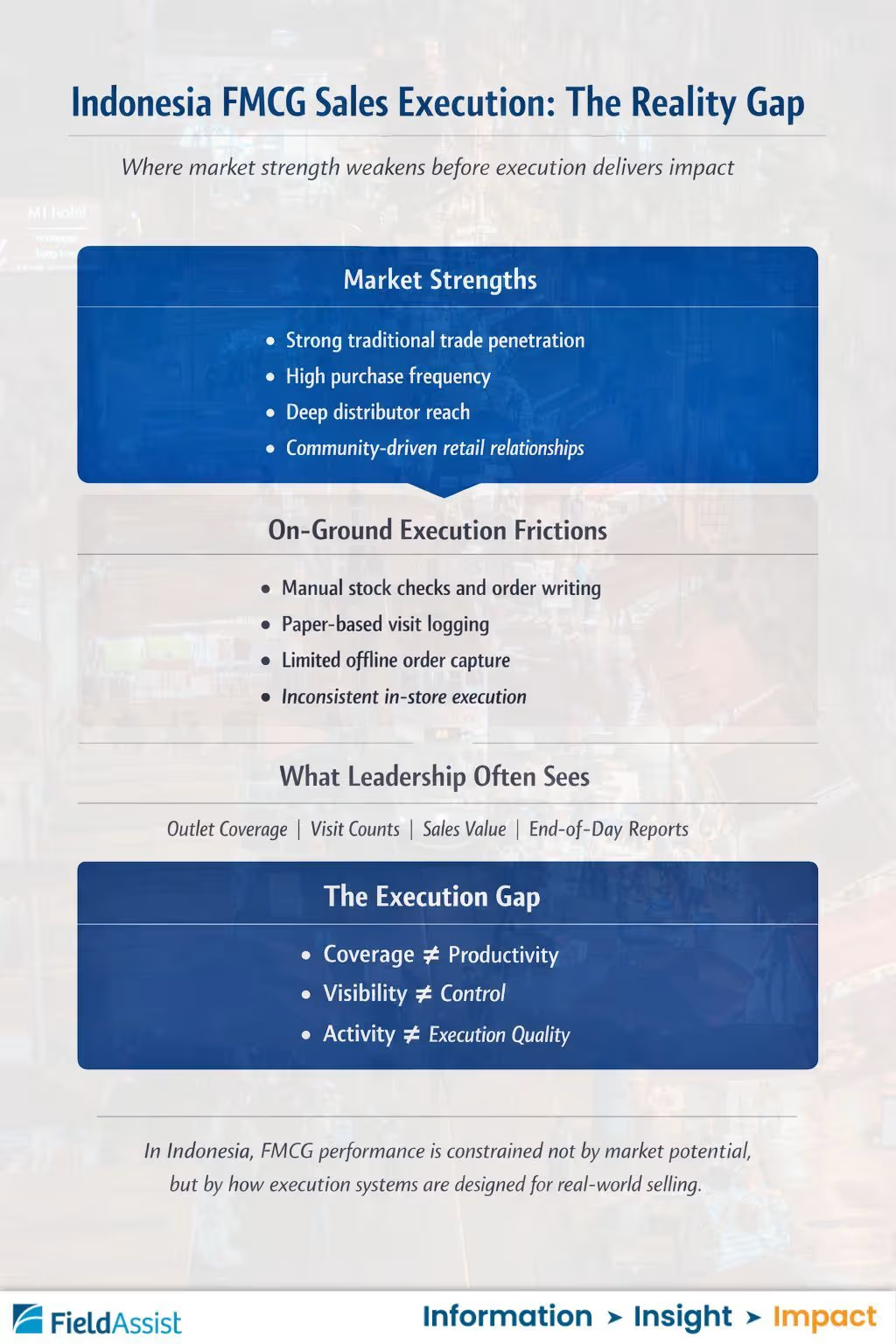
While Indonesia’s FMCG growth opportunity is well known, the real challenges are in daily execution, and these are often not fully understood by senior leadership.
These challenges, although not clearly reflected in market reports or growth forecasts, ultimately determine whether sales plans actually convert into results at the warung and toko levels.
The main reason why sales execution fails in the Indonesian FMCG market is because:
- Thinking that More Outlets = Better Productivity: Many leaders believe that covering more outlets will automatically improve sales. That’s not entirely true. In reality, sales reps are often spread across large and fragmented areas. They may visit more warungs and small toko, but spend very little quality time in each shop. As a result, kunjungan toko becomes only a quick visit, and shelf execution remains fragile.
- Giving priority to Activity Tracking > Execution Quality: Most sales reviews usually focus on numbers like how many visits count, order value, and outlet coverage achieved in a day. Nevertheless, these numbers do not show execution quality. They don’t tell us if the right SKUs were discussed or not, if stock issues were fixed, or if displays were set correctly. Leaders can see the effort, but cannot see what actually happened inside the shop.
- Many SFA tools Focus Only on Reporting: Sales tools often become a problem when they are built mainly for reporting, not for easy use in the field. In low-network areas, slow apps, poor offline support, and complicated steps push reps back to paper-based working. Over time, these tools are seen as audit systems, not tools that help execution. This reduces trust and usage at the ground level.
- Delay in Capturing On-Field Data: In many cases, sales data is checked only at the end of the day. Because of this delay, managers cannot guide or correct execution while reps are still in the market. When issues finally appear on dashboards, the selling opportunity at the warung is already over.
Why Traditional SFA Breaks Down in Indonesia?
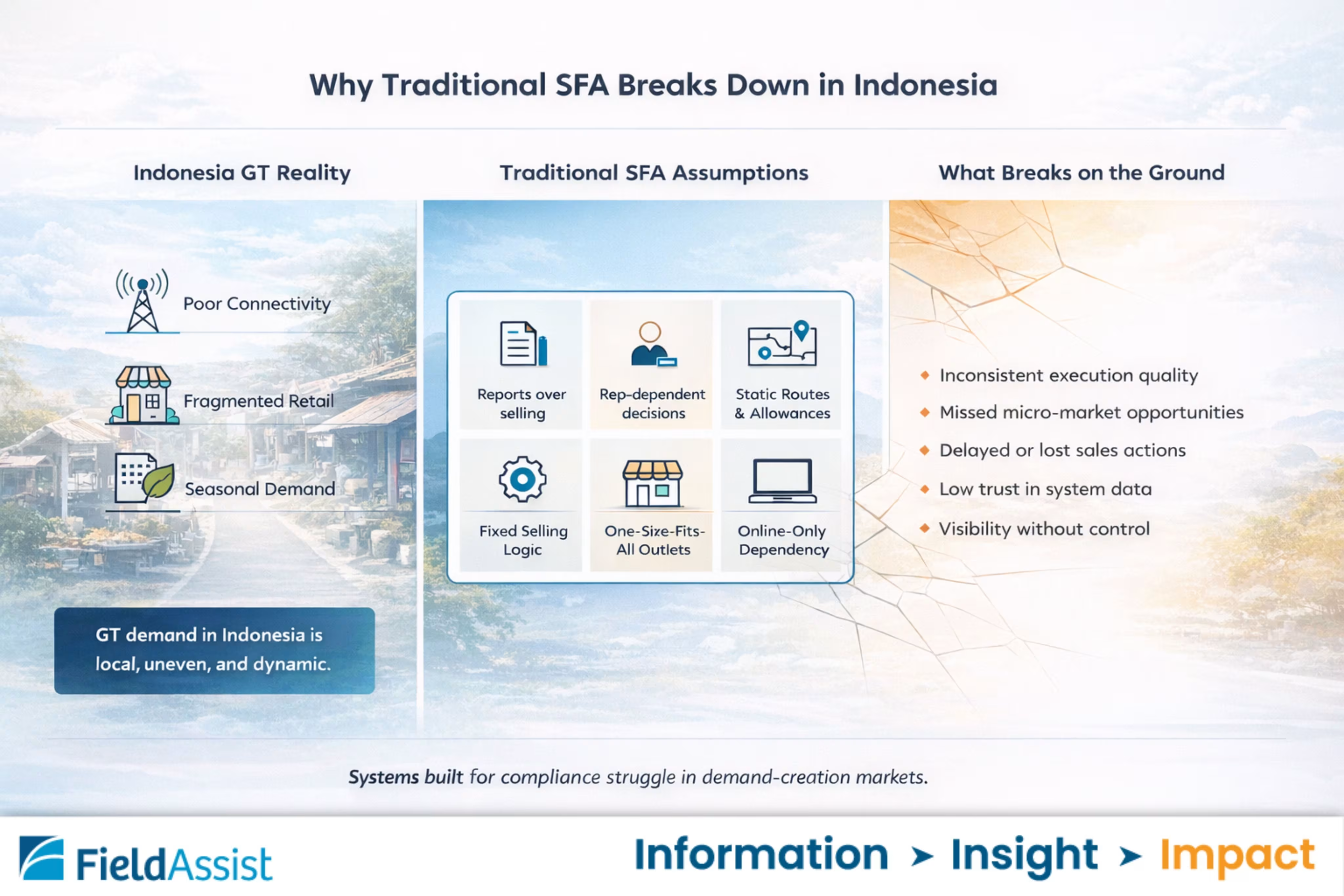
Traditional SFA tends to fail in GT-dominant Indonesia because most systems are not culturally and demographically aligned with how the demand is actually created, captured, and fulfilled in a very local and practical way.
Some field sales systems may work in big cities like Jakarta, where roads are good and internet connection is strong. But these systems usually fail in rural and semi-urban areas, where network signal is weak and shops are spread out.
This happens for many connected reasons, such as:
- Traditional SFA is mostly about filing reports over selling: The traditional SFA system focuses more on whether tasks are completed or not, rather than having a gamified approach on what to sell, where to push harder, and how much stock the shop really needs.
- Reps are left to figure things out on their own: Since traditional SFA is rule-driven and static, sales representatives often rely on personal judgment to decide which schemes to offer, which SKUs to prioritize, and how to build the right order for each outlet. This leads to inconsistent execution, especially across reps with varying experience levels.
- Sales systems don’t reflect real field conditions: Routes are planned based on guesswork, not actual movement on the ground. Travel money is fixed, visit checks do not feel practical, and real work done in the field is not properly recorded. Because of this, field teams feel the system is not realistic and they do not trust it.
- Selling logic remains static even as demand changes: Local festivals, seasonal shifts, and micro-market buying patterns rarely influence in-app order suggestions. When demand signals are not reflected in the selling process, sales opportunities are missed despite high visit coverage.
- All outlets are treated the same way: Most traditional SFA systems lack true outlet profiling. High-velocity warungs and slow-moving rural stores are handled with the same execution logic. There is limited clarity on must-sell SKUs by outlet type or how execution expectations should vary across store formats.
- Lack of reliable offline support: Many parts of Indonesia still have weak or unstable internet. If the SFA system cannot work properly without internet, sales teams cannot record orders, check stock, or complete store visits. This causes delays and even loss of sales. In Indonesia, offline working is not an extra feature, it is a basic need.
Together, these breakdowns explain why SFA adoption often fails in Indonesia. The issue is not resistance to technology, but systems that are misaligned with how selling actually happens across a diverse, GT-driven market.
Why Businesses Choose FieldAssist SFA in Indonesia?
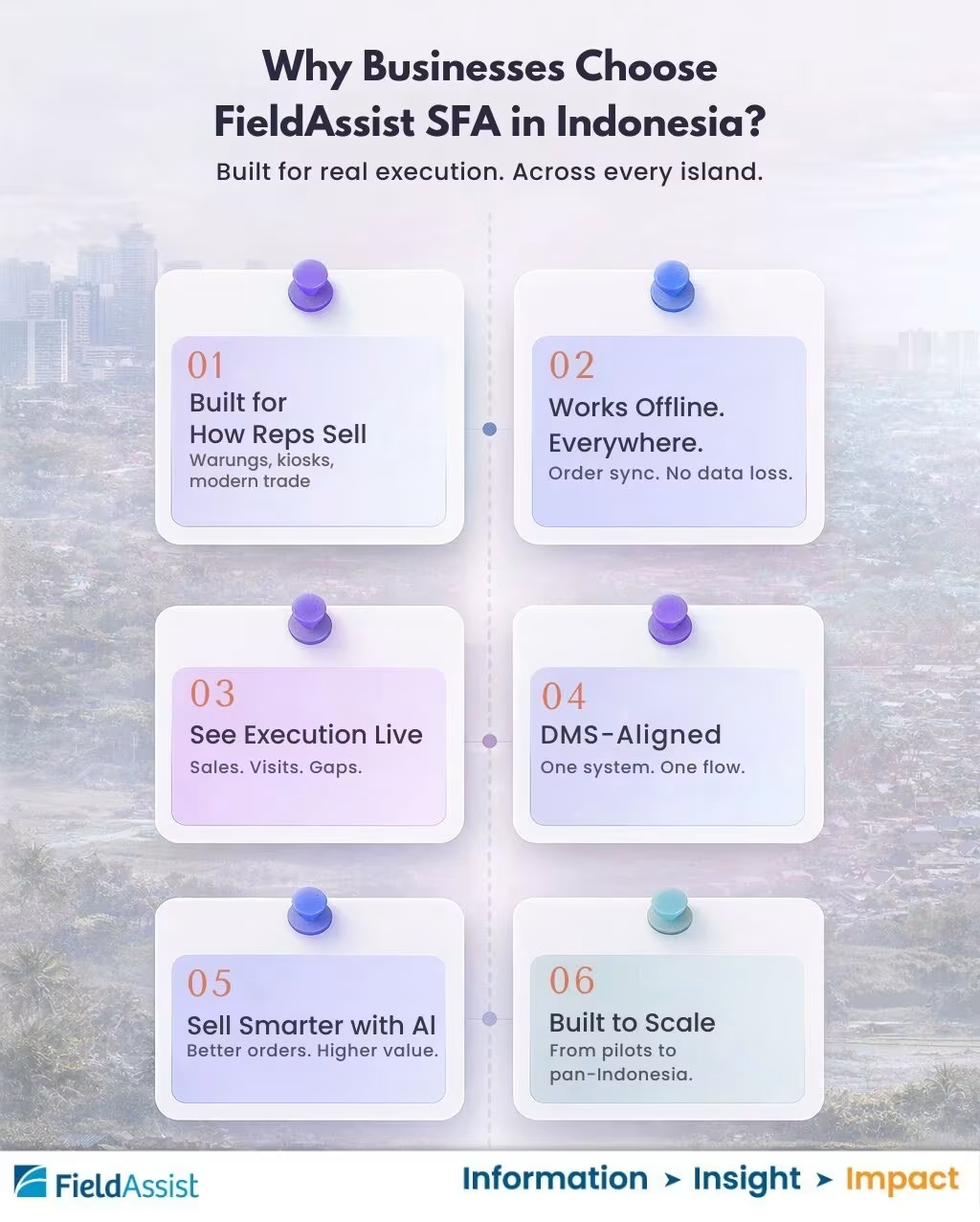
For FMCG leaders in Indonesia, sales force automation is no longer a back-office tool. It has become the backbone for building a future-ready, market-ready, pan-Indonesia sales operation. Leaders need systems that can scale across urban centers and remote rural markets alike, while remaining reliable under uneven infrastructure and diverse selling conditions.
This is where FieldAssist stands out. Its SFA platform is designed with an execution-first mindset, built around how sales representatives actually sell in warungs and small kiosks. Offline reliability, low data-entry friction, and contextual guidance ensure that reps can focus on selling, not managing software. The system adapts to real field conditions instead of forcing uniform processes across vastly different regions.
FieldAssist has already helped companies manage difficult market changes. For example, Mars Petcare earlier had no clear view of secondary sales because of old and rigid systems. With FieldAssist, the company was able to work better with distributors, get real-time field data, activate more than 8,400 shops, and increase sales team productivity by 40%. The result was not just better reports, but stronger control over execution across the market.
Standout Capabilities of FieldAssist Sales Force Automation
FieldAssist SFA addresses Indonesia’s execution realities through a tightly integrated set of capabilities:
- Mobile-first field execution: FieldAssist’s Sales Force Automation Software in Indonesia works to the benefit of sales reps. The mobile SFA app enables sales reps to capture orders, stock levels, and photo proof of merchandising directly from outlets. This maximizes efficiency and minimizes common errors caused on the field.
- Deep outlet profiling: FieldAssist SFA provides deep outlet profiling features. So with detailed outlet data, such as owner information, store type, previous purchase history, and payment preference, a rep can do more personalized and effective selling across thousands of islands.
- Real-time execution visibility: Live dashboards for sales, visits, and performance help leaders quickly identify gaps, including in remote and outer regions.
- Field accountability at scale: Attendance check-ins and individual salesman tracking improve discipline and transparency across culturally and linguistically diverse territories.
- Market response analytics: Field data enables brands to adjust promotions and selling focus based on actual market response, from warungs to modern retail.
- Distributor integration: Seamless integration ensures orders flow end to end, reducing delays caused by regulatory and infrastructure constraints.
- Offline-first reliability: The platform handles high-volume, low-value transactions even in low-connectivity areas, ensuring no loss of orders or execution data.
- AI-driven intelligence: Demand forecasting, personalized order recommendations, and AI order agents help increase average order value, particularly in beauty and festive-led categories.
- Geo-fencing controls: Location-based checks ensure compliance and route discipline across vast and complex territories.
Conclusion:
We hope this blog has made one thing clear i.e. growth in Indonesia’s FMCG market is not constrained by demand, but by how effectively brands execute across general trade and modern trade. From warungs in dense neighbourhoods to outlets in far-flung districts, sales continuity depends on execution that works beyond ideal conditions.
In markets where selling happens across long jalur distribusi, weak signals, and relationship-driven retail, sales force automation must work for the field first. It must support reps even in no-network zones, enable them to serve distant retailers consistently, and keep the selling cycle moving without friction.
Traditional SFA systems struggle because they were built for reporting, not for the realities of warung-led trade, distributor-dependent fulfillment, and low-connectivity selling. Modern SFA, on the other hand, goes further than capturing orders. It must guide in-store decisions, adapt to local demand patterns, and operate reliably even in imperfect conditions.
This is where FieldAssist SFA changes the equation. By combining execution guidance, route optimisation, SKU recommendations, and outlet-level intelligence, it reduces decision load on the sales rep and brings discipline to complex territories. The result is better execution across every kunjungan toko.
If you want to see the difference FieldAssist SFA makes on the ground, the next step is simple. Experience it first. A short demo is the best place to start.





%20(1).avif)
.avif)